Boule or Baguette? Exploring Task Topology, Length Generalization, & Benefits of Reasoning Traces
This presentation explores groundbreaking research on reasoning models and their ability to handle problems requiring longer proofs. The study introduces PITA, a massive dataset of propositional logic statements, and investigates how reasoning traces help models solve problems of varying complexity. By examining task topology through the metaphor of boule versus baguette shapes, the researchers reveal when reasoning traces excel and when they struggle, offering critical insights for deploying robust reasoning systems.Script
When a reasoning model tackles a logic problem, should it explore broadly like a round boule, or dive deep like a long baguette? This question sits at the heart of understanding how reasoning traces help machines think through complex proofs.
Let's begin by understanding the challenge these researchers set out to solve.
Building on that challenge, the authors investigate reasoning traces, which are intermediate steps models generate before reaching conclusions. The critical question is whether these traces help models generalize to problems requiring longer proofs than they've seen during training.
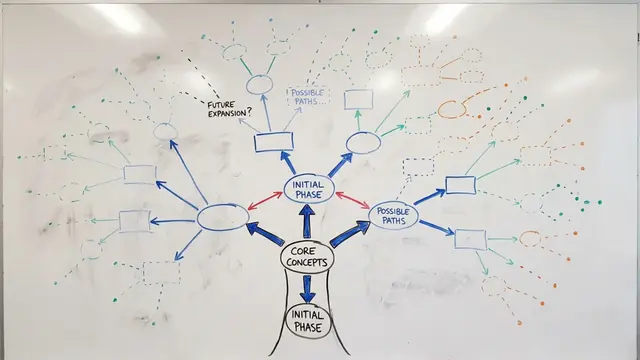
To understand this, they introduce two contrasting task topologies. Boule-shaped tasks spread broadly with many unique examples but require shorter proofs, while baguette-shaped tasks dive deeply with longer proof chains but fewer variations.
Now let's see how they tested these ideas at scale.
The researchers created PITA, a dataset containing over 23 million propositional logic statements with complete proofs. This massive resource allowed them to systematically vary task depth and breadth while comparing reasoning trace models against direct prediction models.
The experiments revealed a striking pattern.
The results were clear and surprising. Reasoning trace models excelled on broader, shallower tasks but struggled with deeper, narrower problems where longer reasoning chains actually became a liability rather than an asset.
Why does this happen? The authors found that depth-intensive tasks force models to generate longer reasoning traces, creating more opportunities for errors to compound through the proof chain.
These findings have immediate implications for deploying reasoning systems. Understanding task topology helps us predict when reasoning traces will help versus when direct approaches might work better, guiding future research toward improving depth generalization capabilities.
Task topology shapes reasoning success: choose your boule or baguette wisely. Visit EmergentMind.com to explore more about this research and other advances in machine reasoning.