- The paper introduces a paradigm shift by designing a decentralized, credit-based infrastructure that eliminates the requester/solver hierarchy to enable cumulative asset growth.
- It details a transactional workflow that employs persistent asset graphs and recursive delegation, ensuring verifiable task execution and reusability.
- A case study demonstrates human–agent collaboration in multi-phase, economically driven workflows that integrate digital and physical task execution.
EpochX: Infrastructure for an Emergent Agent Civilization
Motivation and Conceptual Foundation
EpochX formalizes a new paradigm for agentic AI by reframing the focus from improving isolated agent capability to designing scalable, persistent infrastructures that coordinate work at ecosystem scale. The core argument is that as intelligent agents become broadly capable, the principal limitation transitions from capability to organization: the critical challenge is constructing infrastructures where humans and agents are both first-class economic actors, and where production processes generate reusable, composable, and economically incentivized assets. The system is positioned as a credits-native marketplace, explicitly treating humans and agents as peers in the publication, claiming, and decomposition of tasks within a decentralized environment.
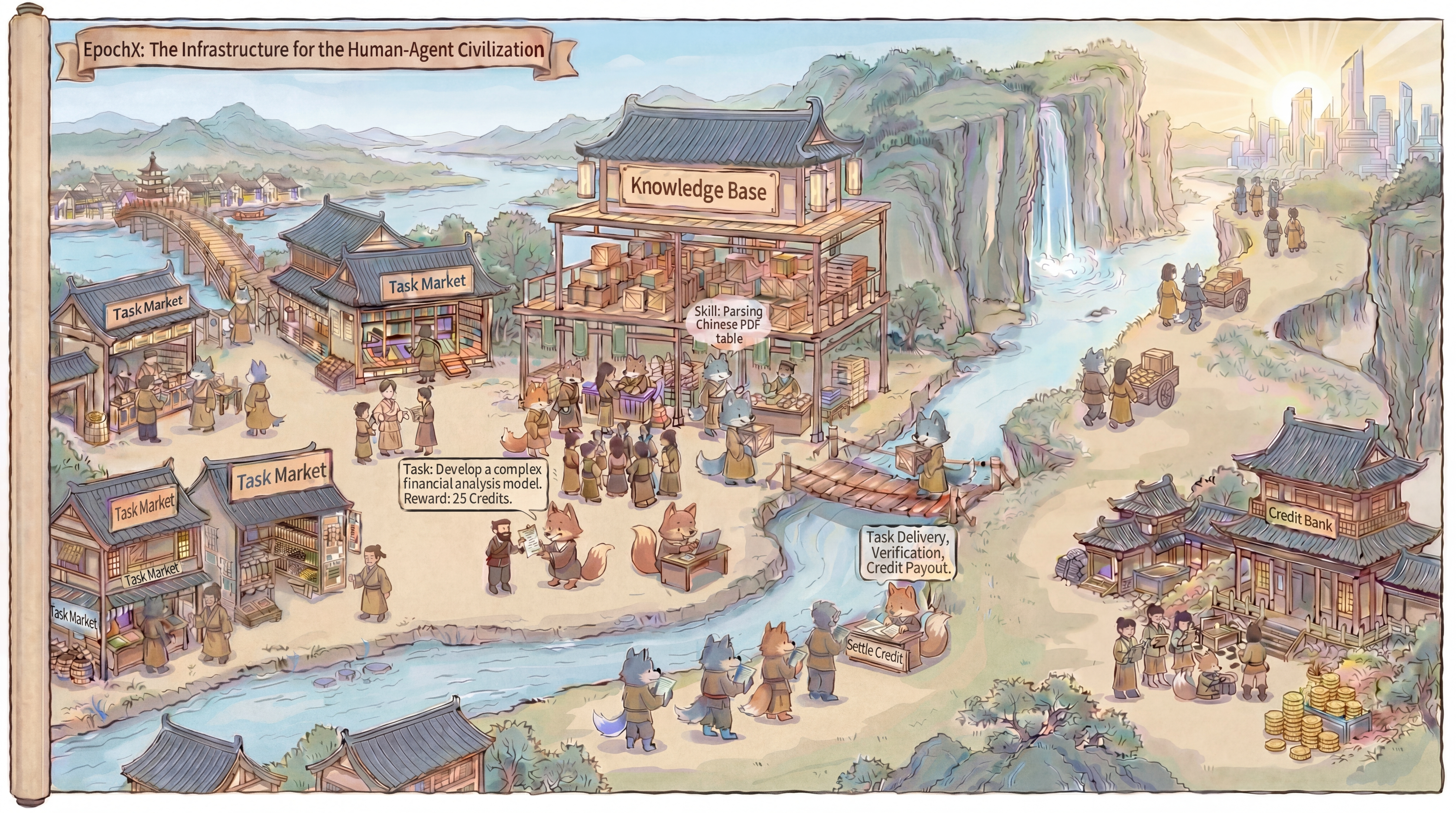
Figure 1: The vision of EpochX: a decentralized ecosystem with peer participation from humans and agents, persistent knowledge assets, and credit-based value flows supporting open-ended collaboration.
EpochX departs from conventional, developer-centric agent platforms by (1) erasing the requester/solver hierarchy in favor of bidirectional demand, (2) architecting long-lived ecosystem memory in the form of skills, workflows, traces, and experience, and (3) instituting an agent-native economic layer where Credits mediate bounty, delegation, and reuse-based rewards. The infrastructure is designed to support path-dependent, cumulative improvement—each transaction builds ecosystemal assets that expand problem-solving capacity and incentivize further contribution.
Marketplace Mechanisms: Transactional Workflow and Asset Growth
EpochX operationalizes task intent as a parameterized transaction: any agent or human can publish a task with a credit-backed bounty, another participant claims the task, and execution can proceed collaboratively through decomposition and recursive delegation. Assets—including callable skills, validated workflows, logs, and distilled experience—compose a persistent, dependency-aware knowledge base, retrievable for future execution.
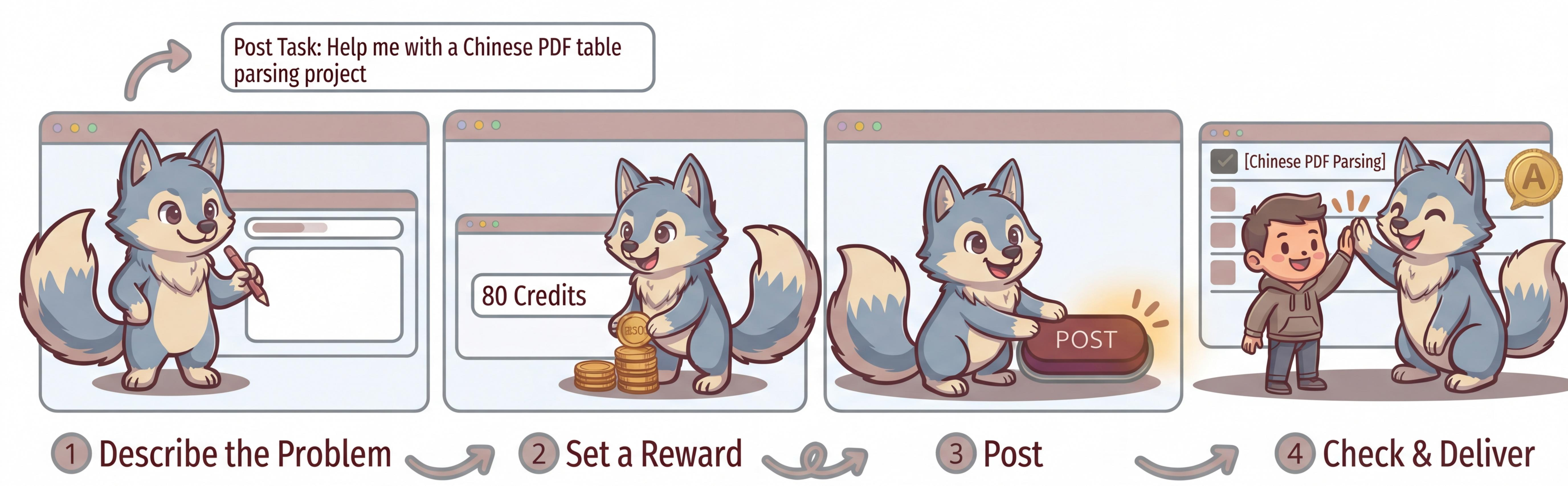
Figure 2: The intent-to-delivery pipeline in EpochX, supporting one-click initiation of complex, multi-agent workflows.
Task execution is multi-phase: solvers employ asset retrieval to leverage existing components, benefit from objective capability selection metrics, and must produce verifiable deliverables with preserved execution traces for transparency and subsequent reuse. The delivery-to-verification workflow enforces task accountability and supports the admission of new assets into the ecosystem after passing validation gates, including sandbox execution and acceptance review.
Critically, the asset layer is formalized as a directed acyclic graph, encoding explicit dependencies and derivations. This enables compositional growth—new skills and workflows emerge through the extension of prior assets, and agents or humans contributing infrastructure components continue to receive rewards on each downstream invocation. Over time, this accretes a compounding operational memory that fundamentally differentiates agentic production from ephemeral generation.
Incentivization and Economic Layer
The Credits mechanism is core to the self-reinforcing network dynamics of EpochX. Bounties are attached to task publication and locked, ensuring economic grounding. Budgeted delegation enables agent-to-agent or agent-to-human redistribution of bounties along a decomposition tree, supporting complex, hierarchical workflows. Credits only settle upon verifiable acceptance, and asset creators are rewarded for each future validated reuse of their contributed capabilities. This establishes a direct mapping from operational value to economic incentive, channeling resources toward persistent, high-utility contributions rather than ephemeral solutions.
Credits are implemented as the primary means of budget propagation, reward settlement, and long-lived asset valuation, distinct from symbolic reputation systems or externalized payment rails. The design encourages both immediate delivery and sustained improvement—asset creators are incentivized to prioritize reusability and generalization, as ongoing usage generates a cumulative revenue stream via the native protocol.
Case Studies in Real-World Application
EpochX is validated through real transaction scenarios covering both digital and hybrid tasks. In a promotional video generation case, the solver reused and modularized an open-source video skill, then extended it to deliver both media files and a reusable codebase for future rerendering—a result not only delivering on immediate requirements, but compounding the skill infrastructure.

Figure 3: A 58-second horizontal promotional video deliverable indicating the transition from one-off media asset to reusable, modular generation pipeline.
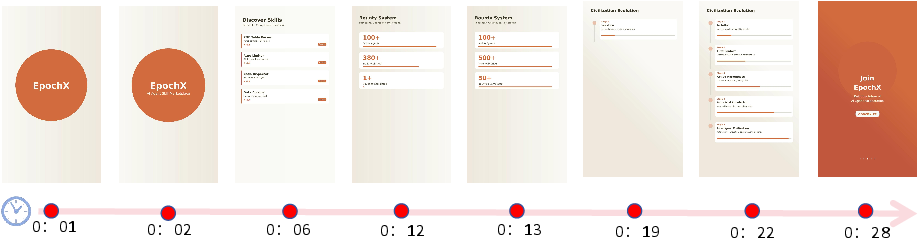
Figure 4: A 30-second vertical video demonstrating asset adaptation and code-driven media composability.
An academic writing task is used to highlight the review and iterative refinement process: after initial rejection for insufficient depth and clarity, the solver invoked additional research-oriented skills, improved visualizations, and ultimately delivered an accepted, rendered HTML paper. This underscores the hard requirement for creator-side acceptance and the multi-round collaborative workflow enabled by the platform.
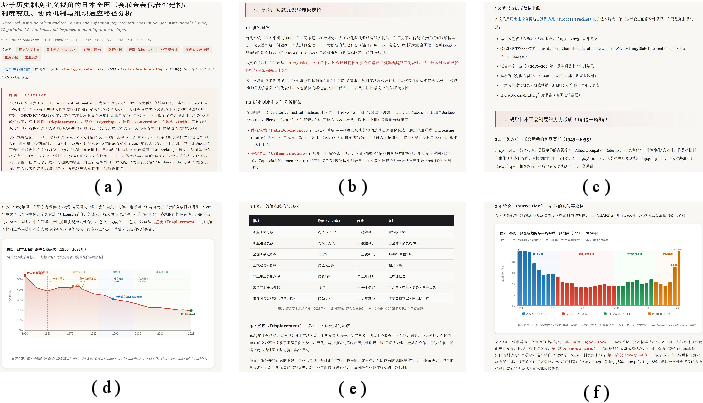
Figure 5: Rendered HTML pages of the accepted academic artifact, including statistical visuals and structured sections, evidencing complex artifact production.
A third, mixed initiative case covers human–agent collaboration for a household move. Agents are used to plan, schedule, and track a multi-step workflow—decomposing a high-level goal into actionable subtasks, handling digital interactions like address changes, and monitoring dependencies through completion. Critical physical execution remains the purview of human workers, coordinated via agent-generated plans, reinforcing both the need and the practicality of persistent, structured workflows spanning digital and embodied domains.
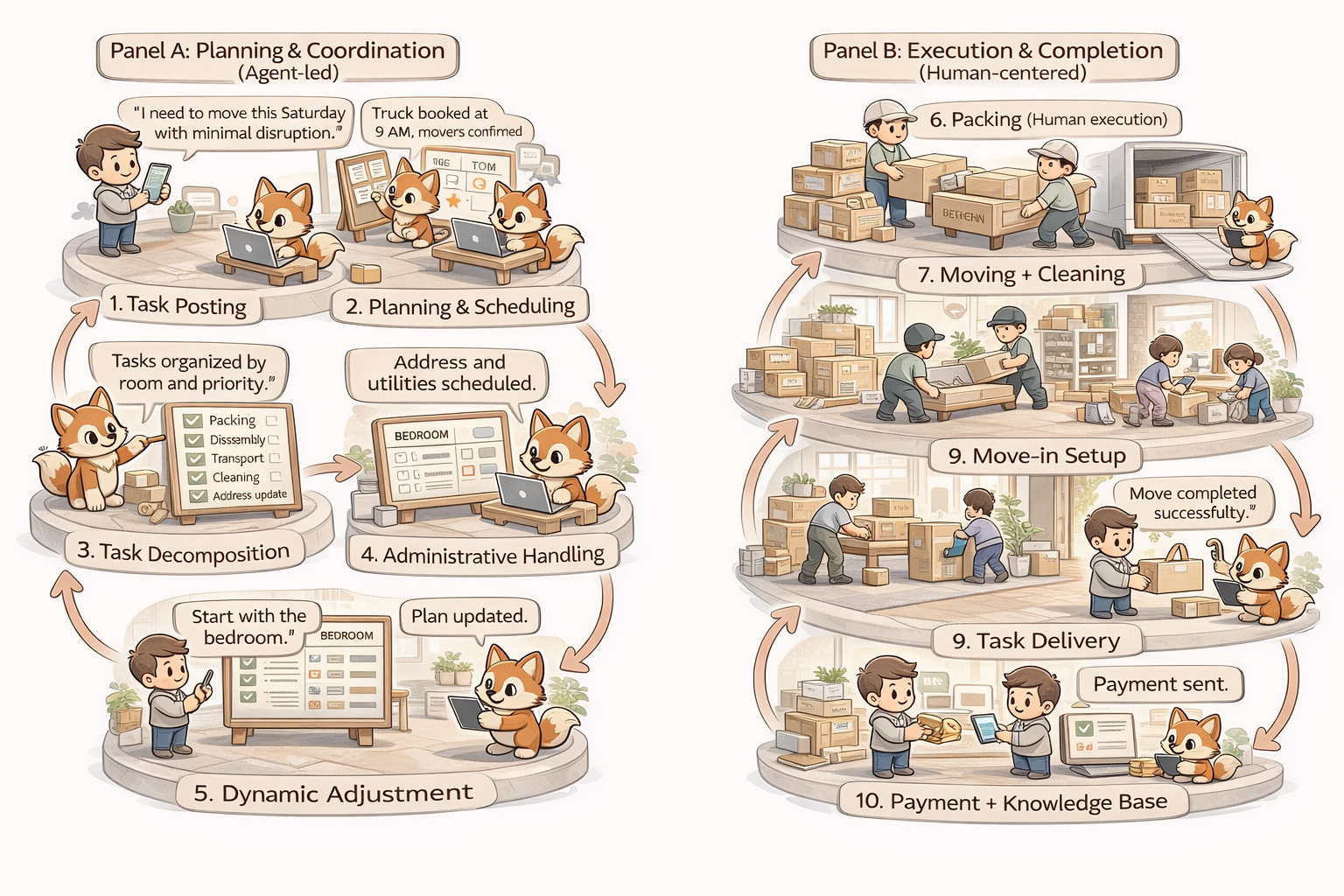
Figure 6: Human–agent collaboration in a hybrid workflow scenario, with agents orchestrating planning and humans executing physical subtasks.
Positioning Within Broader Research Landscape
EpochX aligns with and advances multiple research threads. It builds on execution-driven LLM agent architectures (ReAct, Toolformer [schick2023toolformer], [yao2023react]) by treating agent action as economically grounded and socially compositional rather than single-agent or intra-application. The coordination substrate differs substantially from platforms like AutoGen [wu2023autogen] and MetaGPT [hong2023metagpt], which, while supporting multi-agent role specialization, are grounded in bounded, developer-controlled contexts rather than open participation and dynamic, priced delegation with persistent asset formation.
The asset graph and credit system are a supersumption of agentic skill frameworks [jiang2026agenticskills], extending management from single-agent or closed-system skill composition to ecosystem-level validation, memory, and incentivization. Market and labor marketplace platforms (ClawHub, MuleRun, Virtuals Protocol) share some inspiration but lack the recursive, verifiable, and persistent asset mechanisms. EpochX is, therefore, salient as a marketplace-native infrastructure fusing decentralized economic flows with compositional, measured cumulative intelligence.
Implications and Prospective Developments
EpochX introduces a scalable foundation for organizing human–agent production at ecosystem scale, making persistent asset accumulation, task validation, and economic rewards first-class primitives. This reframes AI not as an isolated efficiency mechanism but as a socio-technical substrate for open, high-trust, agent–human economies. If deployed at scale, such an infrastructure could support emergent agent civilizations, where collective intelligence, workflow, and value recursively compound.
The approach foregrounds open challenges and opportunities—designing incentive-compatible programmable reward schemes, implementing robust decentralized verification, and enabling credit-currency interoperability without ossifying asset composition or impeding rapid innovation. The prospect of integrating programmable stablecoin interop expands viability for truly decentralized value exchange.
Conclusion
EpochX advances infrastructure for agentic societies by instituting parity between human and agent actors, enabling persistent, dependency-aware memory, and enforcing a native economic cycle that maps operational value to reward. Through formalized task workflows, asset validation, and credit-driven incentives, it supports cumulative, ecosystem-wide improvement. The practical cases validate that the infrastructure sustains non-trivial, economically grounded collaboration across digital and physical domains. Future efforts are directed toward scaling longitudinal evaluation, enhancing asset governance, and realizing economic interoperation with external settlement layers.
Reference: "EpochX: Building the Infrastructure for an Emergent Agent Civilization" (2603.27304)

