Self-Improving Pretraining: Breaking the Quality Ceiling
This presentation explores a revolutionary approach to language model pretraining that embeds safety, factuality, and quality improvements directly into the training process. Instead of relying solely on post-training alignment, the authors demonstrate how to use strong post-trained models as teachers and judges during pretraining itself, achieving substantial improvements in generation quality, safety, and factual accuracy while maintaining standard pretraining benchmarks.Script
What if we could teach language models to generate safe, factual, and high-quality text from the very beginning, rather than trying to fix bad behaviors after pretraining is complete? Standard pretraining bakes in low-quality and unsafe behaviors that are notoriously difficult to correct later, but this work shows us there's a better way.
The core challenge here is that traditional pretraining learns from whatever text it encounters, including problematic content. Even sophisticated post-training techniques struggle because they're fighting against deeply ingrained patterns learned during the massive pretraining phase.
So the authors asked a fundamental question: what if we could improve quality during pretraining itself?
Instead of just learning to predict the next token from raw data, they introduce a teacher-student framework. Strong models act as both rewriters to create better training targets and judges to score different candidate continuations.
A key insight is moving from next-token prediction to sequence prediction. By generating 128-token chunks at a time, the model learns to plan more coherent continuations rather than just predicting one token ahead.
Let me walk you through exactly how this training process unfolds.
For each training example, they create multiple candidate continuations. Early in training, the judge typically selects the teacher rewrites since the policy model is still learning, but as training progresses, the policy's own rollouts increasingly get selected.
The teacher model plays a dual role throughout training. As a rewriter, it creates better versions of problematic text while maintaining the context flow, and as a judge, it provides the reward signals that guide the policy model toward generating high-quality content directly.
They use online Direct Preference Optimization to train on these judge-ranked candidates. The beauty of DPO is that it can learn from any continuation, whether generated by the current model or the teacher, creating a smooth learning progression.
Now let's look at how they validated this approach across different quality dimensions.
They designed separate experiments targeting each quality dimension, using specialized teacher models and evaluation suites. Each experiment used different judge training approaches tailored to the specific quality being optimized.
Their evaluation is comprehensive, covering both generation quality through pairwise comparisons and standard pretraining benchmarks to ensure they don't sacrifice general capabilities. They also used specialized benchmarks for safety and factuality assessment.
The results demonstrate substantial improvements across all three quality dimensions.
The quality improvements are striking, with win rates approaching 90 percent against standard next-token pretraining baselines. Importantly, these gains come without sacrificing performance on traditional language modeling benchmarks.
The safety and factuality results are equally impressive, showing that the approach can significantly reduce both toxic content generation and hallucinations. These are precisely the kinds of improvements that are difficult to achieve through post-training alone.
One fascinating finding is how the training dynamics evolve. The system naturally transitions from relying on teacher guidance to producing high-quality content independently, suggesting the model internalizes the quality criteria rather than just mimicking examples.
Several important insights emerge from their ablation studies and analysis.
The ablations reveal that the preference learning aspect is crucial - simple supervised learning on rewrites doesn't achieve the same gains. They also found that computational investment in more rollouts and stronger judges pays off significantly.
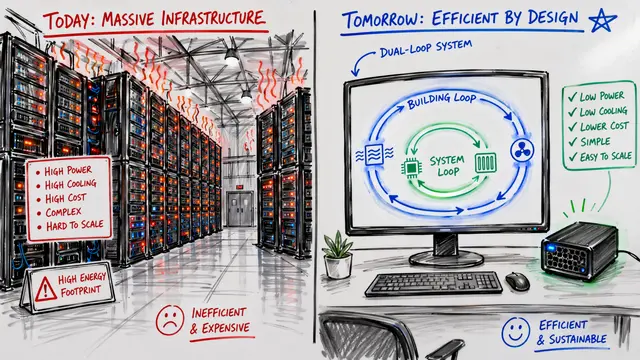
The approach does come with trade-offs, particularly in computational efficiency. The authors acknowledge that generating multiple candidates and running comprehensive judgments makes training slower than traditional pretraining, though they argue the quality gains justify the cost.
The authors outline several promising research directions, including joint optimization across quality dimensions and extending the framework to more complex skills like reasoning. The efficiency challenge remains an active area for improvement.
This work fundamentally challenges how we think about language model training by showing that quality, safety, and factuality don't have to be afterthoughts - they can be built in from the ground up. The results suggest we're entering an era where the distinction between pretraining and alignment may blur entirely. For more cutting-edge AI research breakdowns like this, visit EmergentMind.com to stay at the forefront of the field.