Harmonic Maps into Principal Bundles and Generalized Magnetic Maps
This presentation explores a geometric framework that connects harmonic mappings, principal bundles, and the physics of particles moving under magnetic forces. By studying Kaluza-Klein harmonic maps, the authors reveal a profound connection between differential geometry and generalized Lorentz forces, extending classical theories into higher dimensions with implications for string theory and particle physics.Script
When a particle moves through a magnetic field, its path curves according to the Lorentz force. But what if we could describe that same physics through pure geometry, by treating the particle's trajectory as a harmonic map into a specially constructed space?
The authors merge three powerful ideas. Kaluza-Klein theory, which explains forces through extra dimensions, harmonic maps that minimize energy, and principal bundles that encode the geometry of gauge fields. Together, these form a new language for magnetic interactions.
How exactly do you build a geometry where harmonic maps become magnetic trajectories?
Start with a base manifold, add a principal connection to define how fibers twist, and include a fiber metric. The Kaluza-Klein metric weaves these together into a single geometric structure where harmonic maps naturally project down to curves obeying generalized Lorentz equations.
The key insight lies in decomposing the tension field. When a map is harmonic, both its vertical and horizontal tensions vanish. This produces two coupled equations: the Wong equation governing motion in the fiber, and the generalized Lorentz force describing the projected path on the base manifold.
What does this geometric machinery actually describe?
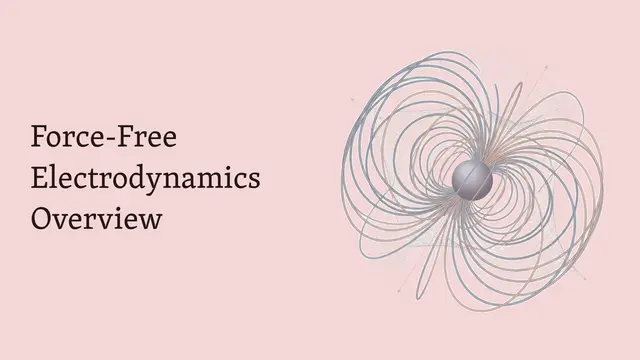
A particle moving freely would follow a geodesic, the straightest possible path. Add a gauge field, and it becomes a magnetic curve, constantly deflected perpendicular to its motion. The authors show this emerges naturally from harmonic map theory, and the framework extends to arbitrary dimensions.
This geometric approach elegantly unifies physics and mathematics, offering variational principles that extend to string theory. But global solutions demand navigating topological constraints, and the framework's richness comes with computational complexity that can limit practical applications.
The profound shift is this: what we experience as magnetic force is actually the projection of motion trying to be straight in a higher-dimensional space. Gauge fields aren't external pushes but intrinsic twists in the geometry itself, visible only when we look at the shadow cast by harmonic maps onto our familiar dimensions.
Geometry and physics speak the same language, and harmonic maps into principal bundles reveal that magnetic forces are really just particles trying to travel straight through a curved, hidden landscape. Visit EmergentMind.com to explore more research and create your own presentation videos.