- The paper demonstrates a novel training algorithm that integrates Gibbs sampling with backpropagation for scalable thermodynamic AI.
- It offloads over 99.99% of FLOPs to thermodynamic blocks, achieving near feed-forward performance on image classification benchmarks.
- It provides detailed error analysis and power-law convergence theory, offering actionable insights for hardware-efficient design.
Overview and Motivation
"Scaling Up Thermodynamic AI Models" (2607.00170) addresses the scalability bottlenecks that have traditionally limited Ising-based thermodynamic computing in neural inference tasks, particularly in image classification benchmarks. Rather than relying on exact deterministic computation typical in GPU hardware, the paper advocates for a stochastic paradigm where error-tolerant, energy-efficient hardware—modeled as high-temperature Ising systems—performs the bulk of computation via Gibbs sampling. The central research contribution is the development of a generalized, backpropagation-compatible training algorithm that allows deep convolutional architectures to be deployed efficiently on such thermodynamic substrates, bringing them to parity with modern feed-forward neural inference in terms of task performance.
Thermodynamic Block Architecture and Hardware Implementation
The proposed architecture decomposes models into classical encoders/decoders and a sequence of “thermodynamic blocks” designed for direct Ising machine deployment. Each block comprises three convolutional layers tied together with careful parameterization to map onto sparse, bidirectionally coupled Ising spin networks.
Classical computation is reserved for lightweight pre-processing and output decoding, while the dense activation computation—over 99.99% of FLOPs in large models—is offloaded to thermodynamic inference blocks.
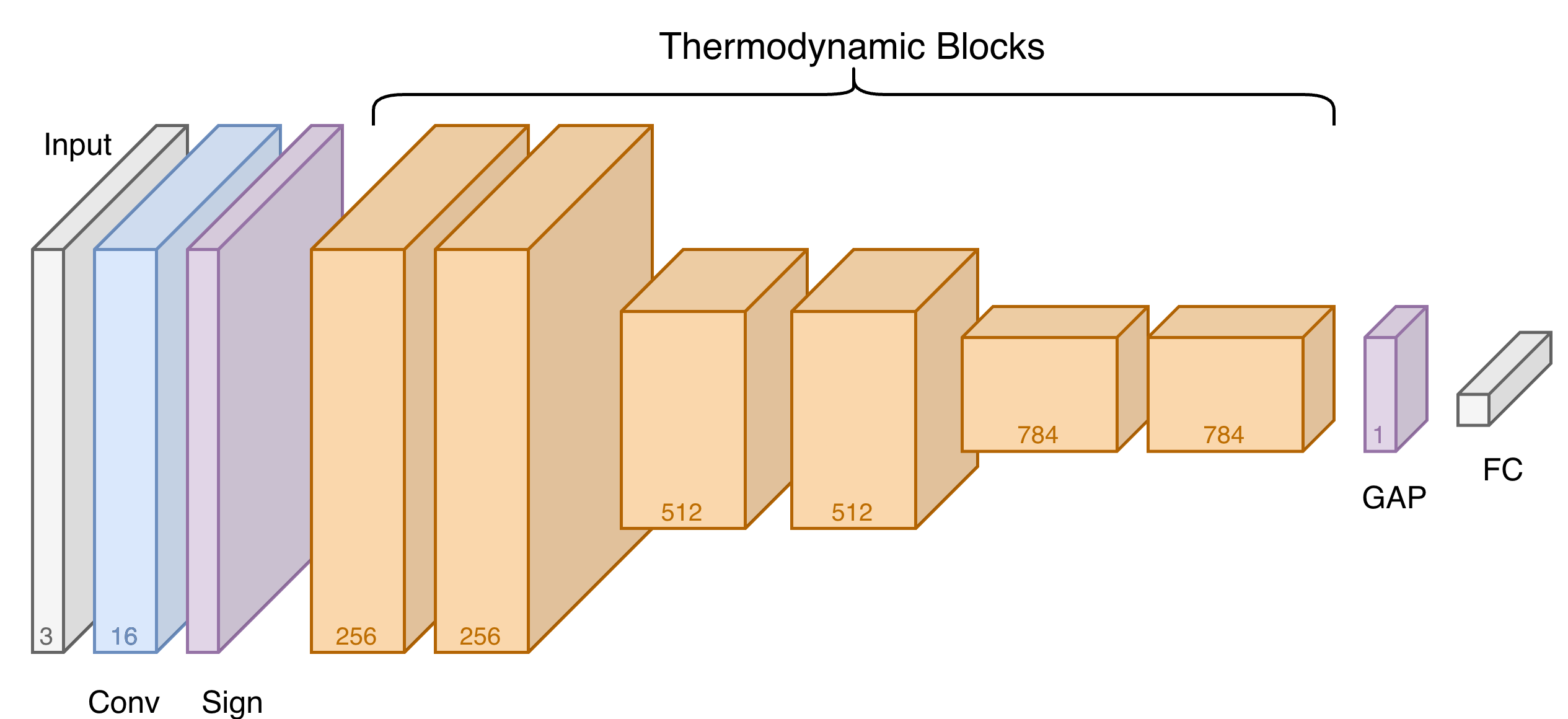
Figure 1: Structure of a CIFAR-10 classifier with a classical encoder/decoder wrapped around six thermodynamic blocks, each internally composed of three convolutional layers.
This design is hardware-motivated: binary inter-block communication aligns with the constraints of p-bit, spintronic, or optical Ising substrates; the use of sign activations enforces compatibility with digital or analog binary interfaces; and energy function mappings respect the topology and precision constraints of near-future thermodynamic hardware.
Training Algorithms and Gibbs Regularization
To make deep models robust to stochastic, non-equilibrium Ising dynamics, the paper introduces a sophisticated four-phase training protocol:
- Continuous pretraining: Standard deep residual convolutional networks are used to generate a strong teacher with bounded activations.
- Conversion to Ising-compatible blocks: Activations are algebraically manipulated and folded to facilitate later binarization.
- Straight-through estimation (STE): Binary inter-block communication is established using a stochastic surrogate gradient, preparing the network for blockwise Ising operation.
- Gibbs Regularization: The core innovation, augmenting standard cross-entropy and knowledge distillation with two key regularizers:
- Fixed-Point Loss: Encourages block outputs to be stable fixed points under the high-temperature Gibbs sampling used in hardware deployment. This loss is constructed by contrasting feed-forward outputs with the consensus of short-run Gibbs trajectories, adjusted for backward coupling.
- Magnitude Regularization: Penalizes both small and excessively large pre-activations to avoid slow convergence and gradient vanishing, ensuring robust statistical behavior across the thermodynamic ensemble.
Comprehensive training curricula (e.g., ramping backward coupling, sweep counts, and regularization weights) are deployed to prevent instability and enforce convergence during adaptation.
Theoretical Characterization of Inference Cost and Error
The paper offers an analytical theory quantifying the tradeoff between inference cost (number of Gibbs sweeps G per block) and prediction accuracy, crucial for energy-constrained hardware deployment.
Detailed integral analysis, with closed-form solutions for the low-δ regime, permits direct calculation of expected error rates at any G and δ, revealing a predictable power-law convergence to the feed-forward fixed point.
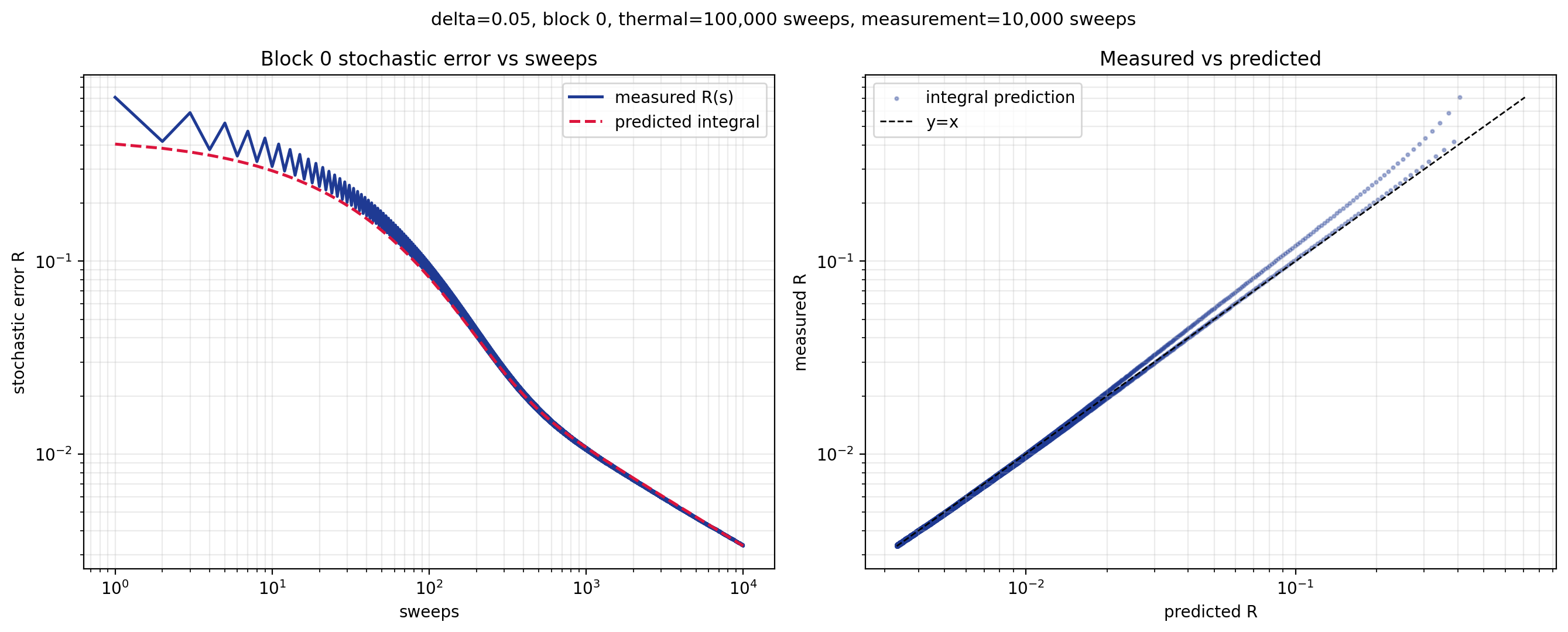
Figure 3: Measured stochastic error rates closely match numerical integral predictions for blockwise Gibbs chain convergence, except for minor oscillations from red-black sampling.
Convergence analysis is reinforced by a linearization of the red-black Gibbs sampler: dominant mode eigenvalues serve as upper bounds on the integrated autocorrelation time τ, which remains close to unity for practically relevant δ0, so error scaling is driven entirely by the distribution of small-mean spins.
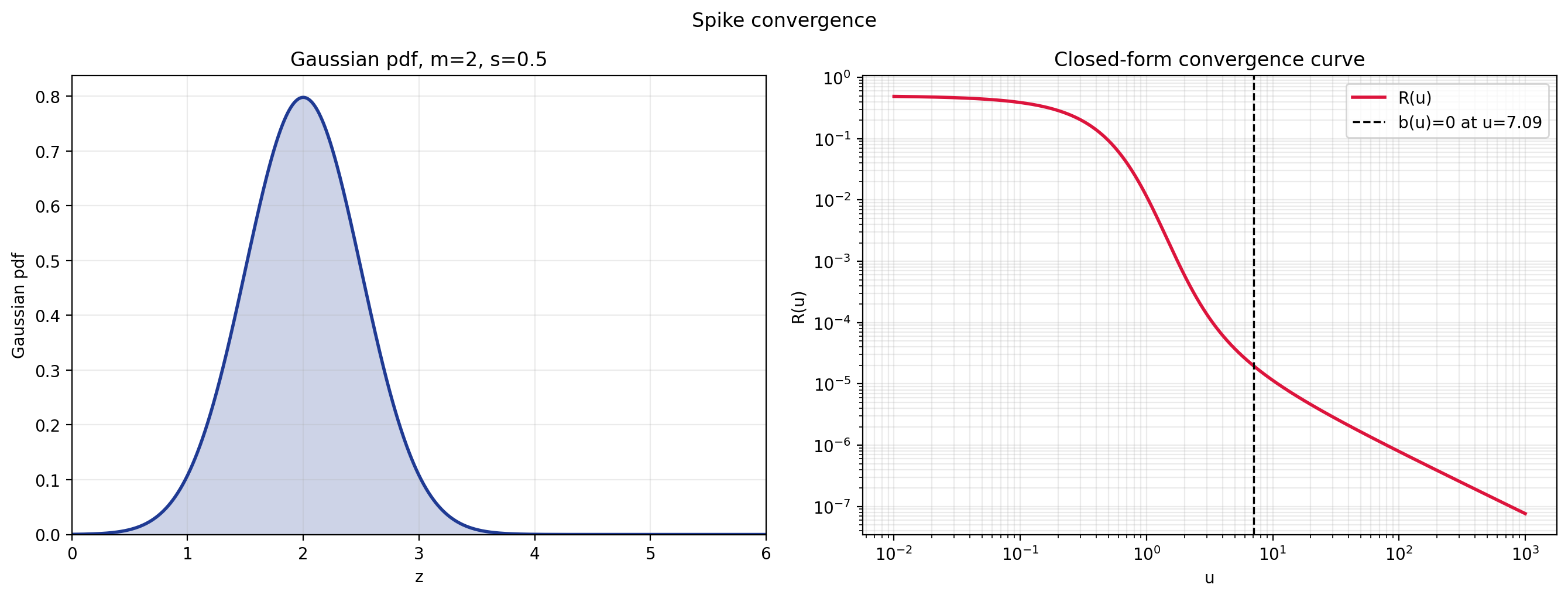
Figure 4: Theoretical depiction of convergence rate for an isolated Gaussian spike, showing power-law scaling onset as a function of sweep count and activation magnitude.
Empirical Results and Hyperparameter Tradeoffs
Experimental validation on CIFAR-10 and CIFAR-100 demonstrates that deep, mostly thermodynamic inference models trained with this protocol can reach high accuracy—within 0.2% of their feed-forward baselines given adequate sweeps and low enough δ1. For instance, 94.9% on CIFAR-10 and 76% on CIFAR-100 under Ising Gibbs inference, with up to 99.99% of FLOPs offloaded from classical to thermodynamic computation.
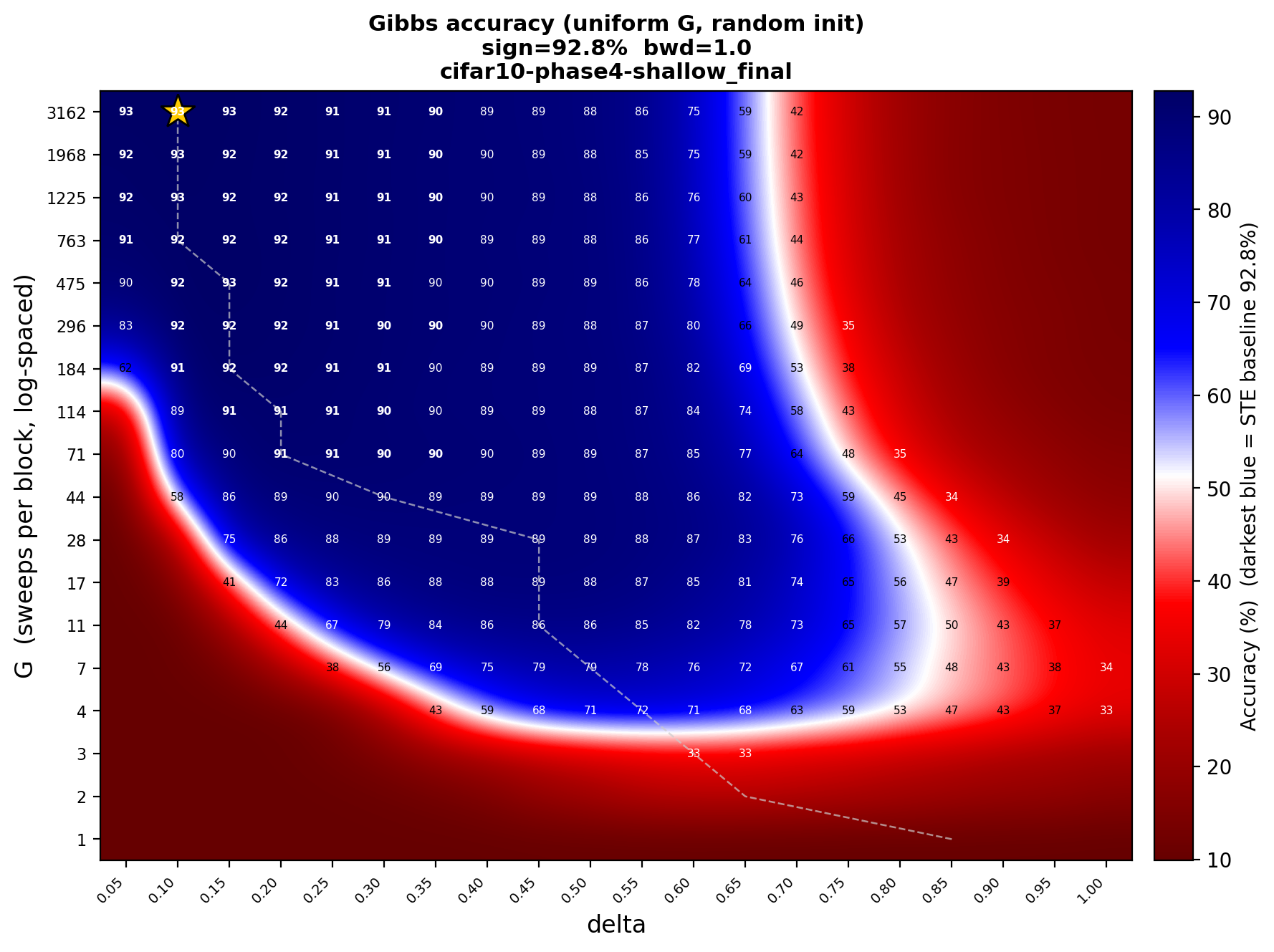
Figure 5: Heatmap shows accuracy on a δ2 grid for uniform sweep allocation, highlighting the tradeoff ridge and performance collapse for poor hyperparameter settings.
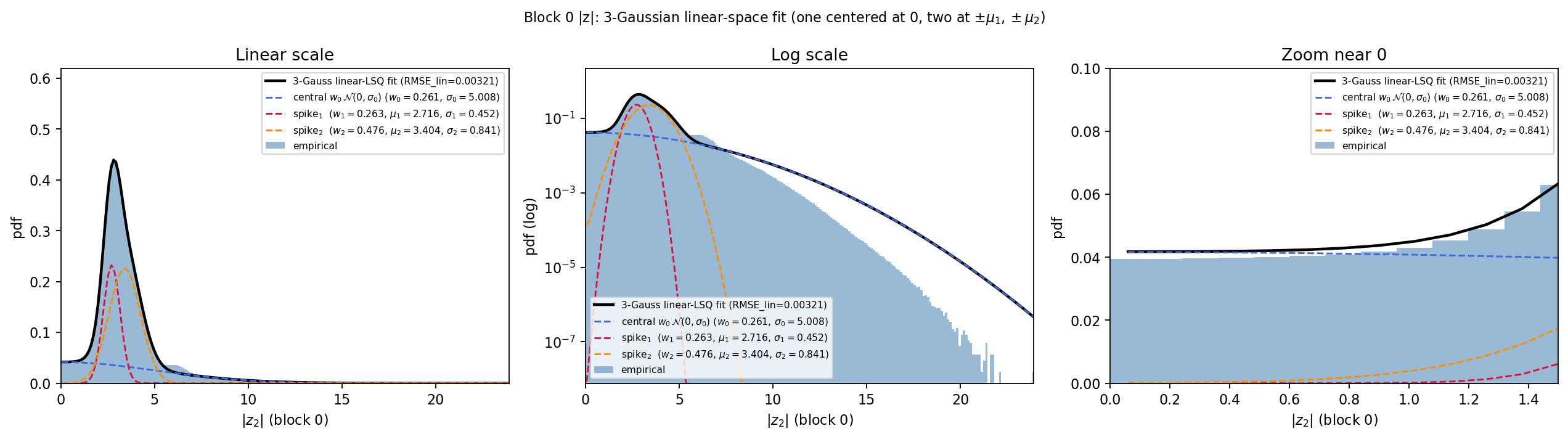
Extensive theoretical and empirical analyses—including Gaussian mixture fits for activation statistics, power-law fits for thermal error variance, and adaptive sweep allocation—enable practitioners to optimize inference schedules for desired accuracy-cost tradeoffs.
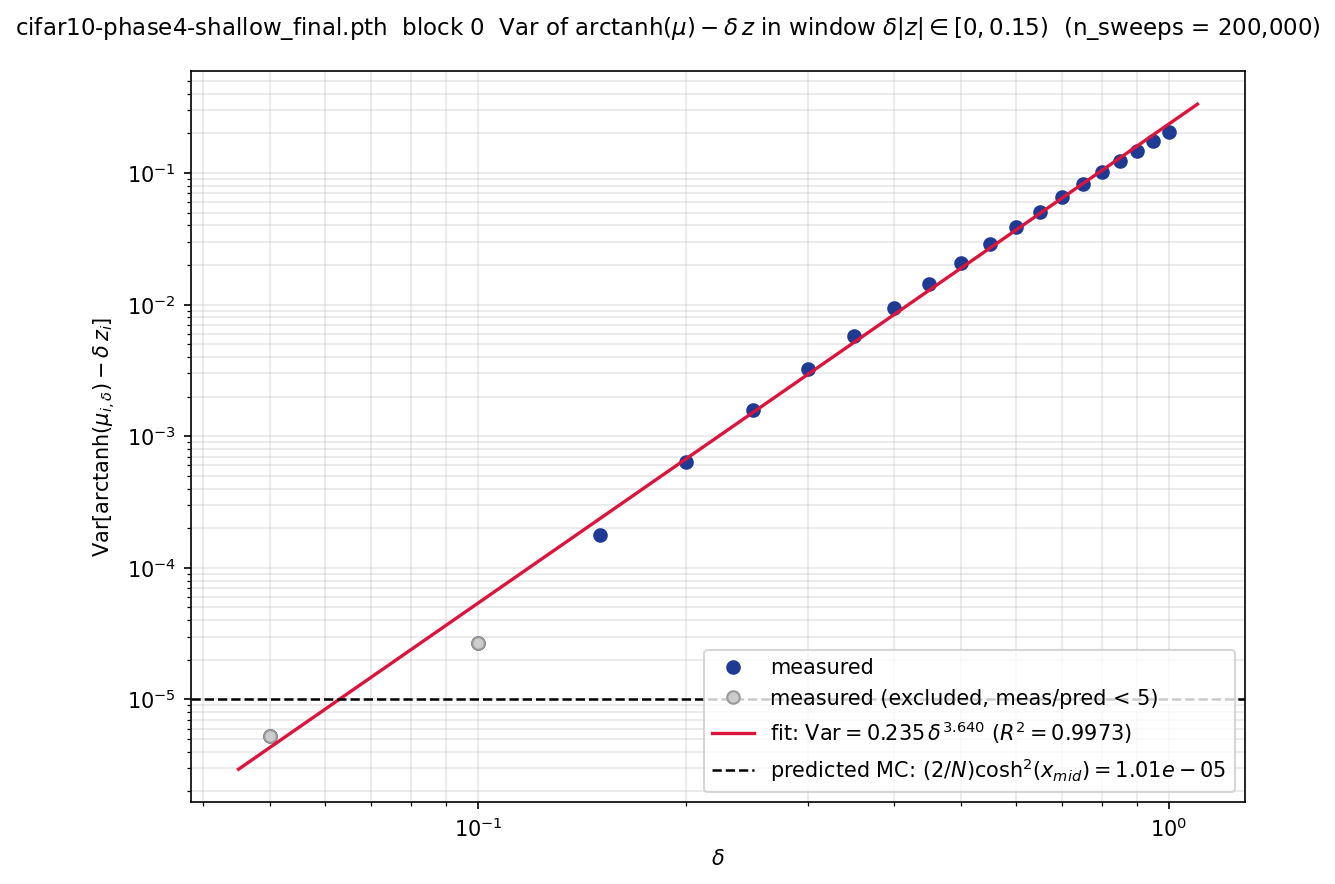
Figure 6: Variance of per-spin thermal perturbation across δ3, cleanly following a power-law fit.
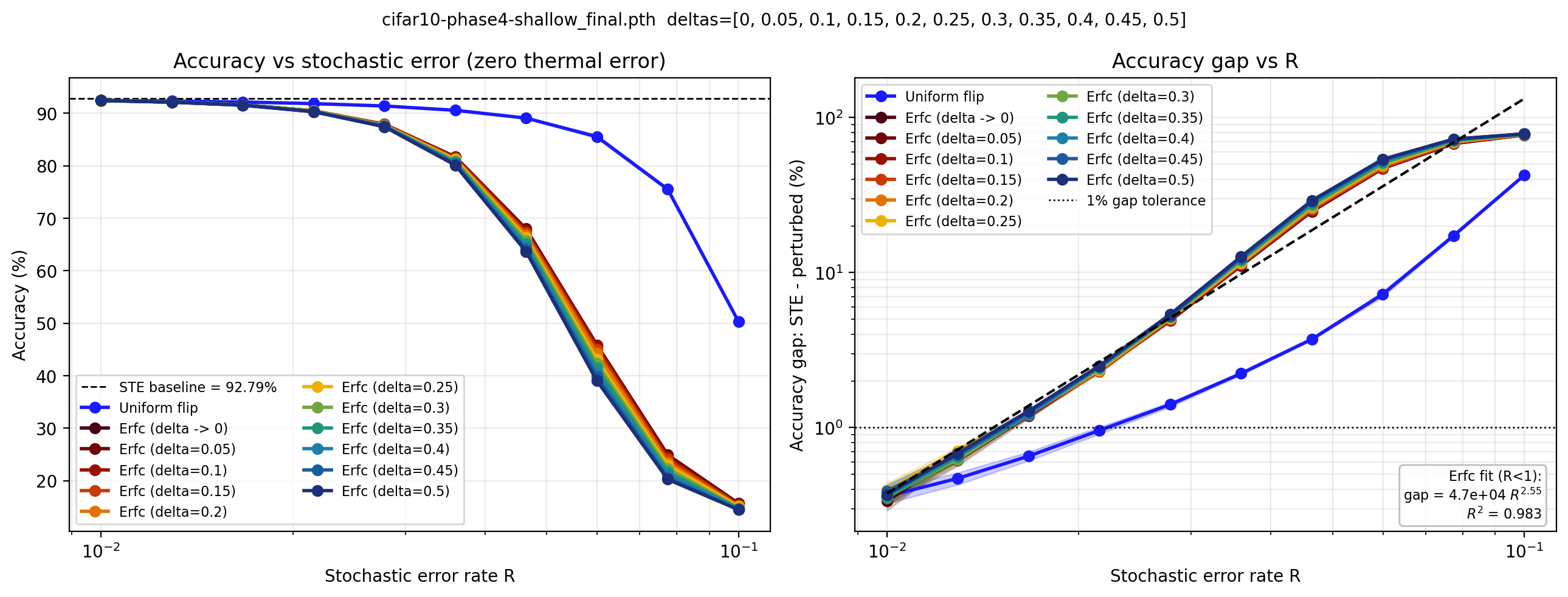
Figure 7: Direct relationship between synthetically injected stochastic error (at zero thermal error) and classifier accuracy is also power-law governed.
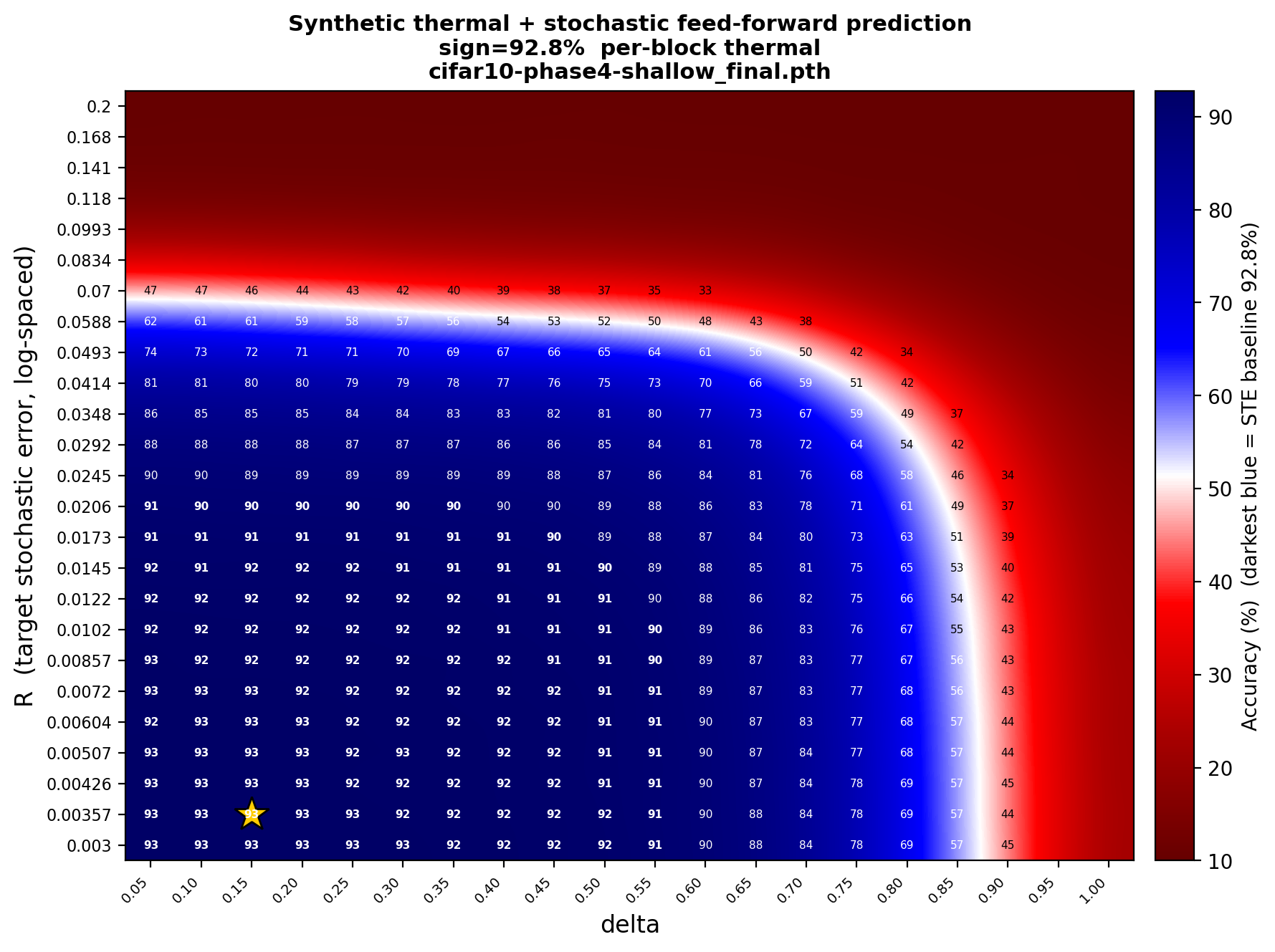
Figure 8: Theoretical prediction for classifier accuracy as a function of block error rate δ4 and thermal parameter δ5, supporting efficient schedule design.
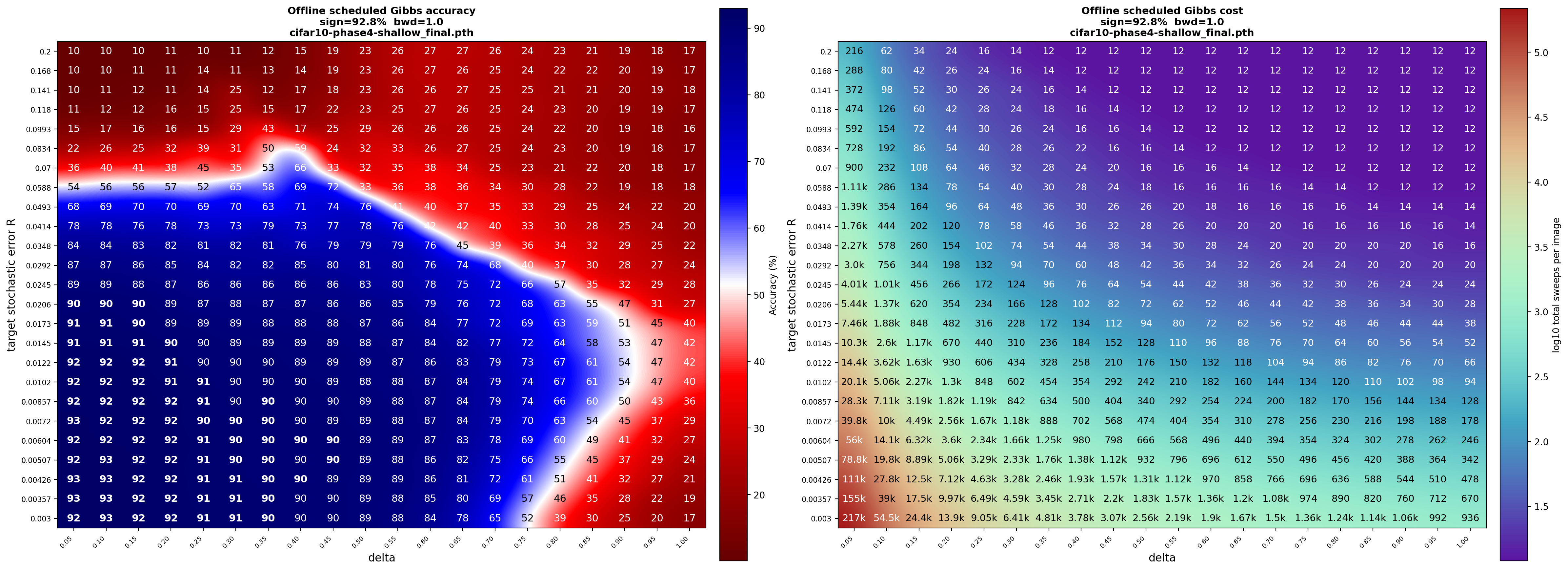
Figure 9: Experimental accuracy (left) and total sweep cost (right) for varying δ6 and δ7 with schedules from the analytic theory.
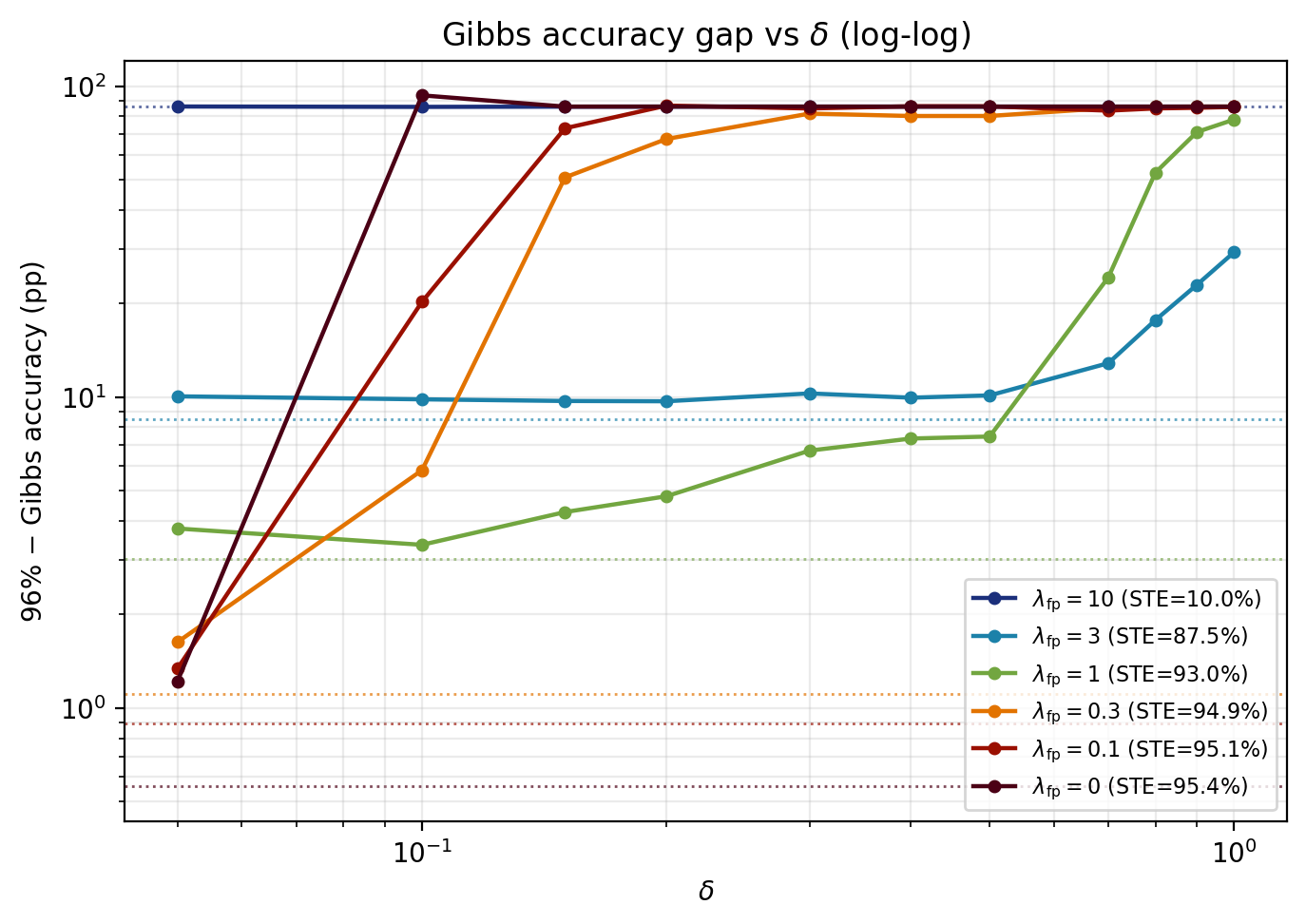
Figure 10: Log-scaled error rates versus δ8 for varying Gibbs regularization, illustrating the resilience-accuracy tradeoff.
Hardware Constraints, Implications, and Future Prospects
The theoretical and empirical results demonstrate that backprop-trained, blockwise Ising-compatible convolutional models are viable for current and near-future thermodynamic hardware—provided that key hardware features (e.g., convolutional topology support, native time-averaging, input spin fixing, quantized/sparse coupling matrices) are implemented.
The authors show that even aggressive post-training sparsification and quantization (e.g., Wanda with 7-bit weights, 80% sparsity) is tolerated, with performance degradation analogous to classical models. A key implication is that future devices should directly accommodate convolutional topologies and hardware-accelerate the sign of the time average readout, rather than enforcing annealing or single-sample regimes.
Ising hardware diversity—encompassing superconducting, digital/CMOS, bifurcation machines, coherent optical, and probabilistic-bit systems—remains a practical deployment challenge, requiring co-design and adaptation of the presented methods to fit device-specific constraints.
Theoretical and Practical Implications
The paper bridges a critical gap in scalable thermodynamic AI by providing:
- A robust, backprop-compatible pathway for training deep stochastic inference models against the dynamics of realistic Ising hardware.
- Sharply predictive theory for balancing sweep cost, error rate, and hardware constraints, underpinned by strong empirical results.
- Quantification of FLOP-offloading potential, with most computation performed thermodynamically, thus offering a credible path to ultra-low-power edge AI.
This work positions thermodynamic AI as not only algorithmically but also practically scalable, and charts a course for future research in specialized device codesign, advanced quantization/sparsification techniques, and applications to non-image-modalities or more complex tasks with similar thermodynamic block patterns.
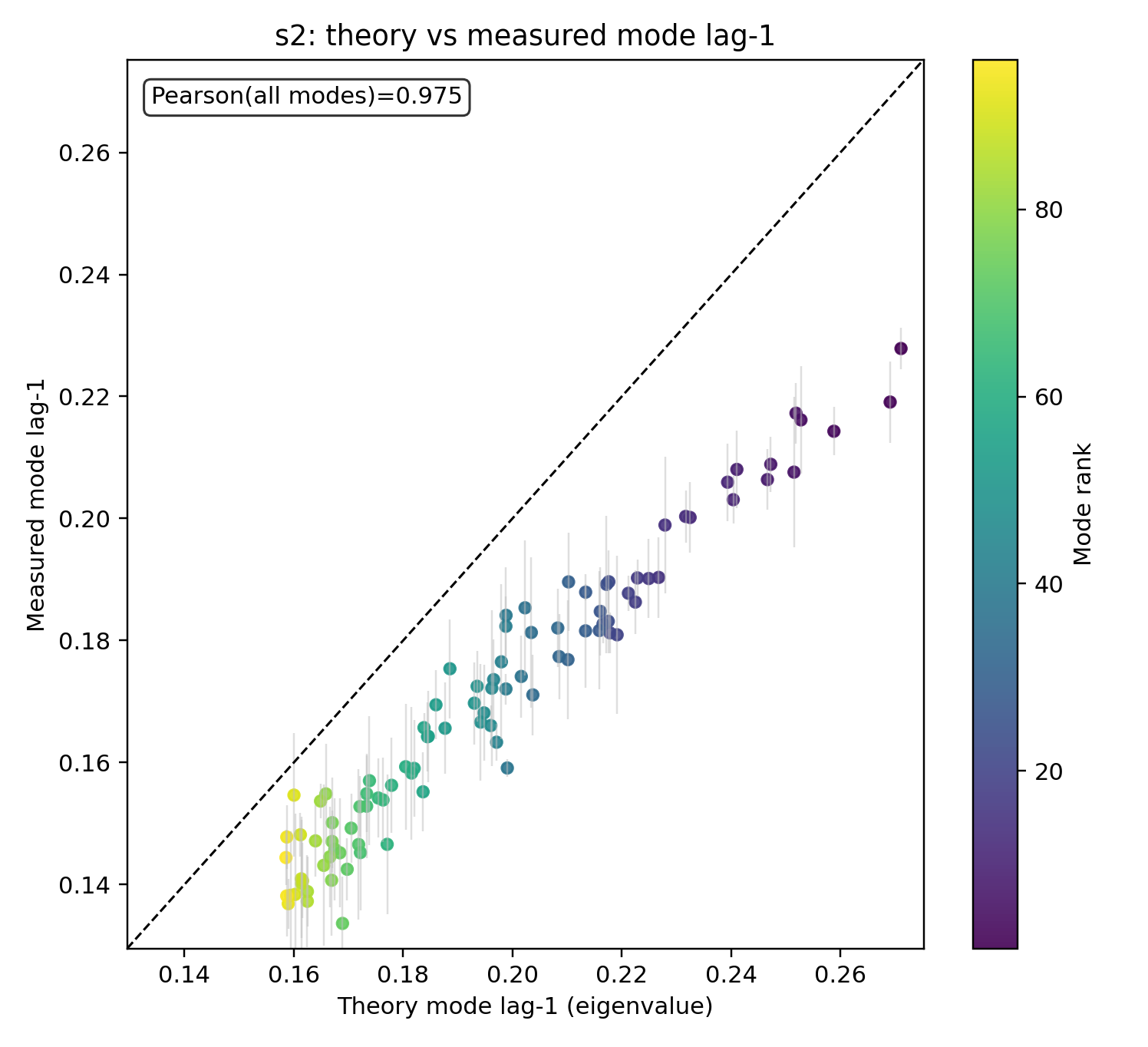
Figure 11: Theoretical vs. empirical lag-1 autocorrelations for dominant eigenmodes, indicating that linearized mode theory accurately predicts persistent dynamics in red-black Gibbs sampling.
Conclusion
"Scaling Up Thermodynamic AI Models" offers a unified formal and practical framework for deploying deep convolutional networks on high-temperature, energy-efficient Ising-type hardware. Its theoretical contributions facilitate precise cost-performance planning, and its empirical results confirm the feasibility of this approach for modern deep learning benchmarks. With appropriate adaptations for device-specific constraints, this methodology may underpin next-generation, ultra-efficient AI inference systems for edge and embedded applications, and provides a strong foundation for further hardware-software co-evolution in thermodynamic computation.