- The paper presents GourNet, a purpose-built CNN that achieves 97% classification accuracy in mango leaf disease detection.
- It utilizes a streamlined architecture with only 683,656 parameters, outperforming larger models like LeafNet, AlexNet, and VGG16.
- Leveraging the MangoLeafBD dataset and augmentation techniques, the model demonstrates rapid convergence and practical deployment potential in precision agriculture.
GourNet: A CNN-Based Model for Mango Leaf Disease Detection
Introduction and Motivation
The paper presents GourNet, a purpose-built CNN architecture for mango leaf disease detection leveraging the MangoLeafBD dataset. The proliferation of disease in mango leaves, induced by fungal, bacterial, or viral pathogens, necessitates accurate, early-stage diagnosis to sustain high crop productivity and mitigate economic losses. Conventional human-centric diagnosis is notably inefficient, particularly at scale. Deep learning-powered computer vision pipelines, specifically CNNs, have emerged as an indispensable tool for this task, automating feature extraction and classification while eliminating subjective bias and manual feature engineering.
CNN Architecture Fundamentals
CNNs have demonstrated superior performance in image-based tasks due to their hierarchical feature extraction mechanism—low-level spatial patterns such as edges are detected in initial layers; mid-level features and high-level abstractions emerge in deeper layers. GourNet utilizes these architectural elements to learn discriminative patterns in mango leaf images and classify diseases precisely.
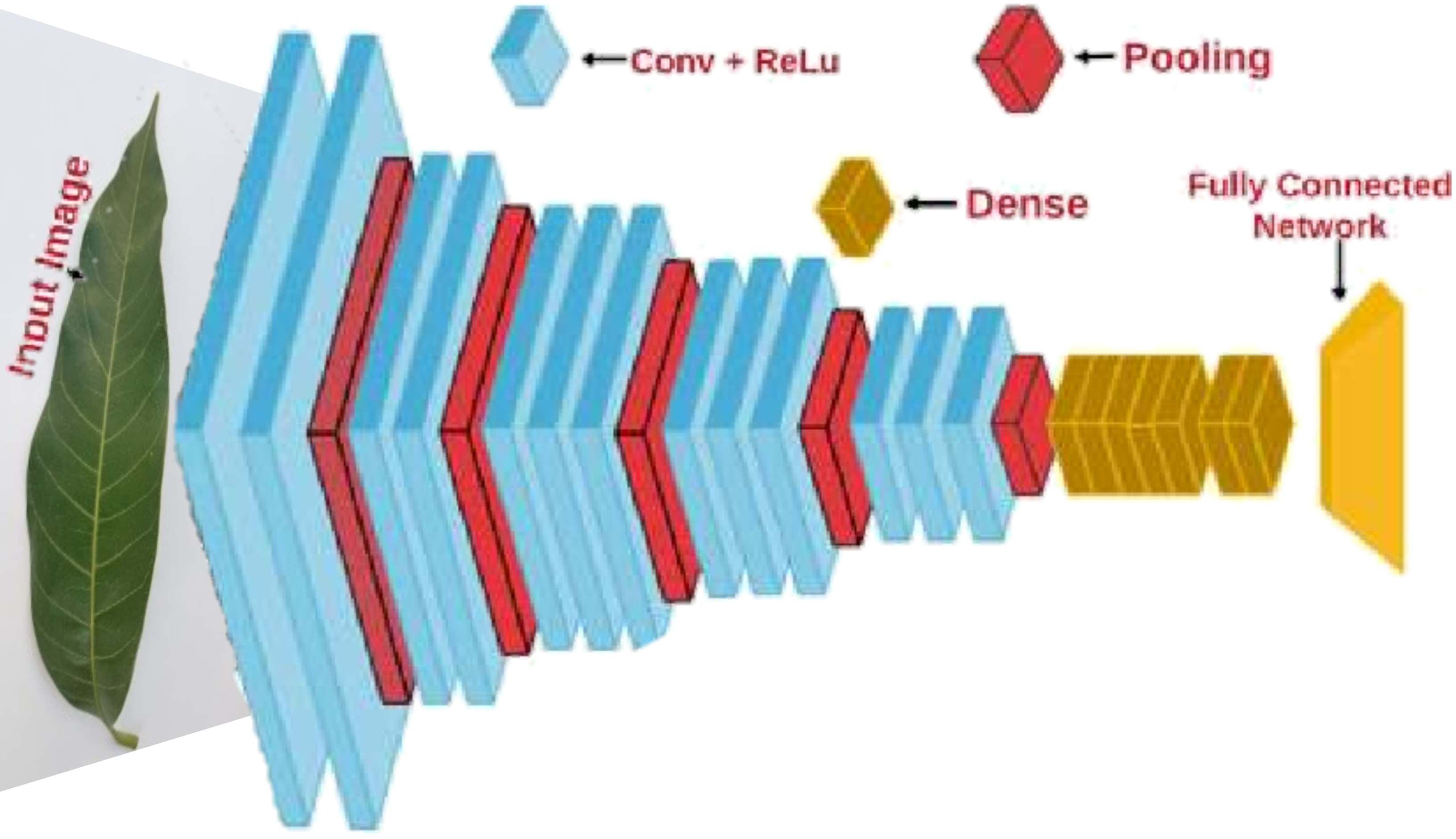
Figure 1: Structural Overview of a typical CNN Model.
The GourNet design deploys sequential 2D convolutional layers combined with ReLU activations and max pooling. These layers capture fine-grained spatial cues relevant to disease manifestation. The convolutional block output is flattened and processed in fully connected layers, culminating in a softmax classifier, which outputs categorical probabilities aligned with the eight disease/healthy classes.
Dataset Characteristics
The MangoLeafBD dataset is an annotated collection of 4,000 RGB images spanning eight classes—seven disease phenotypes and a healthy reference class. Each category contains 500 images (with Bacterial Canker having 501). The disease classes encompass Anthracnose, Bacterial Canker, Cutting Weevil, Dieback, Gall Midge, Sooty Mould, and Powdery Mildew, each exhibiting clinically relevant symptoms such as leaf spots, lesions, galls, or mildew.
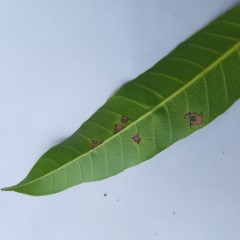
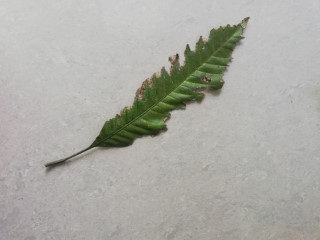
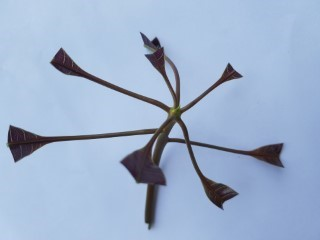
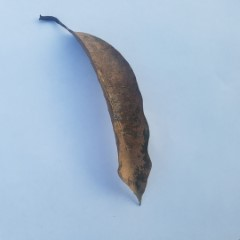
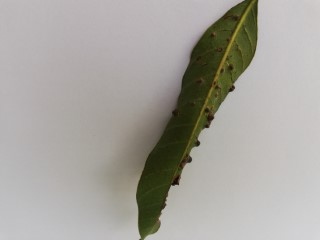
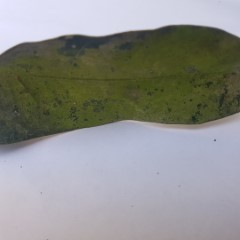
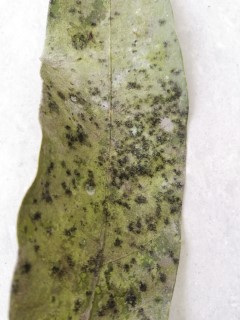
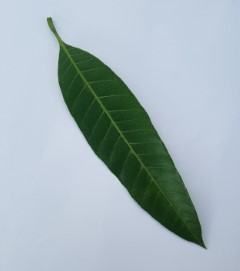
Figure 2: Representative sample image from ``Anthracnose'' class.
Training, validation, and testing splits were maintained at 80/10/10, following standard practice. Images undergo normalization to [0,1], resizing to 224×224, and augmentation via random flipping and rotation to foster robustness and combat dataset bias.
Methodological Workflow
The GourNet pipeline is structured as follows:
- Data Preprocessing: Standardization and augmentation prepare images for model input, improving generalization.
- Model Construction: The architecture—detailed in layer-wise schematic—employs minimal parameterization (683,656 total parameters) relative to prior works such as LeafNet (~3.26M parameters) and canonical architectures like VGG16.
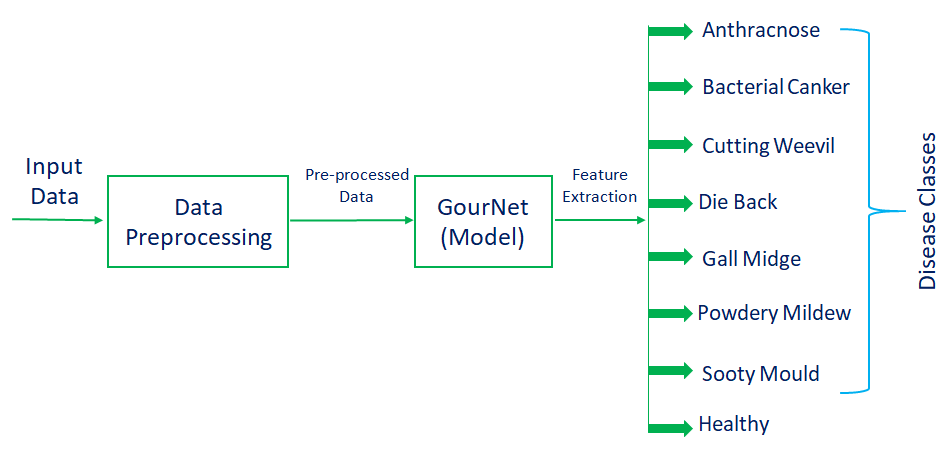
Figure 3: Workflow of the proposed approach.
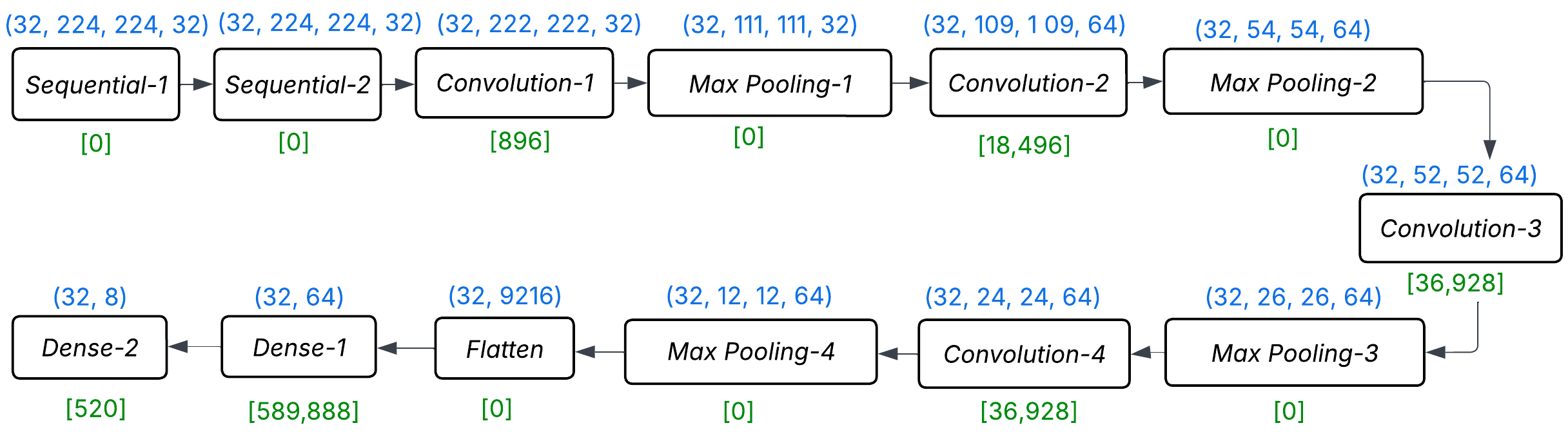
Figure 4: Layer-wise structure of the GourNet model with output shapes and number of parameters.
- Classification: The model assigns a probabilistic label via softmax to each input image.
The Adam optimizer is employed, optimizing sparse categorical cross-entropy loss. Early stopping is integrated to avoid overfitting, guided by validation loss monitoring.
Experimental Results
Training was performed over 50 epochs, batch size of 32, learning rate 0.001, and enabled early stopping. The computational environment comprised a mainstream laptop CPU and 8GB RAM, confirming the model's feasible deployment outside high-end compute clusters.
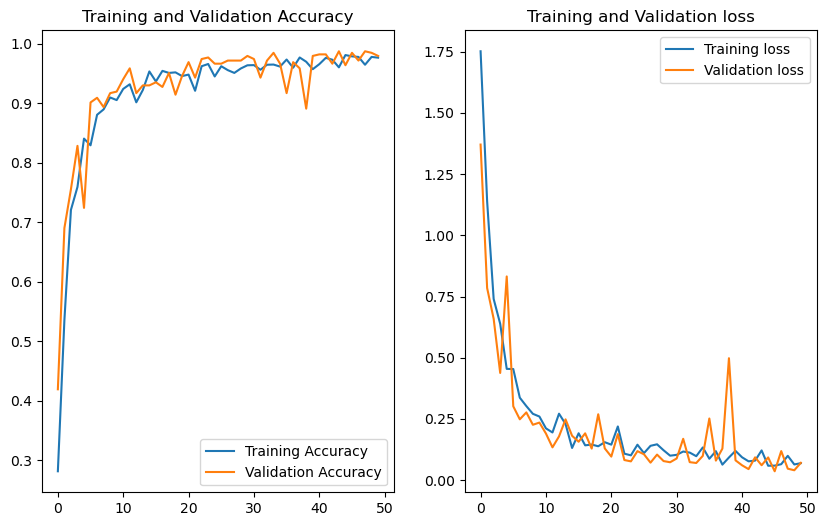
Figure 5: Training and validation accuracy and loss trends of the GourNet model.
The GourNet model achieves 97% classification accuracy, demonstrating:
- Rapid convergence without signs of overfitting.
- Consistent trend of decreasing loss and increasing accuracy across training and validation sets.
- Parameter efficiency—over 4.7 times fewer parameters than LeafNet, 197 times fewer than AlexNet, and nearly 200 times fewer than VGG16.
No contradictory claims are made regarding generalization; the results are robust within the constraints of the given dataset and task.
Implications and Theoretical Perspectives
GourNet substantiates that dedicated, lightweight CNN models can rival, or even exceed, larger, generic architectures for specialized tasks in plant disease detection. The model’s architecture fosters rapid convergence and eschews manual feature engineering. Its parameter efficiency supports practical deployment in resource-constrained environments, such as agricultural field devices or edge IoT systems.
Practically, early detection facilitates timely intervention, minimizes yield loss, and enhances the economic resilience of mango growers. Theoretically, this approach validates that domain-specific architectures crafted for narrowly-defined visual tasks improve both computational efficiency and classification accuracy.
Future work should emphasize transfer learning, cross-domain fine-tuning, and extension to multi-species disease identification, aligning with broader AI trends in low-shot learning and federated inference for agriculture. Integration with sensors and real-time field platforms remains an ongoing direction.
Conclusion
GourNet achieves high classification accuracy on mango leaf disease detection with a substantially reduced parameter count compared to competing models. The model’s compact design and strong generalization underscore its suitability for deployment in precision agriculture workflows. Extension to broader plant pathology domains, along with further validation on larger, multi-location datasets and through real-time edge integration, delineates a rich future trajectory for deep learning in agricultural diagnostics.

