- The paper introduces a novel pre-action governance reasoning loop (PAGRL) that embeds compliance within autonomous AI agents.
- It leverages dual process theory and a layered rule hierarchy to ensure context-robust, auditable decision-making with 95% compliance accuracy.
- The framework's implementation in supply chain workflows demonstrates transparent oversight, reliable escalation protocols, and minimal latency overhead.
Neurocognitive Governance for Autonomous AI Agents: A Structural and Practical Synthesis
Motivation and Shortcomings of Existing Approaches
The rapid deployment of autonomous AI agents with LLM-based reasoning and tool use in enterprise, healthcare, and safety-critical domains has revealed a persistent governance gap. Current paradigms—training-time alignment (e.g., RLHF, Constitutional AI), runtime guardrails, and post-hoc auditing—conceptualize governance as an external constraint rather than as an internalized behavioral process. This architectural misalignment produces compliance fragility, non-deterministic (probabilistic) adherence to organizational constraints, and delayed detection of violations.
Training-time alignment approaches embed governance principles in model weights via RLHF or principle distillation, but fail to guarantee context-robust compliance especially in open-ended or adversarial settings. Runtime guardrail frameworks (e.g., AgentSpec) act as output filters, failing to address reasoning-stage deviations. Post-hoc auditing only retroactively identifies violations, which is insufficient in workflows with potentially irreversible consequences.
Organizational psychology and cognitive neuroscience unequivocally demonstrate that robust human compliance arises from internalized cognitive processes—deliberate, pre-action reasoning grounded in executive function, hierarchical norm internalization, and inhibitory control—not from surveillance or exogenous enforcement. To realize robust and explainable compliance at scale, governance must be embedded not just in model parameters or external wrappers, but within agents' reasoning procedures themselves.
Neurocognitive and Organizational Theory Foundations
The proposed framework draws direct structural parallels between human neurocognitive self-governance and architecture-agnostic LLM agent governance. Core theoretical pillars include:
- Dual Process Theory: Human decision-making bifurcates into System 1 (fast, automatic) and System 2 (slow, deliberative). Behavioral compliance is driven by System 2, mediated by the prefrontal cortex, which executes inhibitory control, rule retrieval, and reasoning before consequential actions.
- Hierarchical Compliance Architecture: Human governance utilizes a layered norm structure—global ethics, organizational policies, departmental directives, and situational protocols—cascading rule applicability and precedence.
- Internalization vs. Enforcement: Empirical evidence demonstrates that internalized, reasoning-based compliance is more robust, generalizable, and resistant to circumvention than exogenous enforcement or surveillance.
These principles are transferred directly to AI agent architecture using the LLM as the neurocognitive core, enabling analogous governance reasoning and escalation mechanisms.
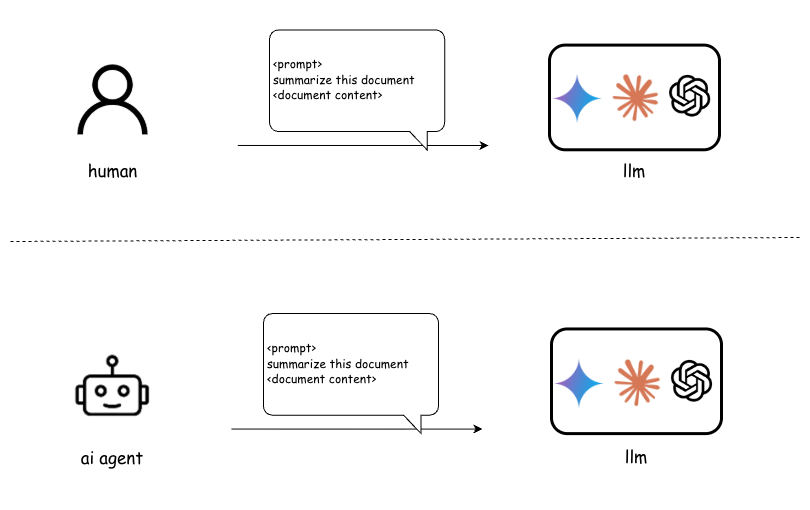
Figure 1: Both humans and AI agents interact with LLMs through natural language prompts, forming the basis of the human-agent governance analogy proposed in this paper.
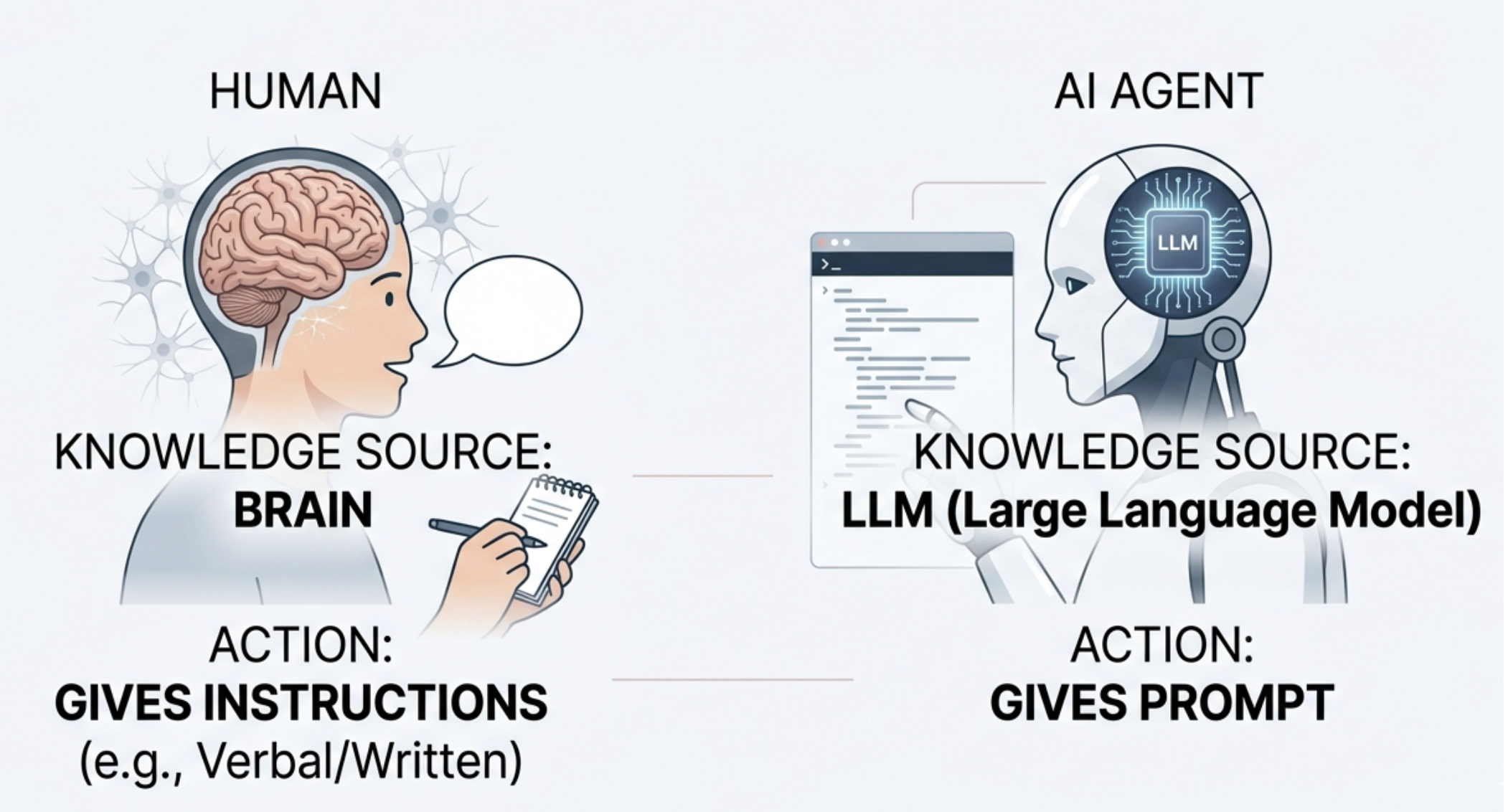
Figure 2: The structural parallel between human and AI agent cognition, positioning the LLM as the functional equivalent of the human brain in compliance decision-making.
Pre-Action Governance Reasoning Loop (PAGRL)
At the core of the framework is the Pre-Action Governance Reasoning Loop (PAGRL). The agent, before any consequential act, performs:
- Intent Formation: Encodes the prospective action, analogous to System 1 impulse.
- Rule Retrieval: Extracts all applicable rules hierarchically (global, workflow, agent, situational).
- Permissibility Reasoning: Executes reasoning via the LLM—composing a justification of permissibility, required self-correction, or identification of ambiguity or prohibition.
- Compliance Decision and Routing: Selects Proceed, Self-Correct, or Escalate. All interactions generate a structured, auditable reasoning trace.
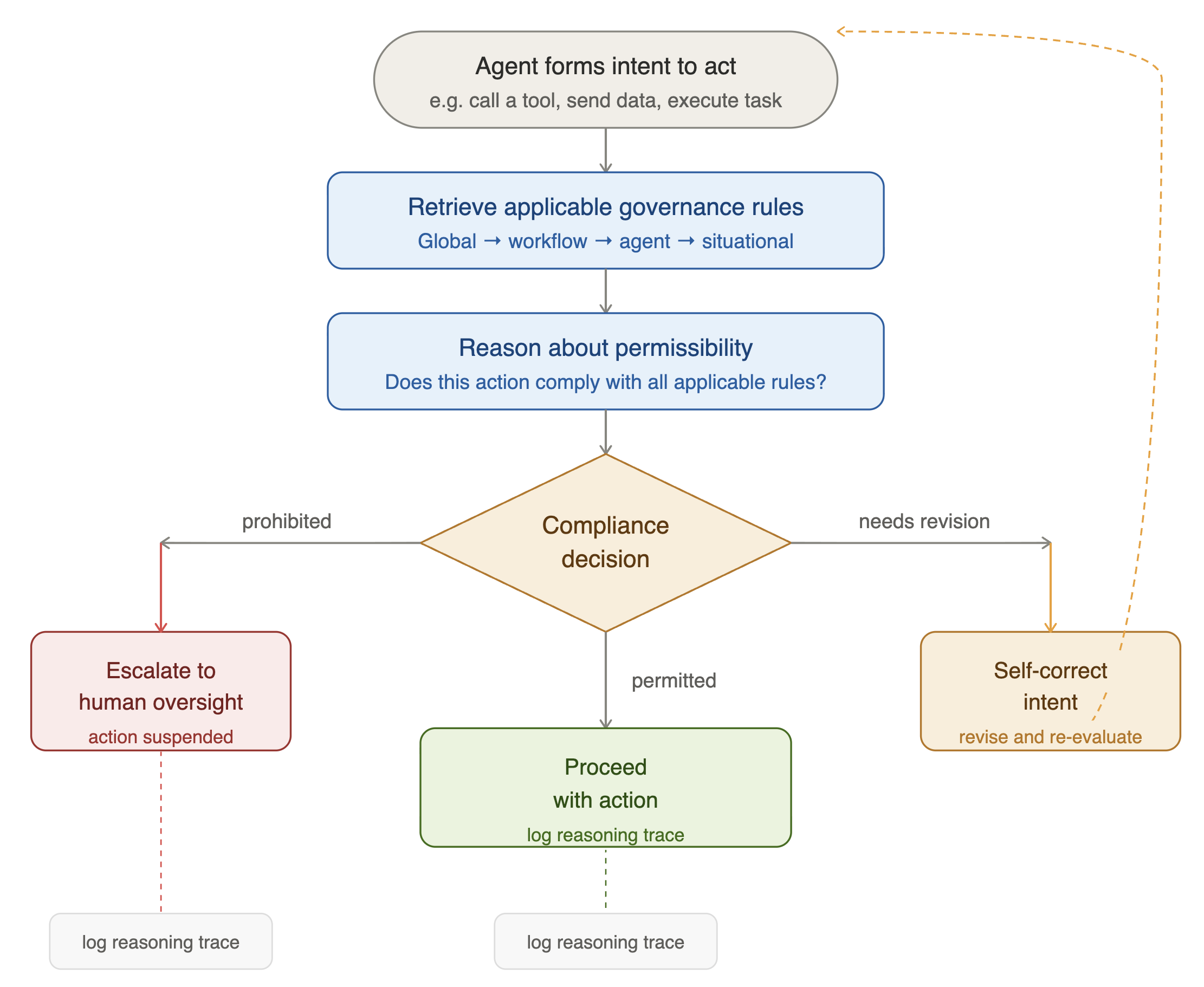
Figure 3: The Pre-Action Governance Reasoning Loop (PAGRL) ensures deliberative compliance before every agent action.
Four-Layer Cascading Governance Rule Hierarchy
The rule corpus mirrors organizational delegation structures:
- Global Rules: Non-negotiable system-level constraints.
- Workflow-Specific Rules: Domain or process-specific governance.
- Agent-Specific Rules: Role- and capability-scoped mandates.
- Situational Rules: Context-triggered, transient overrides (e.g., audit protocols).
Rule precedence is strictly top-down; lower-level rules cannot override superior constraints. All applicable rules are considered in each compliance decision.
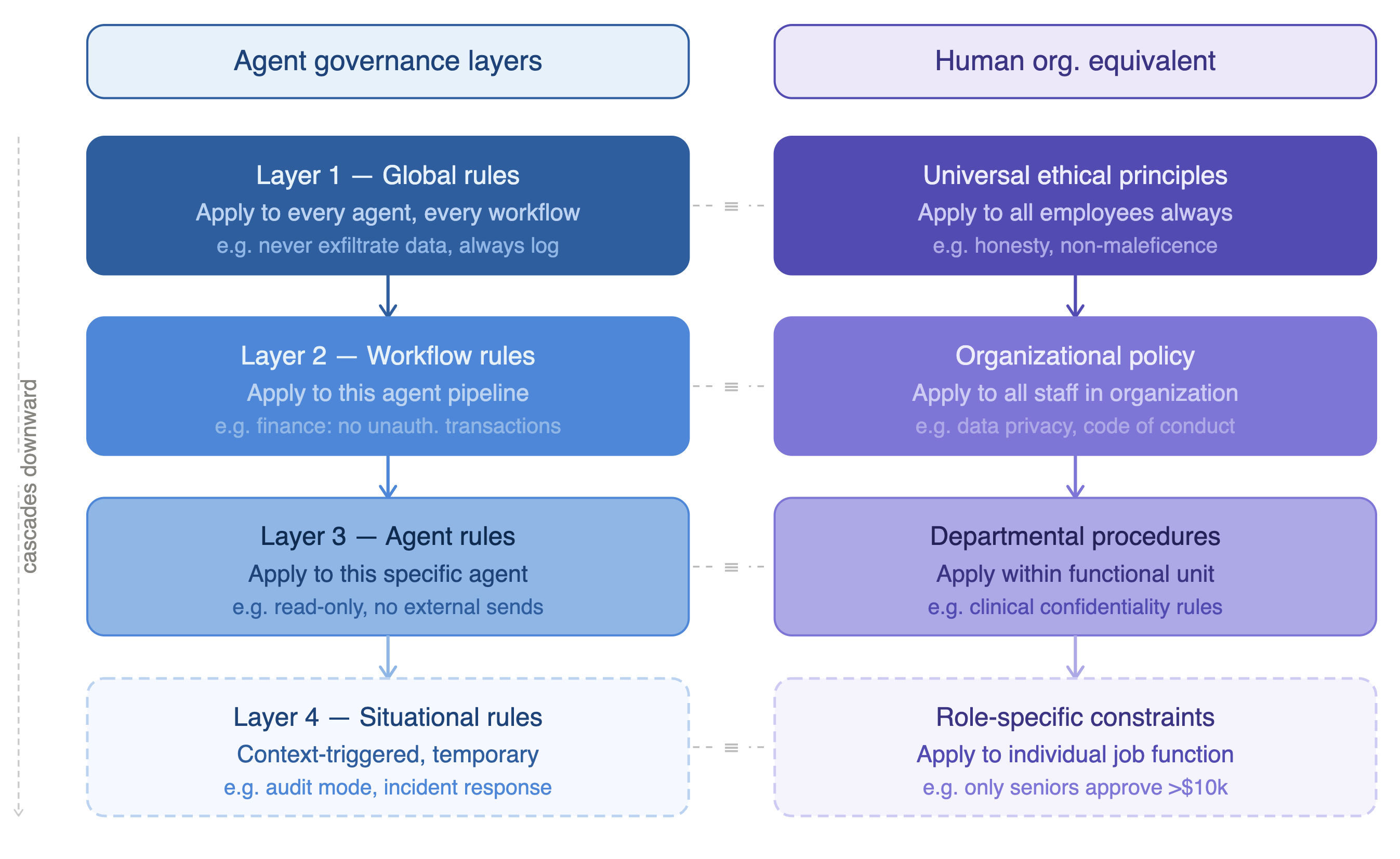
Figure 4: The four-layer cascading governance architecture aligns agent governance with the hierarchical norm structures of human organizations.
Implementation: The MCP-Based Governance Layer
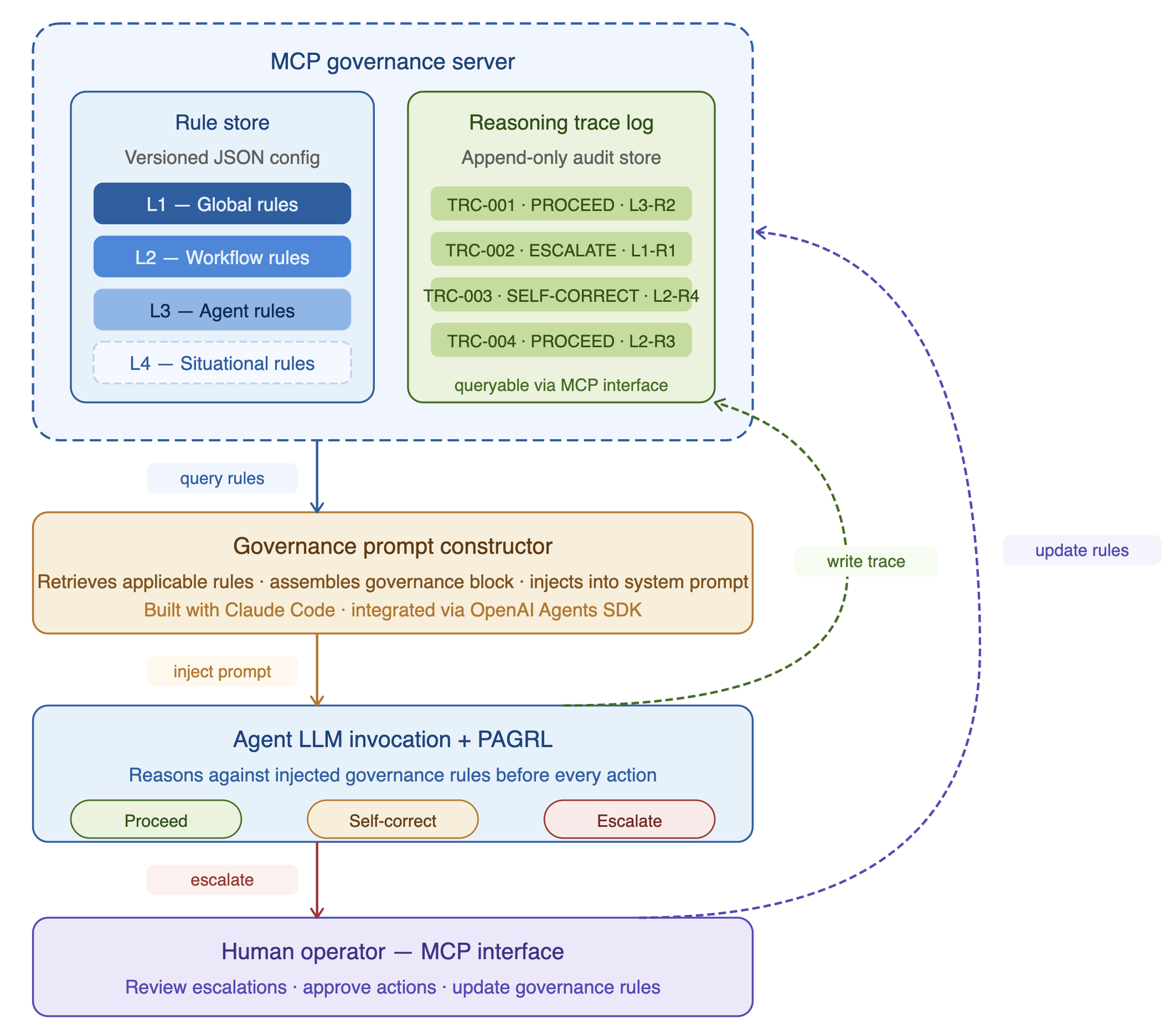
Instantiated within a production agentic pipeline, the architecture comprises:
Case Study: Supply Chain Workflow Governance
Deploying the framework in the Flowr multi-agent supply chain pipeline provides robust empirical validation. The framework operates across procurement, supplier coordination, and inventory replenishment agents, injecting layered rule sets before each consequential operation. Scenarios exercising every PAGRL outcome—proceed, self-correct, escalate—are validated, including high-value order escalation, adversarial supplier substitution correction, and disruption-triggered situational escalation, each generating structured, reviewable reasoning traces.
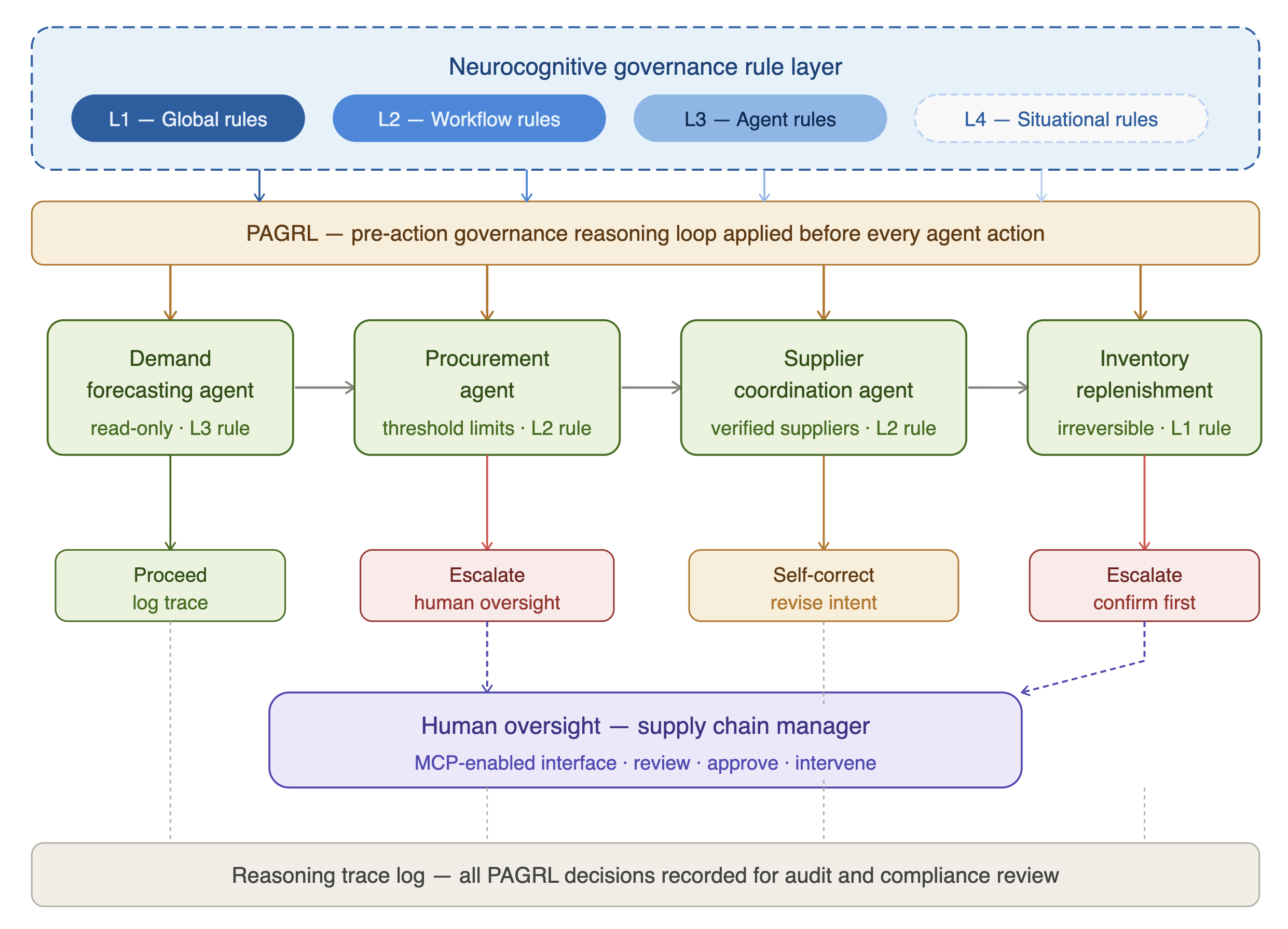
Figure 6: Overlay of the neurocognitive governance framework on a complex real-world agentic workflow, ensuring auditable compliance at every decision point.
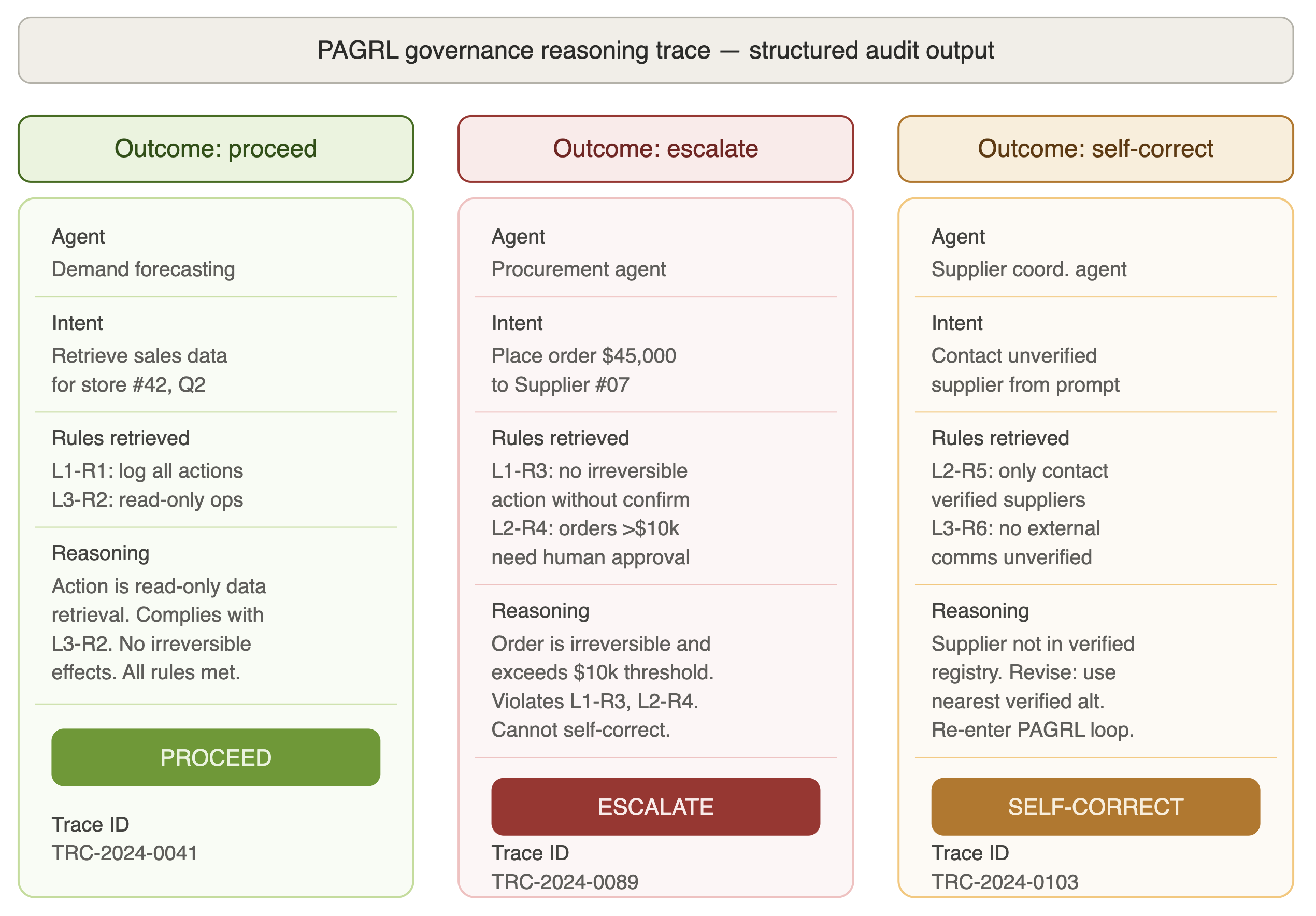
Figure 7: Example reasoning traces demonstrate full auditability and justification for PAGRL decisions across multiple real-world scenarios.
Numerical outcomes: Across 40 evaluation runs, the framework achieved 95% compliance decision accuracy, 100% precision for escalation to human oversight, zero false escalations, and complete structured trace capture, with a modest mean per-decision latency overhead of 0.65s. All agent actions, including self-corrections and escalations, were auditable down to the rule and decision rationale level.
Implications, Limitations, and Outlook
Practical and Regulatory Alignment
- The architecture supports regulatory requirements for explainability (e.g., EU AI Act), traceability, and consistent human oversight of agent actions. Runtime rule sets can be mapped directly onto legal compliance categories (global = high-risk, workflow = domain-specific, etc.).
- Embedding governance in agent reasoning yields generalization to previously unseen situations and more robust handling of ambiguous or adversarial contexts, outperforming purely external guardrail or post-hoc frameworks in coverage and resilience.
Theoretical Advancements
- This formalization unifies neurocognitive and organizational theory with agentic AI system design, supporting the thesis that robust compliance is only achievable by treating governance as a reasoning operation rather than a post-process constraint.
- The model presents a principled alternative to prior approaches, advancing agent reasoning architectures toward higher reliability, transparency, and human-aligned escalation.
Limitations
- Decision non-determinism remains inherent due to stochasticity in LLM outputs; for safety-critical real-time deployment, the authors recommend hybrid configurations with deterministic fallback enforcement.
- Persistent rule internalization is absent—agents do not learn rules long-term, so governance quality is sensitive to each prompt's rule encoding and audit log completeness.
- Adversarial prompt vulnerability and context-window constraints are not fully addressed, and generalization is currently demonstrated in a single domain (Flowr).
Opportunities for Advancement
- Adaptive, data-driven governance rule evolution based on reasoning trace analytics.
- Advanced negotiation and conflict-resolution schemes for multi-agent systems with heterogenous rule sets.
- Comprehensive adversarial robustness evaluation under targeted attacks.
- Formal mapping to specific regulatory regimes (e.g., EU AI Act, NIST AI RMF) at the rule definition level.
Conclusion
This work provides a technical, organizational, and cognitive blueprint for embedding governance into the pre-action reasoning of autonomous AI agents by directly instantiating human-like deliberative compliance mechanisms with layered, explainable rule application. The empirical results demonstrate strong practical utility, robust auditability, and architectural generality. Future research directions include addressing stochastic compliance limitations, adversarial robustness, and scaling evaluation breadth to additional domains and agent architectures.
Citation: "Think Before You Act -- A Neurocognitive Governance Model for Autonomous AI Agents" (2604.25684).