- The paper introduces a hybrid technique that augments analytical BRDF models by replacing selected computational nodes with neural MLPs.
- It demonstrates robust performance with a compact model footprint, achieving high SSIM scores and lower ΔE_ITP errors on standard datasets.
- The approach efficiently balances interpretability and neural expressiveness, enabling versatile material editing and real-time rendering applications.
Neural Enhancement of Analytical Appearance Models: Methodology, Results, and Implications
Introduction
The paper "Neural Enhancement of Analytical Appearance Models" (2604.24081) introduces a hybrid framework designed to augment classical analytical BRDF models with neural modules, specifically small-scale MLPs, thereby enhancing their expressive power in representing measured reflectance without incurring the high computational overhead typical of purely neural approaches. The methodology leverages the computational graph structure inherent to analytical models, systematically identifying bottlenecks and replacing selected nodes/operators with differentiable neural alternatives.
Framework Architecture
The proposed neural enhancement approach begins by decomposing an input analytical model (e.g., GGX) into a computational graph comprising computational nodes and arithmetic operators. Each node and operator is a candidate for replacement with an MLP, whose architecture and input dimensionality are determined based on their respective analytical parameters and any additional neural parameters introduced.
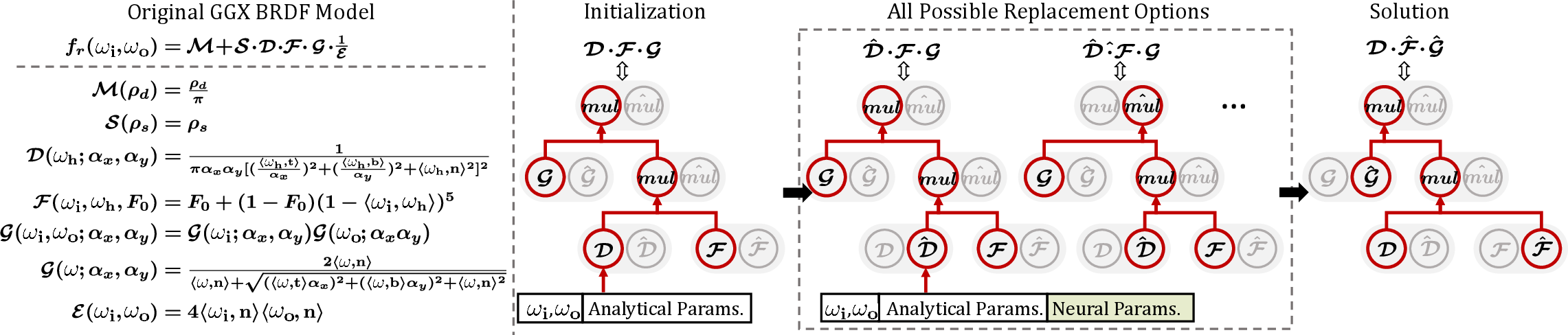
Figure 1: Graphical depiction of the enhancement process, showing the conversion from analytical GGX BRDF to a computational graph with nodes/operators eligible for neural module replacement.
The model enhancement is guided by a hypercube-based search over the space of possible replacement states, represented by an N-bit vector for N nodes/operators. This search avoids the combinatorial explosion of enumerating all 2N states by iteratively evaluating only those configurations with Hamming distance ≤1 from the current state. Training proceeds by optimizing both neural and analytical parameters using a logarithmic L1 loss between predictions and ground-truth, employing RMSProp for stable convergence.
The MLPs used for replacement are four-layer fully connected models with leaky ReLU activations, balancing high capacity for fitting accuracy and low computational footprint.
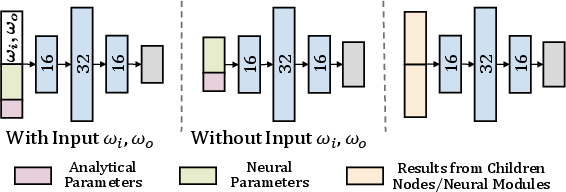
Figure 2: Visualization of neural module architectures, illustrating distinct input configurations for node/operator replacements.
Results and Comparative Analysis
The main result centers on the enhanced GGX model, which replaces three nodes and one operator with neural modules, resulting in a model with 39 parameters (12 analytical and 27 neural) and approximately 7K trainable weights. The network footprint remains compact at 26.45KB, and the methodology is shown to produce a unified representation able to fit a diverse range of BRDFs and BTF texels from large datasets.
Quantitative results demonstrate the model’s strong numerical performance. Across EPFL and UTIA datasets, the enhanced GGX achieves high SSIM scores and low ΔEITP errors, outperforming both legacy analytical models and several state-of-the-art neural approaches. Notably, fitting 100,000 measured samples requires only 27.3s (compared to 34.2s for original GGX), and rendering throughput remains competitive at 13.68×10⁶ rays/s.
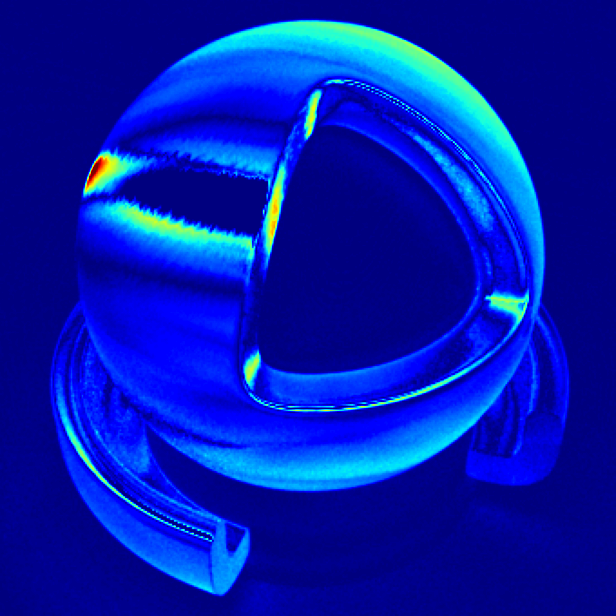

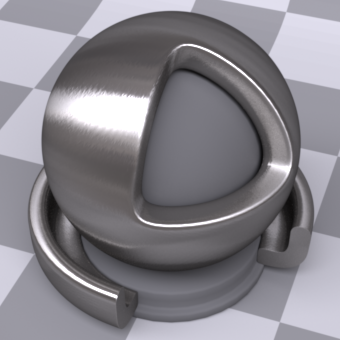
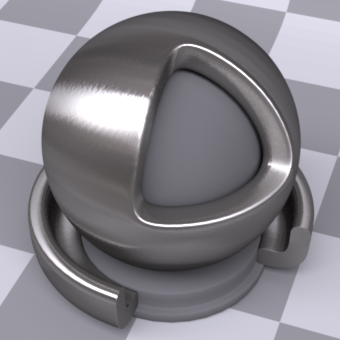

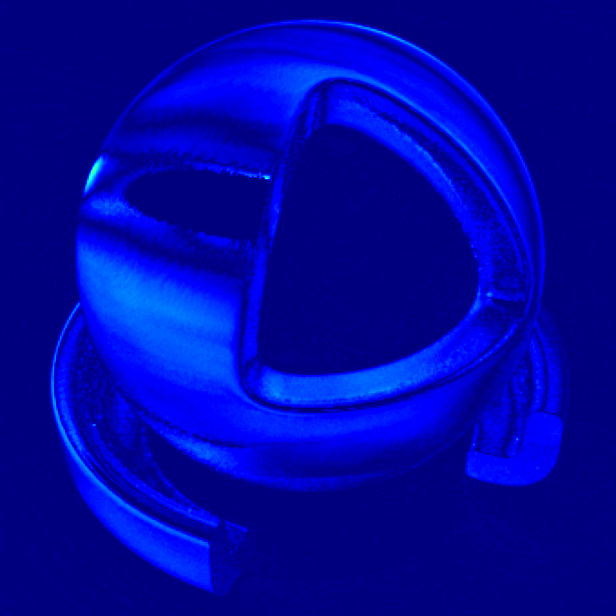



Figure 3: Sequence demonstrating progressive boosting of GGX by neural replacements, significantly reducing SSIM/ΔEITP errors against measured ground-truth.
Comparative experiments highlight the following claims:
- Material-agnostic fitting: Unlike BRDF-specific neural networks (e.g., NBRDF), the enhanced GGX generalizes across both isotropic and anisotropic materials while maintaining comparable or superior fitting accuracy.
- Robust inductive bias: The hybrid retains parameter semantics and analytical editing capabilities, as shown by direct manipulation of diffuse/specular albedo and roughness with no refitting required.
- Efficiency: The model delivers accuracy competitive with large-scale neural networks (e.g., NLBRDF with 109 parameters) at a fraction of the computational cost.
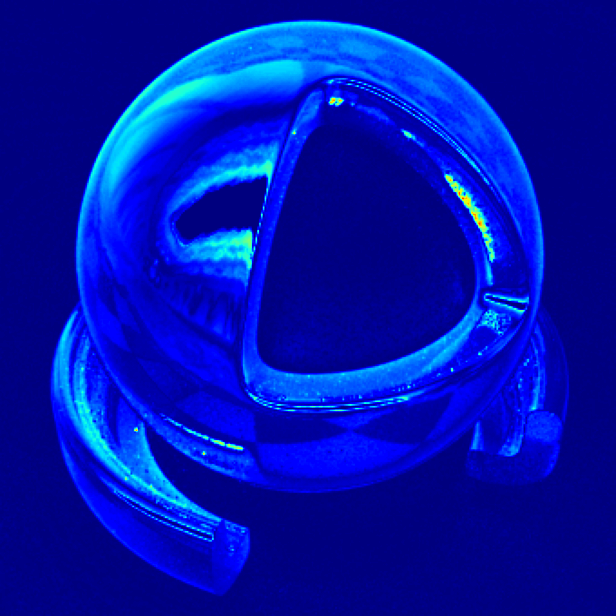
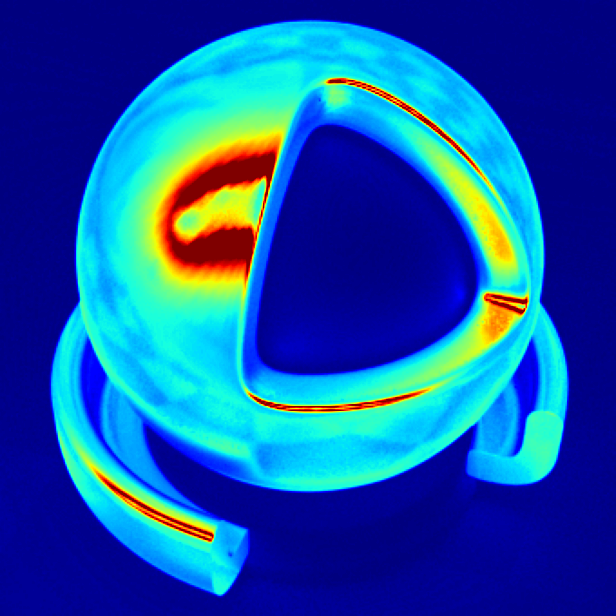
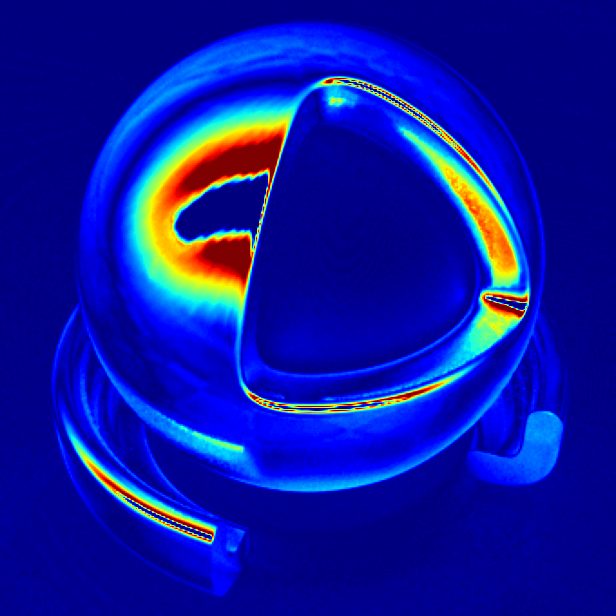
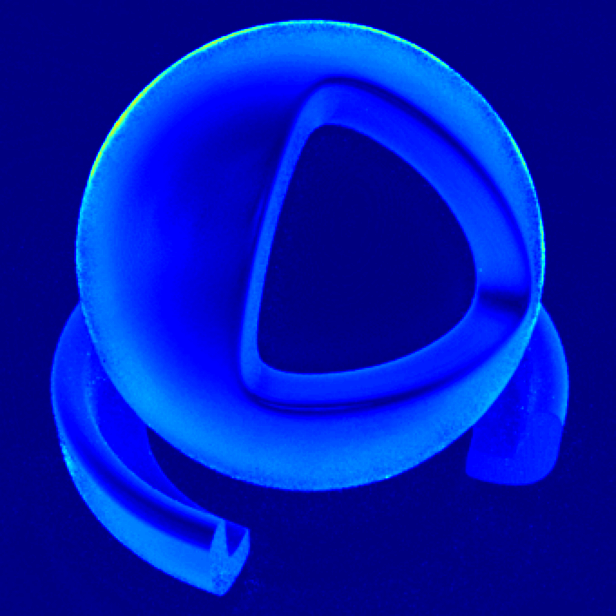

Figure 4: Side-by-side qualitative comparison to state-of-the-art BRDF representations, reporting SSIM/ΔEITP and error maps for five materials.
The framework is also demonstrated on other analytical BRDFs (Cook-Torrance, Ward, GenBRDF), consistently enhancing their capacity for fitting measured reflectance. Evaluation of module size, parameter count, and granularity indicates optimal trade-offs in the recommended configurations.
Limitations and Future Directions
While the model effectively boosts measured appearance representations, two primary limitations are observed:
- Limited extrapolation: The enhanced model cannot generalize to reflectance behaviors outside the expressive domain of the input analytical model or far from training data, as quantified in cases of strong color change.
- Semantic interpretability: Neural parameters lack the direct semantic meaning of analytical parameters, limiting intuitive material editing except where analytical terms remain.
The authors propose several extensions:
- Automated determination of optimal node/operator granularity for enhancement.
- Integration with symbolic regression or generative procedural modeling for even more efficient appearance representations.
- Enforcement of physical constraints (energy conservation, reciprocity) within the hybrid model.
- Exploration of neural importance sampling (NeuSample) for further integration with rendering pipelines.
Practical and Theoretical Implications
Practically, the neural enhancement framework offers a systematic approach for improving analytical appearance models in applications such as real-time rendering, material acquisition, and editing. Its compatibility with standard rasterization and ray-tracing pipelines is maintained, and its modest computational footprint makes it suitable for deployment across both academic and industrial graphics engines.
Theoretically, the methodology provides a compelling blueprint for hybrid modeling—combining domain knowledge encoded in analytical models with data-driven neural expressiveness. This approach may inform more general efforts in physics-informed neural networks and symbolic regression, where existing models are incrementally augmented through structured neural search.
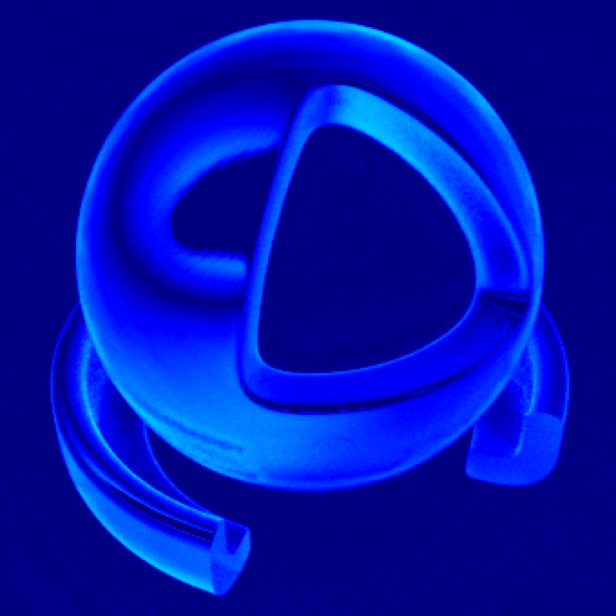

Figure 5: Impact of module granularity over reconstruction, reinforcing that smaller granularity yields better fitting.
Conclusion
Neural enhancement of analytical appearance models delivers a principled, tractable approach to bridging the gap between compact, interpretable analytical models and data-driven neural representations. The proposed hypercube-based search and modular architecture achieve high accuracy, efficiency, and generalizability. By maintaining semantics and compatibility while achieving strong numerical results, this hybrid method advances the state of reflectance modeling and opens new avenues for integrating analytical and neural paradigms in visual computing research.

