- The paper introduces a taxonomy of volatile and non-volatile photonic memory, detailing mechanisms from delay lines to phase-change elements.
- It outlines computational metrics and neuromorphic architectures such as RC, RNN, and delay-based networks for optimized temporal processing.
- Channel equalization and low-latency AI applications showcase the practical potential of integrated photonic neural networks.
Memory in Integrated Photonic Neural Networks: Physical Mechanisms and Neuromorphic Architectures
Motivation and Context
The surge in AI performance has exposed the "memory wall"—a primary bottleneck arising from the architectural separation of memory and computation in von Neumann systems. Biological neural networks circumvent this by physically co-locating memory and computation, with distributed ensembles encoding transient and persistent information. Neuromorphic computing leverages physical substrates to achieve this paradigm, with integrated photonics emerging as a particularly promising platform due to its high bandwidth, low loss, and inherent parallelism. This review presents a comprehensive taxonomy and characterization of memory in integrated photonic neural networks (PNNs), spanning physical mechanisms, dynamical regimes, architectures, and applications.
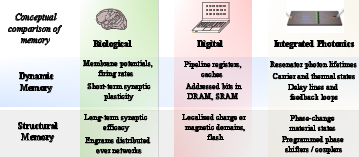
Figure 1: Conceptual comparison of structural (non-volatile) and dynamic (volatile) memory across digital, biological, and integrated photonic systems.
Biological Memory: Mechanisms and Analogies
Biological memory systems exhibit hierarchical timescales—from milliseconds in short-term memory (STM) to years in long-term memory (LTM)—rooted in synaptic communication, cellular excitability, and circuit-level engram formation. Fundamental mechanisms such as long-term potentiation (LTP) and depression (LTD) modify synaptic weights, while molecular and structural consolidation stabilize memory traces. Hebbian learning, based on local correlation-driven updates of synaptic weights, underpins distributed, associative memory encoding.
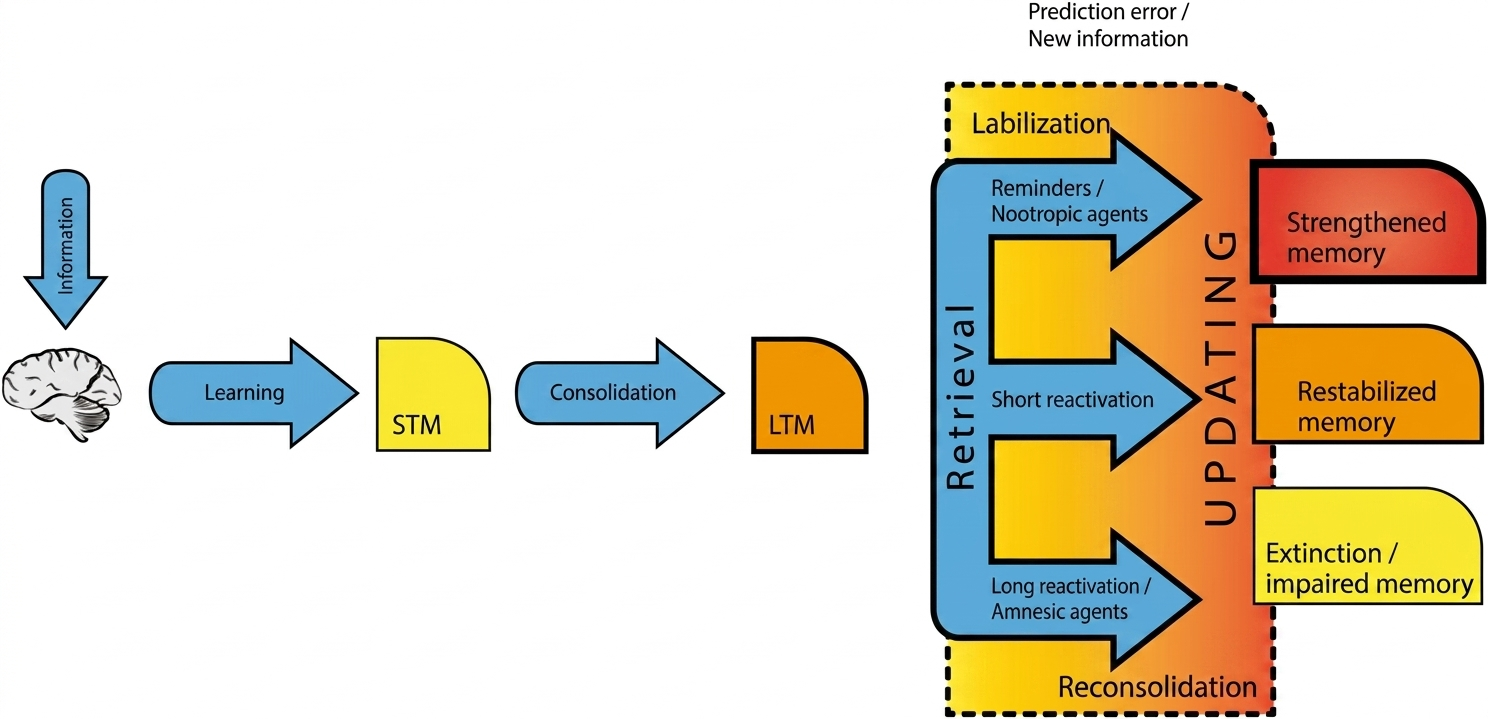
Figure 2: STM to LTM through encoding, learning, and retrieval is foundational to biological memory architecture.
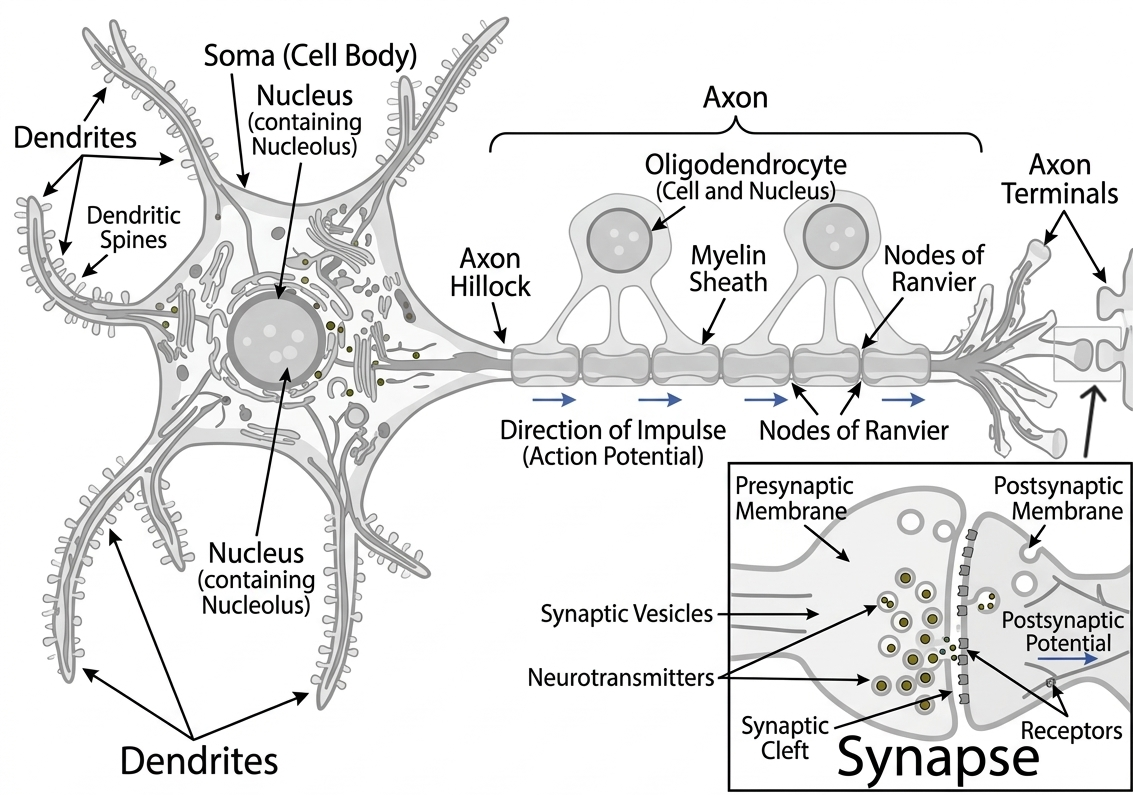
Figure 3: Cellular scheme of neuron and synapse, highlighting the substrates for biological memory.
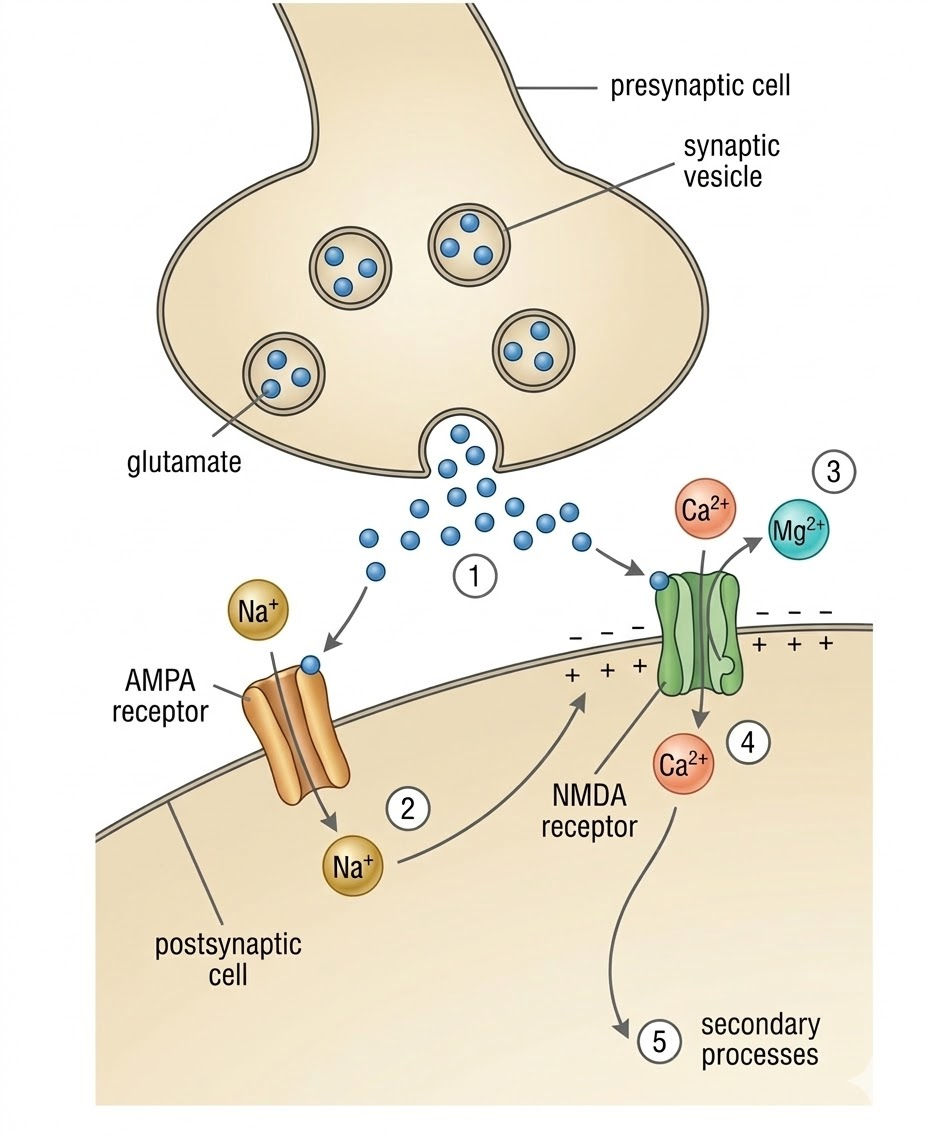
Figure 4: Biochemical mechanisms of synaptic communication and LTP.
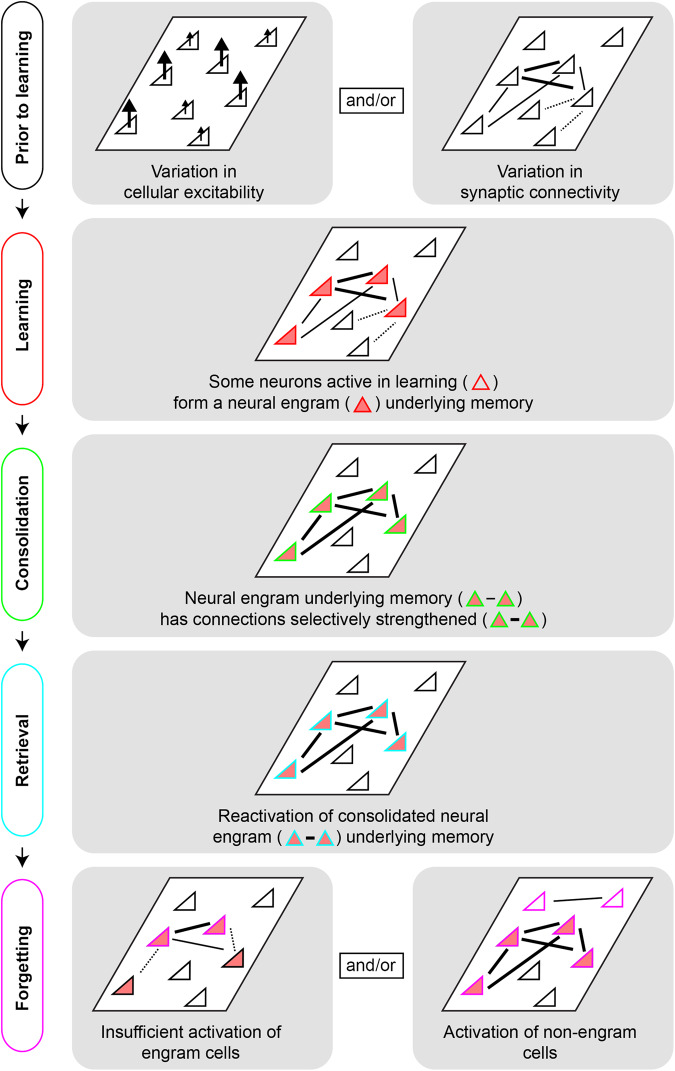
Figure 5: From encoding to engram cell formation, mapping memory stages and synaptic consolidation.
Integrated Photonic Memory: Taxonomy and Physical Mechanisms
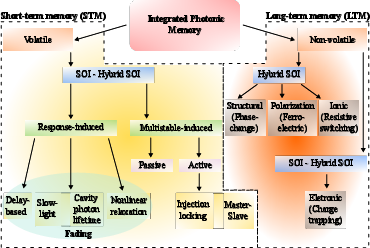
Memory in silicon and hybrid photonic platforms is classified primarily as volatile (response-induced and multistable-induced) or non-volatile, based on retention and decay times:
- Volatile Memory:
- Response-induced: Memory arises from delay lines (time-of-flight), slow-light effects (engineered dispersion), and nonlinear relaxation (free-carrier and thermo-optic effects in microring resonators, MRRs).
- Multistable-induced: Memory emerges from bistable regimes, self-pulsing, or injection-locking, with information encoded in attractor basins or oscillatory states.
- Non-volatile Memory:
Key device-level distinctions are established: delay lines (spiral waveguides, fiber), slow-light structures (photonic crystals, coupled MRRs), and resonant cavities offer volatile, fading memory for high-bandwidth tasks; phase-change, ferroelectric, and charge-trapping mechanisms enable power-independent, programmable non-volatile weights.
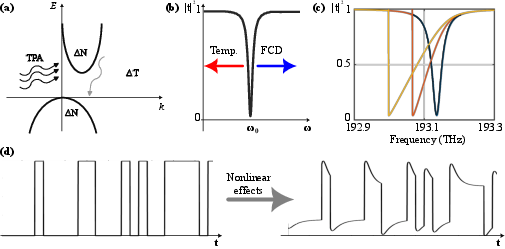
Figure 7: Nonlinear effects and fading memory in MRRs: free-carrier and thermal dynamics govern optical response.
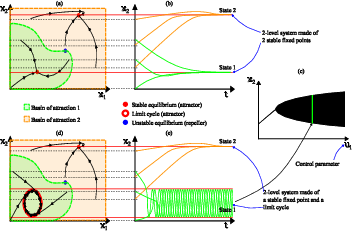
Figure 8: Phase-space analysis of bistable systems and attractor transitions in multistable memory architectures.
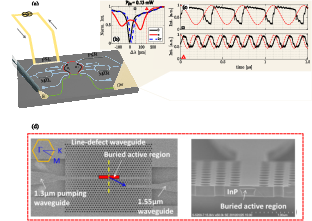
Figure 9: Implementations of passive and active optical bistability in integrated photonics.
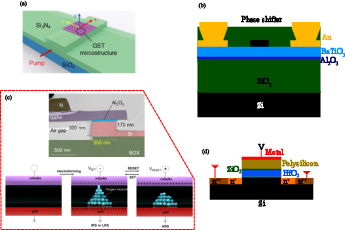
Figure 10: Device illustrations of phase-change, ferroelectric, ionic, and charge-trapping non-volatile memories.
Computational Characterization: Metrics and Architectures
Memory capacity, impulse response, and information processing capacity serve as substrate-agnostic metrics for evaluating dynamical memory in neural systems, extended to photonic circuits. The echo state property (ESP) is emphasized as a prerequisite for reliable RC operation, ensuring that system state is determined by input history, not initial conditions.
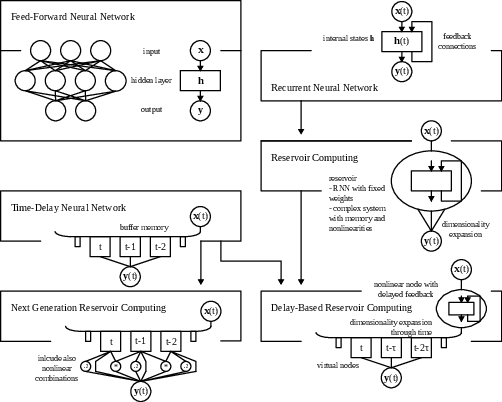
Architectural types are classified:
Spatial, Delay, and Multimode RC
Spatial RC architectures employ waveguide delays, multimode dispersion, and passive interference meshes for high-speed signal processing, achieving volatile memory on the order of hundreds of picoseconds. Delay-based RC leverages time-multiplexed feedback with nonlinear nodes—semiconductor lasers, MRRs, or external fiber loops. Significant throughput improvements are achieved by combining multiplexing in space, wavelength, and time.
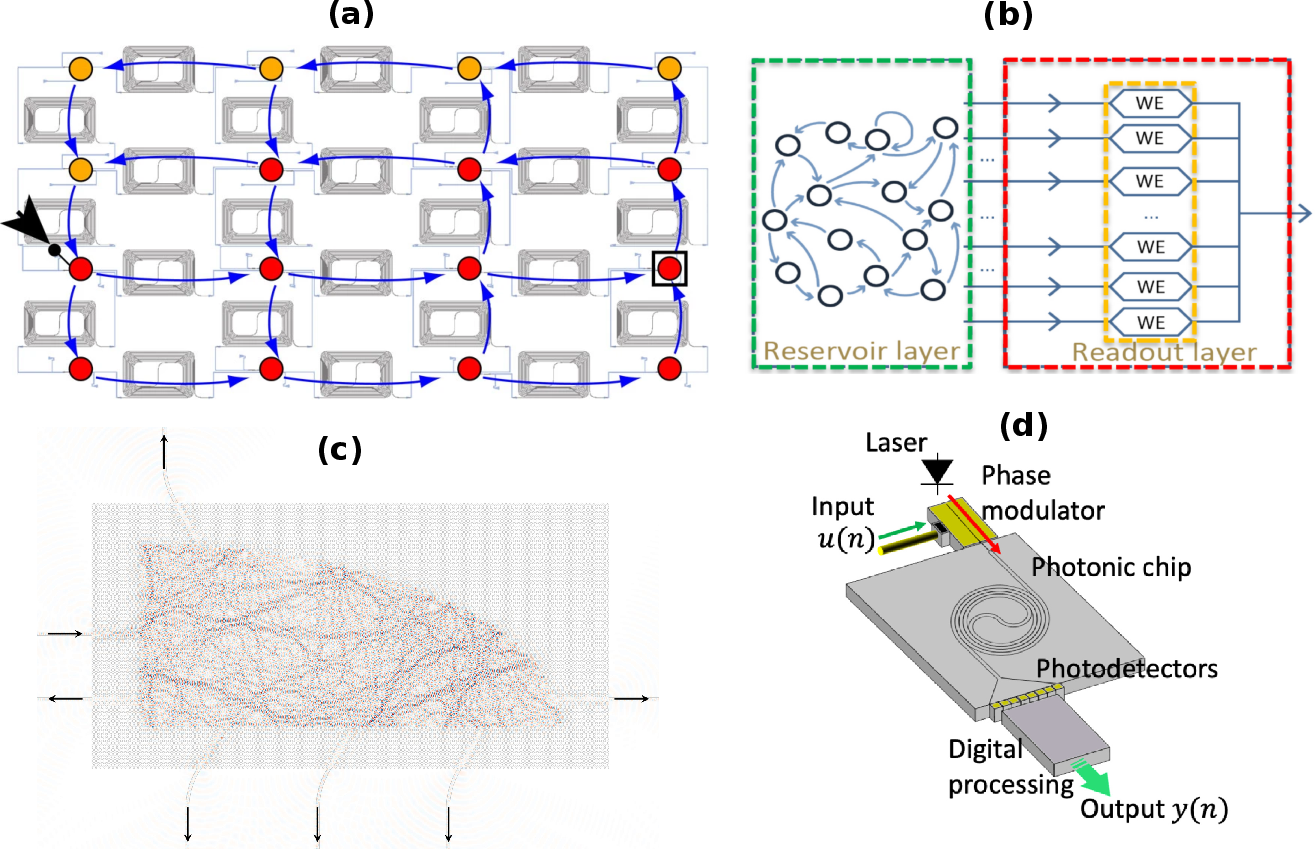
Figure 12: Spatial RC implementations via delay lines, photonic crystal cavities, and multimode waveguides.
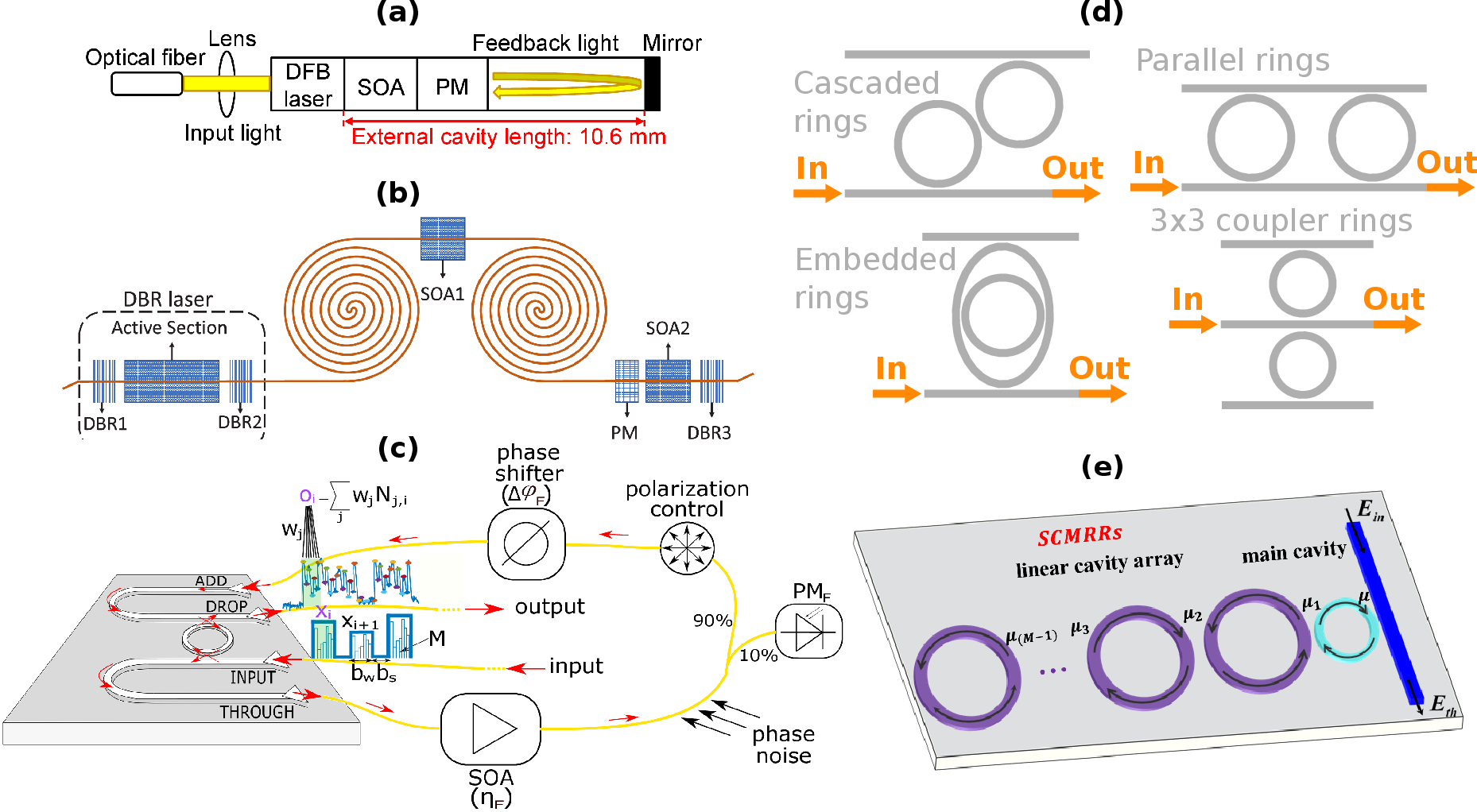
Figure 13: Delay-based RC using semiconductor lasers, fiber loops, and coupled resonators.
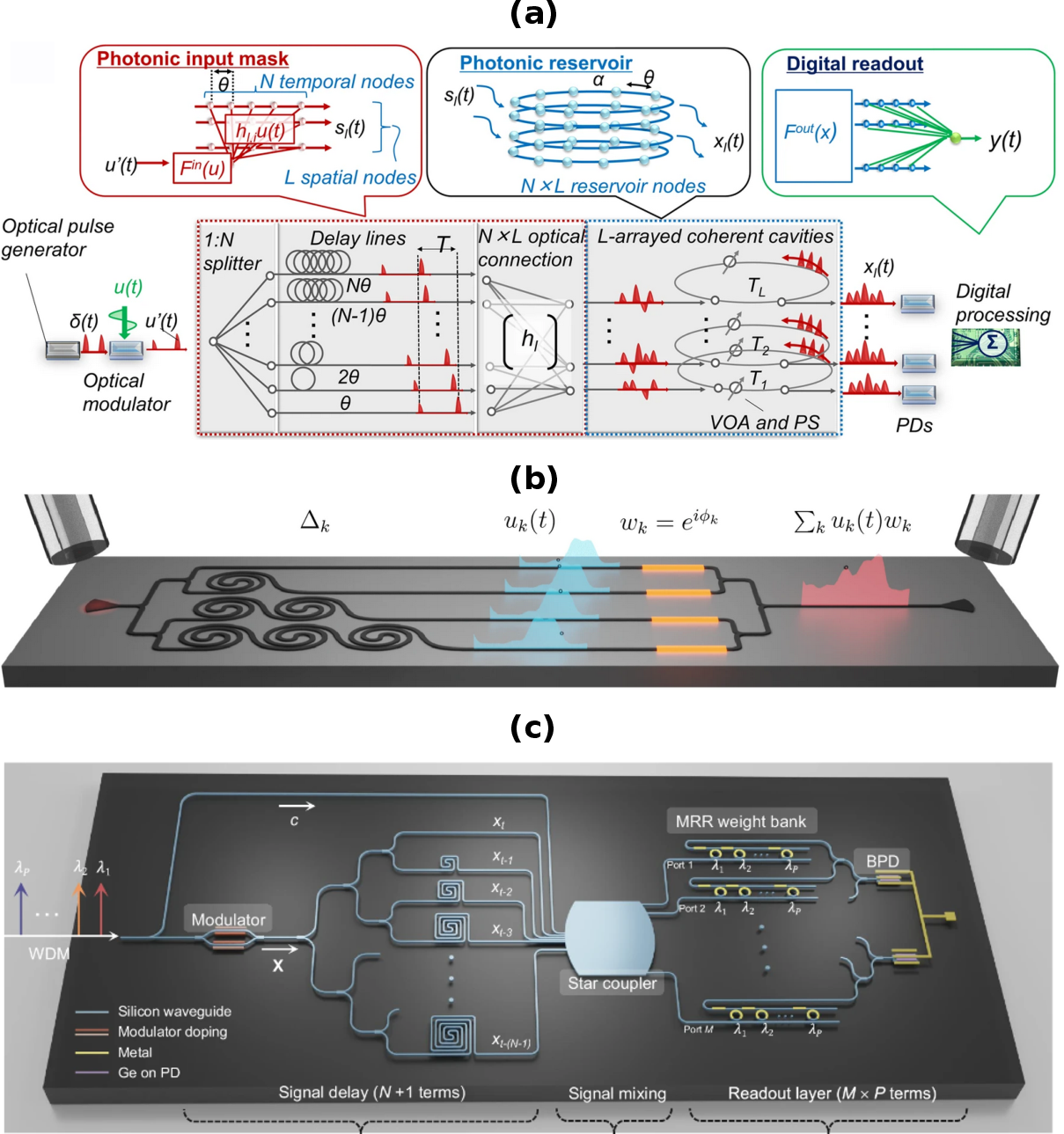
Figure 14: Hybrid spatial-delay RC architectures with programmable feed-forward networks and star couplers.
Nonlinear Light-Matter Interaction and Multistable Regimes
Nonlinear memory is realized by leveraging light-matter interaction in high-Q MRRs, exploiting two-photon absorption, free-carrier dispersion, and thermal relaxation for fading memory and local nonlinearity. Self-pulsing in MRR matrices supports persistent volatile memory, compatible with RC and spiking neural network paradigms. Optical phase response, wavelength selectivity, and fabrication tolerance are critical design factors.
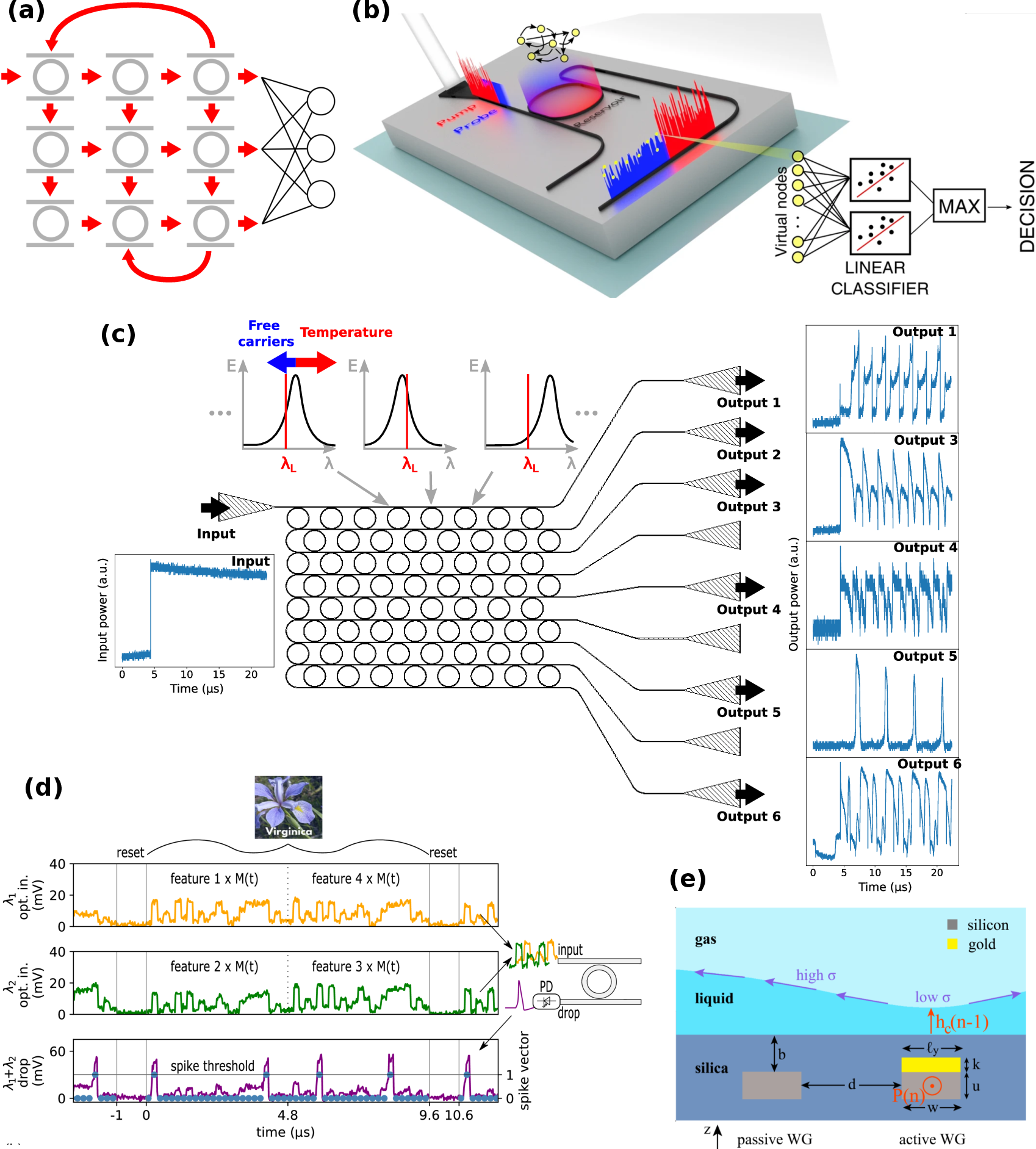
Figure 15: Nonlinear MRR RC, self-pulsing dynamics, multi-wavelength coupling, and optofluidic memory nodes.
Trainable Photonic Neural Network Realizations
Hybrid optoelectronic RNNs exploit O-E-O feedback for programmable dynamics, while all-optical delay line loops realize iterative computation (e.g., matrix inversion) with memory encoded in time-of-flight. PCM integration permits non-volatile, plastic weights and Hebbian-like updates, supporting learning rules driven by physical signals. Implementation challenges include resonance stabilization, phase alignment, and the embedding of in-situ physical plasticity.
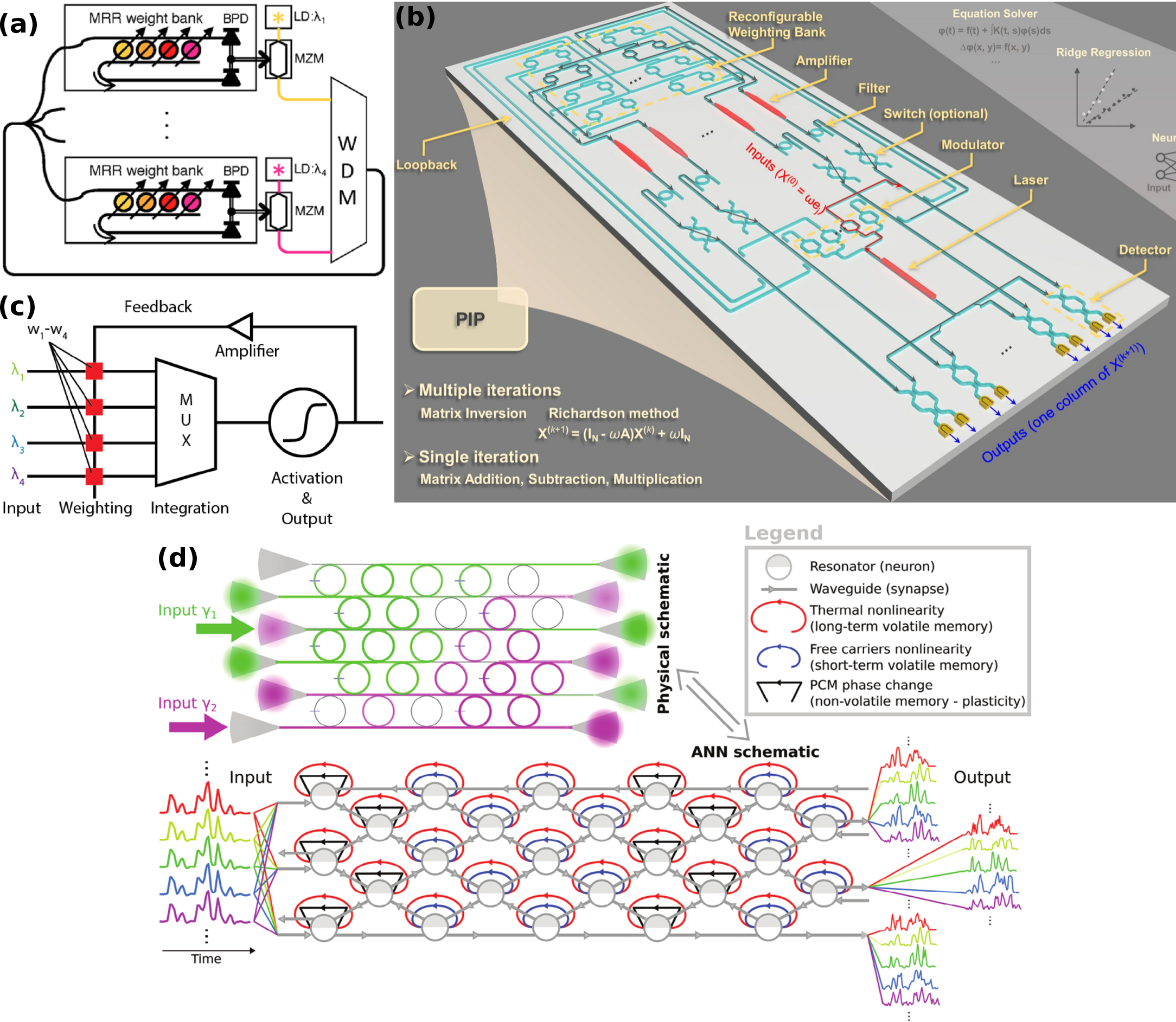
Figure 16: Programmable PNN architectures—RNNs with O-E-O conversion, optical recirculation, PCM plastic synapses, and hybrid nonlinear/PCM networks.
Application: Channel Equalization in Telecommunications
Photonic RC and FIR architectures are deployed for equalization of chromatic dispersion and nonlinear fiber distortions. Volatile memory depth is matched to the channel’s characteristic temporal impairment; scaling up requires fine-grained control of delay granularity and tap count. Devices achieve competitive BER improvements, with significant reductions in power and processing latency compared to conventional DSP, leveraging all-optical readouts and programmable weights.
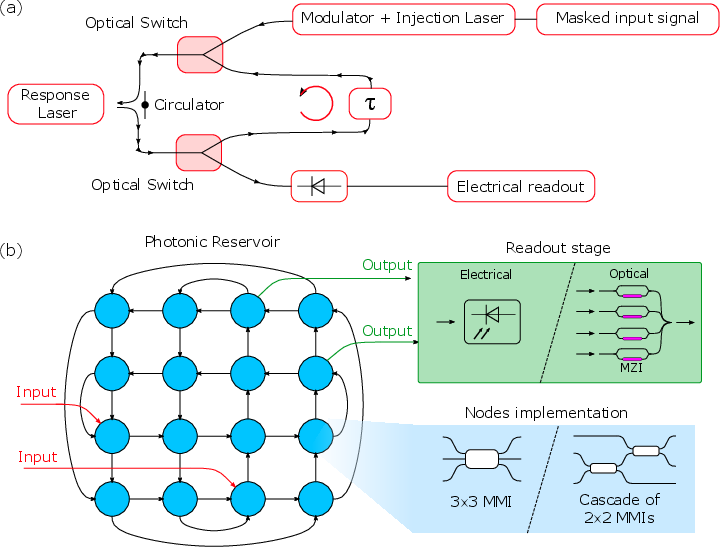
Figure 17: Photonic RC for channel equalization—semiconductor laser/fiber loop systems and integrated multi-node RC networks.
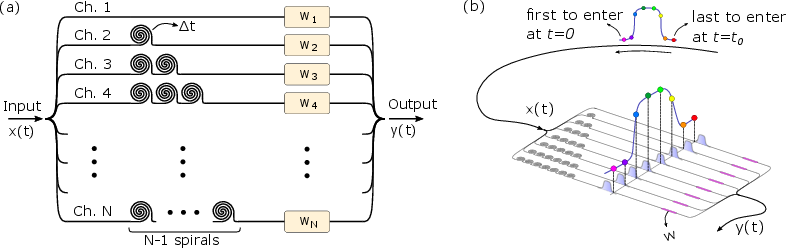
Figure 18: Time-delayed complex perceptron for optical FIR filtering and programmable equalization.
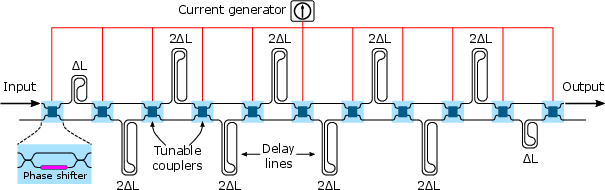
Figure 19: Programmable lattice filter leveraging tunable couplers and unbalanced MZIs for dispersion compensation.

Figure 20: Cascade of MRRs for programmable linear filtering and multi-stage dispersion compensation.
Conclusions and Future Outlook
Integrated photonic platforms provide diverse memory mechanisms, spanning volatile fading, multistable, and non-volatile material-based storage. This hierarchy enables neuromorphic architectures capable of real-time temporal processing, associative learning, and non-volatile weight storage—essential for scalable, energy-efficient hardware AI. RC, spiking, feed-forward, and hybrid optoelectronic networks all benefit from tailored memory depth and retention times, optimized for task requirements. Major challenges remain in system-level integration: precise resonator alignment, scalable plasticity, and robust hybridization with electronics. The practical impact is poised to be most pronounced in hybrid photonic–electronic systems operating natively on optical data, with potential for widespread deployment in telecommunications, sensor processing, and low-latency AI inference.
References
See (2604.22620) for comprehensive bibliographic coverage and deep technical details across mechanisms, architectures, and application domains.