- The paper demonstrates that AI support reduces writer ownership in a stage-dependent manner, with the most significant drop when AI generates the entire draft.
- The study employs a rigorous between-subjects design with detailed metrics, including self-reported ratings and expert evaluations, to assess attribution and quality.
- The findings highlight a trade-off between enhanced essay quality and diminished psychological ownership, urging careful design of AI writing tools.
The Effects of Stage-Specific AI Writing Support on Writer Ownership and Attribution
Introduction
This work rigorously investigates the relationship between AI-supported writing at discrete process stages (planning, drafting, and revision) and the psychological sense of ownership, authorship attribution, and output quality. Rather than treating LLM interaction as a monolithic intervention, the authors isolate the effect of AI at each canonical stage of writing—an approach directly addressing underexplored questions at the intersection of HCI, educational technology, and computer-supported cooperative work. The methodological emphasis on separating support by stage, coupled with detailed outcome measurement (self-reported ownership, explicit attribution, automated and expert essay quality grading), enables quantitative and qualitative interrogation of the mechanics by which AI modifies the intellectual and affective commitments of the human writer.
Experimental Design and Conditions
The experiment used a between-subjects protocol (n=253), with each participant assigned to one of four conditions: no AI support, AI-supported planning (AI-Plan), AI-generated full draft based on their outline (AI-Draft), or AI-supported revision (AI-Revision). The assignment reflects prevalent pedagogical models segmenting writing into planning, drafting, and revision, and mirrors how LLMs are operationalized in mainstream writing support. All participants provided an outline, a draft, and completed essay revisions, with tools and suggestions gated to their respective conditions. Importantly, granular behavioral telemetry (keystrokes, paste events, API interactions) is used alongside self-report and essay artifact analysis, yielding high-resolution insight into the locus and magnitude of human and AI contributions.
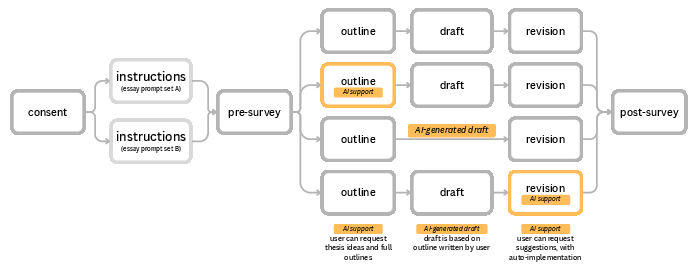
Figure 1: Study flow showing sequential writing stages and the randomized condition structure.
Measurement of Ownership, Attribution, and Writing Quality
Ownership is measured via a direct Likert query ("I feel this piece of writing is truly mine"), with supporting constructs (agency, intent, effort) as secondary probes. Attribution is captured via explicit post-hoc estimation of AI vs self credit for both ideas and final surface text. Essay quality is assessed on an IELTS-derived rubric via both expert human scoring and large-scale model-based evaluation, carefully validated for high agreement. These multi-axis post-hoc measures are complemented by robust statistical controls—especially for task prompt—and planned contrast analysis (No AI vs AI avg.; AI-Draft vs other AI; AI-Plan vs AI-Revision), ensuring findings are not artifacts of prompt selection, time-on-task, or other confounds.
Main Empirical Findings
Ownership
AI support at any stage statistically significantly reduces ownership compared to a no-AI condition, but the decrement is stage-dependent. The decline is minimal for AI-Plan, intermediate for AI-Revision, and maximal for AI-Draft, with the largest decrease in ownership (−1.65 Likert points) observed when the AI generates the draft. Notably, even when the AI-Draft is explicitly based on a participant's own outline, the resulting essay is perceived as less their own than essays produced with AI input during planning or revision.
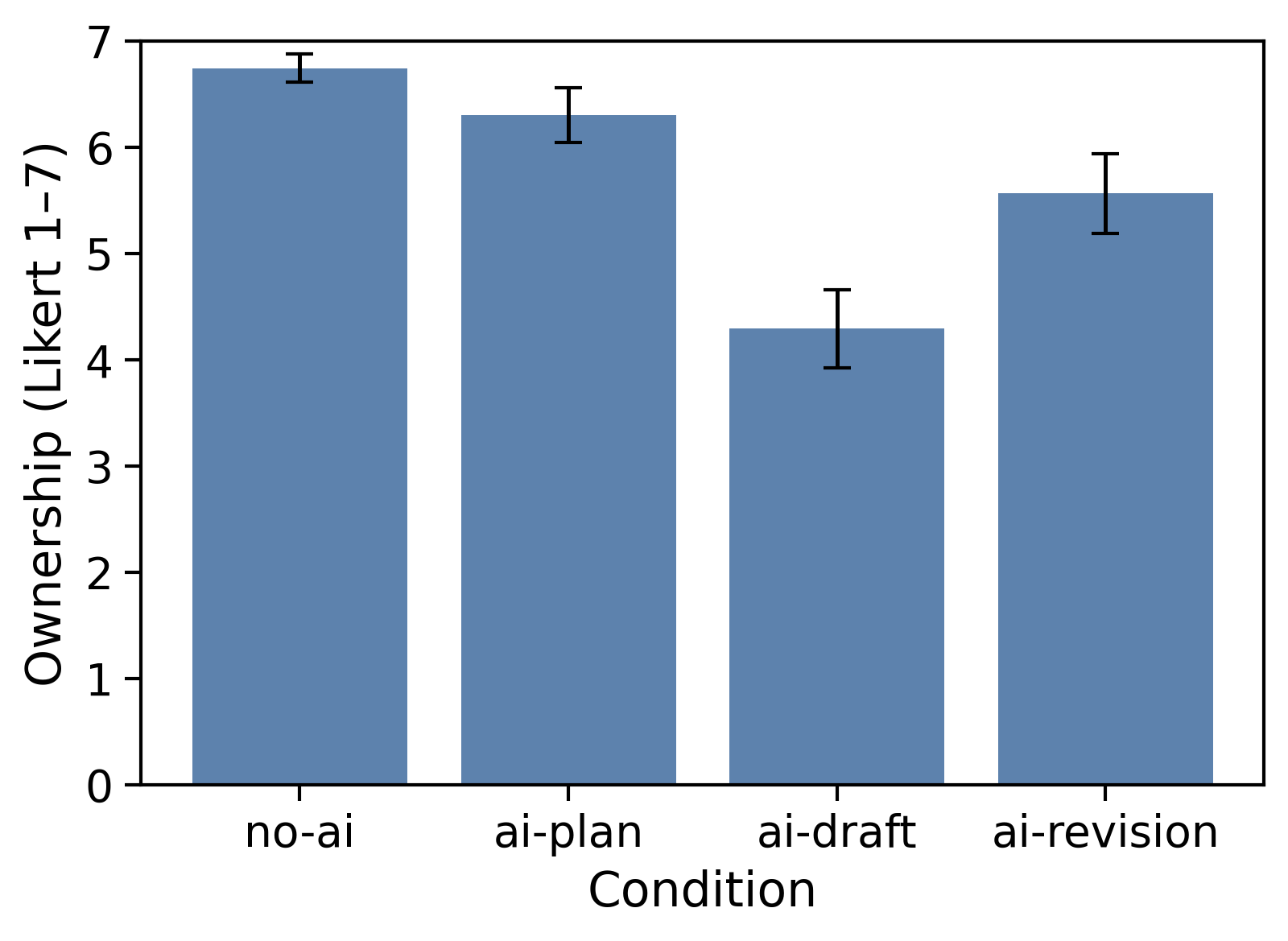
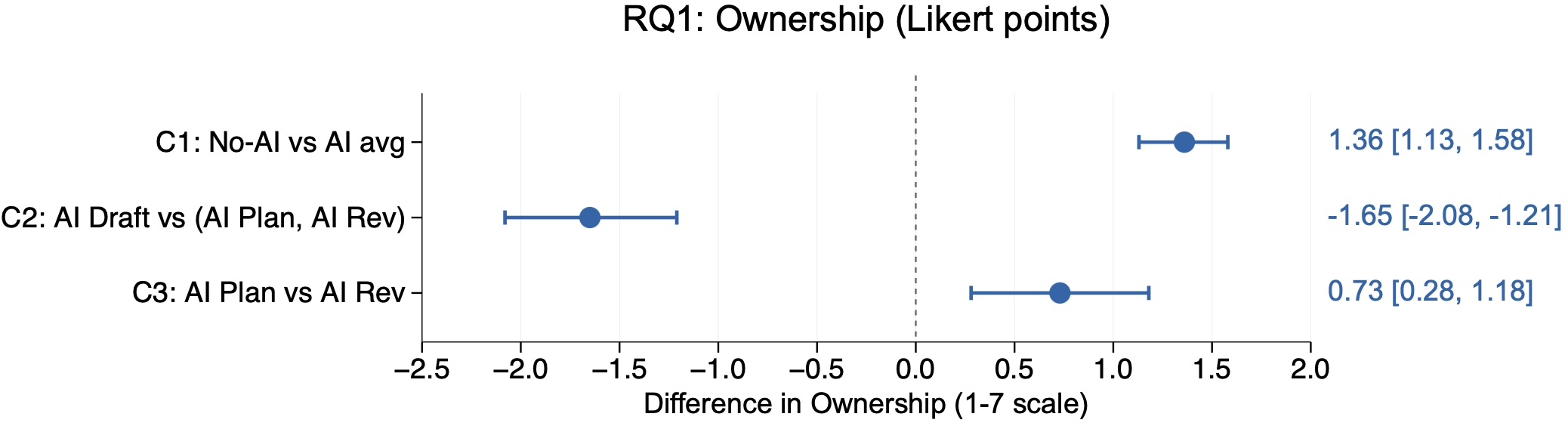
Figure 2: Self-reported ownership ratings, showing clear stage-dependent effects.
Attribution
Stage granularity similarly mediates explicit attribution. While the bulk of both ideas and text in No-AI essays are self-attributed (≈2-4%), AI-Draft essays exhibit markedly higher attribution to AI for both ideas (27%) and text (57%). AI-Plan and AI-Revision are intermediate (11–16% for ideas, 10–24% for text). Crucially, participants often find it difficult to separate text-based from idea-based attribution when AI generates fluent prose, resulting in elevated idea attribution even if the outline is their own and the revision effort is substantial.
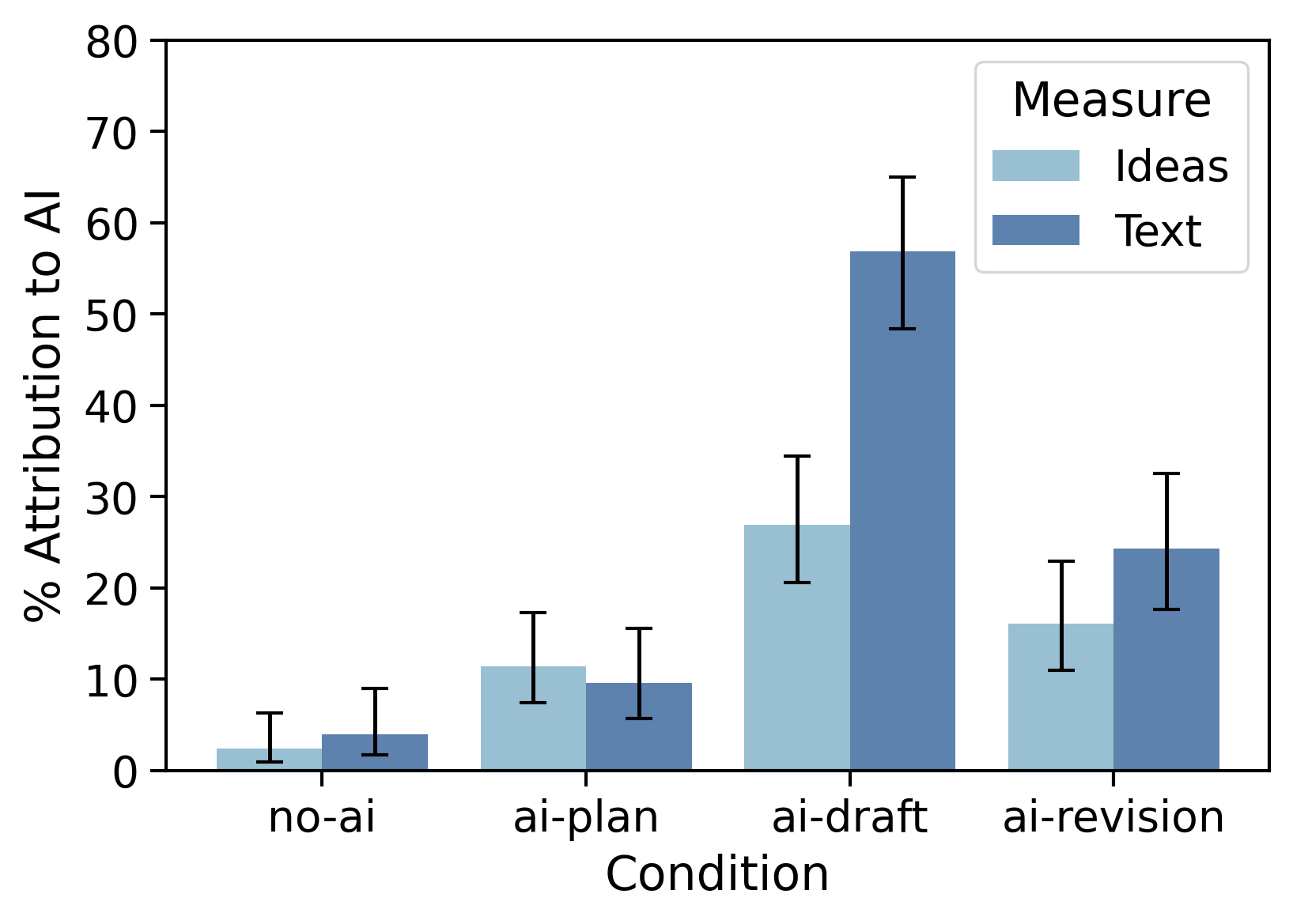
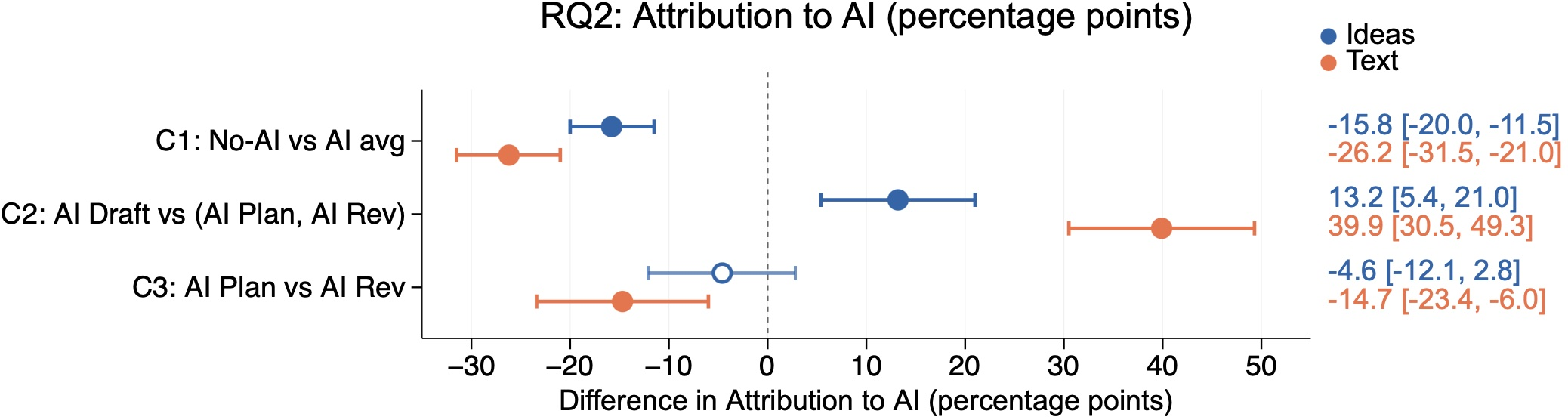
Figure 3: Mean percentage of text and ideas attributed to the AI, by condition.
Essay Quality
The deployment of AI at the drafting stage yields a substantial boost in essay quality (mean = 7.27/9), compared to the relatively flat quality profiles of AI-Plan (5.85) and AI-Revision (5.79), and No-AI (5.69)—revealing a sharp trade-off between writing quality and writer ownership. Contrast analysis confirms that gains in fluency, structure, and argumentation emerge most robustly in the AI-Draft condition.
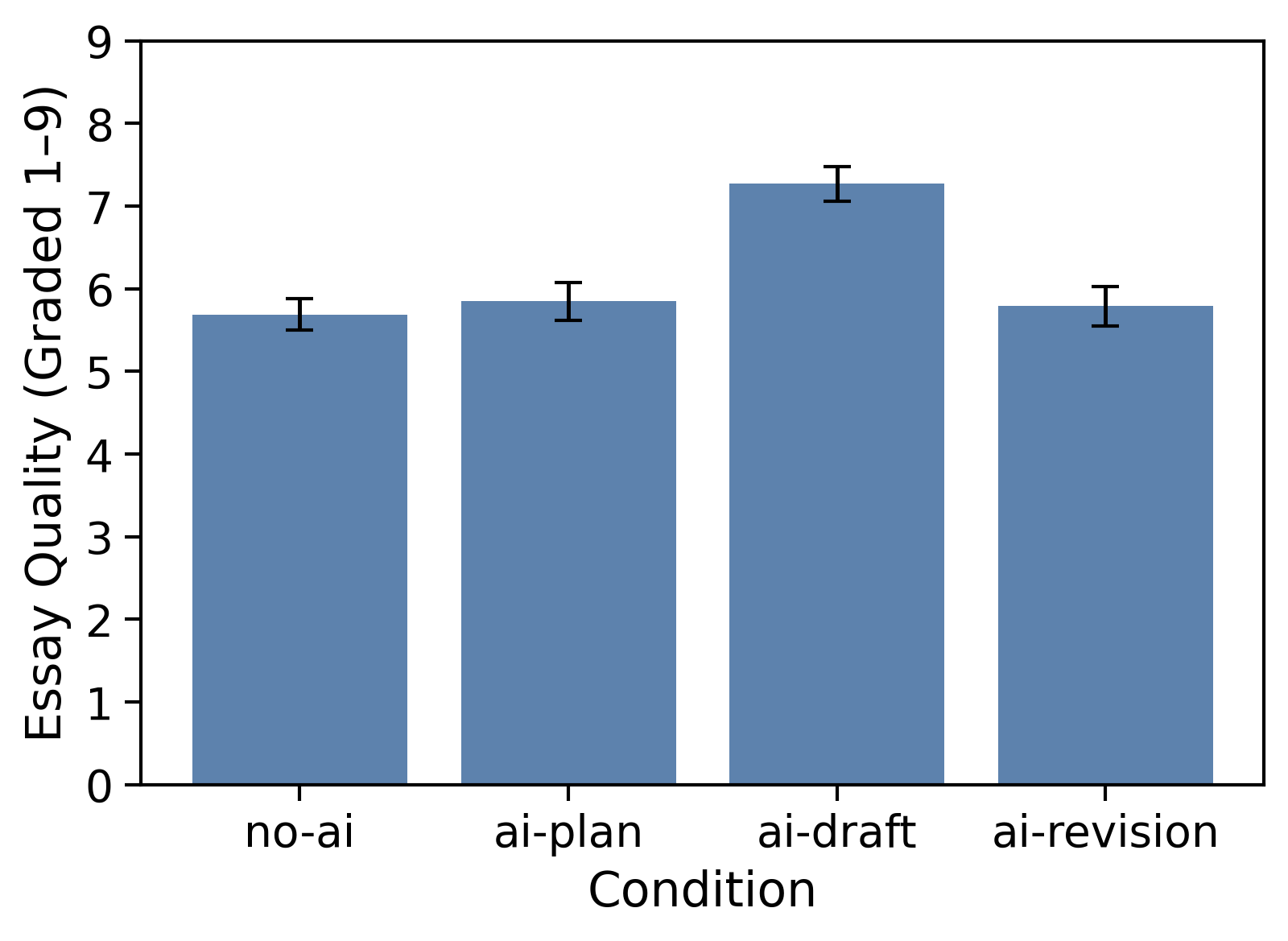
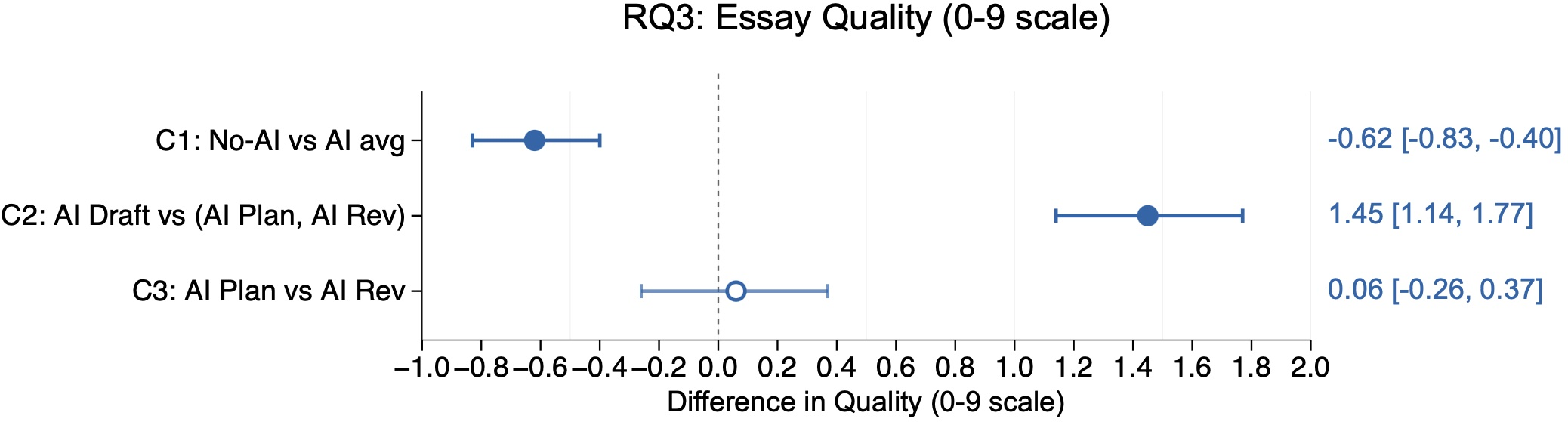
Figure 4: Automated and human-aligned essay quality scores by writing condition, controlling for confounds.
Qualitative Findings and Theoretical Implications
Thematic analysis of post-task responses corroborates and elaborates the quantitative data. Ownership is reported as a function not only of labor/effort but also affect, investment, and self-efficacy. Emotional and cognitive engagement is highest when participants manually produce text, reflecting deeper goal formation and identity integration, in line with cognitive-process writing theories. When AI contribution is high—especially for fluent text—participants not only relinquish surface attribution but also recognize that the generative process itself (and hence idea discovery) has shifted to the AI. Respondents articulate this both in terms of diminished agency ("The ideas were mine, but what resulted was not") and reduced emotional resonance.
AI assistance in planning is frequently ignored or its suggestions are viewed as redundant, minimizing impact. In revision, AI contributions are adopted more often, but the locus of intervention is perceived as surface-level or incremental to core meaning. The findings thus nuance the design challenge for AI toolmakers—preserving authorial agency and maximizing intellectual engagement require careful orchestration of when, not merely how, AI intervention occurs.
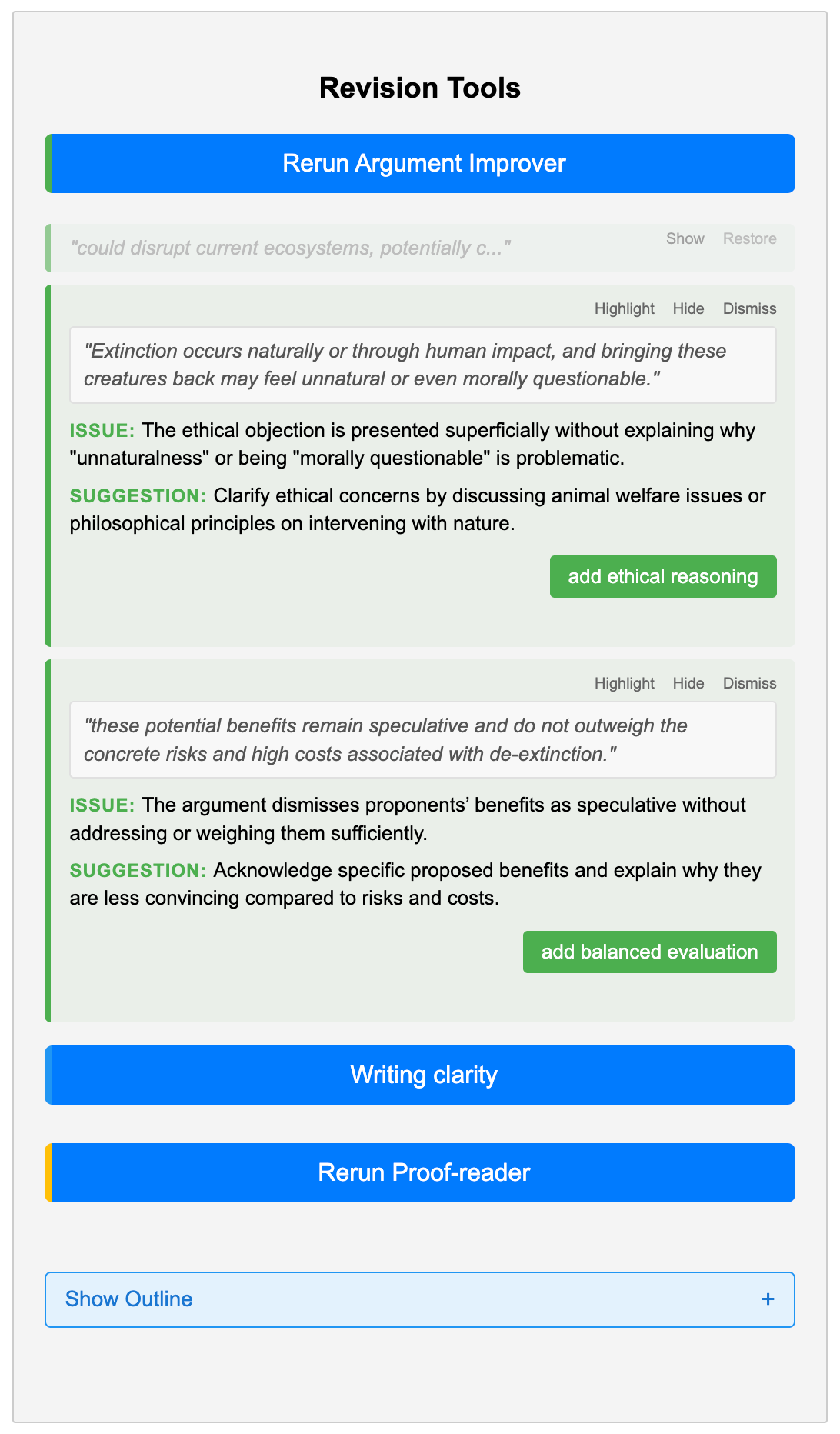
Figure 5: Screenshot of the revision tool interface, illustrating actionable, granular suggestions with direct implementability.
Several practical design implications arise:
- Fade-out/fade-in AI scaffolding: Integrating temporal modulation of AI contributions, with high scaffolding early (via incomplete or fragmentary suggestions) and declining assistance as the artifact matures, may maximize both quality and psychological ownership.
- Limiting direct use of AI-generated prose: Encouraging reformulation and synthesis (as opposed to direct insertion of fluent AI paragraphs) may prevent the collapse of idea/text separation seen in AI-Draft.
- Editable, manipulable AI output: Shifting from conversational bot paradigms to workspaces that foreground revision/reworking of AI output can realign the locus of authorship and attribution, supporting agency and iterative meaning-making.
These findings reinforce the recursive, non-linear, and affectively rich nature of writing as conceptualized in the cognitive process tradition, while documenting how mechanistic AI deployment, especially for text generation, risks reducing the writer to an editor of machine output.
Limitations and Directions for Further Research
While the protocol isolates stage effects, it necessarily simplifies the reality of recursive writing in the wild. Writing genres, task stakes, and professional expertise may all modulate the ownership-quality tradeoff; evidence here is task-specific (short argumentative essays amenable to LLMs). Future work should extend to higher-stakes, creative, or personal writing genres, investigate the longitudinal effects of persistent AI co-writing, and incorporate task design that allows for recursive revisiting of process stages.
Conclusion
Stage specificity is pivotal in shaping the consequences of AI-assisted writing. The findings demonstrate a monotonic trade-off between AI-driven quality improvements and psychological ownership, maximally disrupted when AI provides full drafts. While surface-level attributions (text, effort) and deeper constructs (ideas, intent, emotional resonance) are both affected, their interplay is subtle and stage-dependent. As writing support systems with LLMs proliferate, design and pedagogical guidance must address not simply whether to use AI, but when, and with what degree of generative license. These results provide an empirical and theoretical foundation for temporally-aware, ownership-preserving AI writing assistance.
References
See (2604.11009) for full bibliographic detail and additional context.

