- The paper introduces a neural network that accurately predicts production times from 3D model renderings with a MAE under 3 seconds.
- The model employs an EfficientNetB0-based encoder-decoder architecture and multi-view 2D image processing for robust geometric feature extraction.
- The approach outperforms traditional methods like PointNet and MVCNN, achieving an F1 score of 0.93 to improve production scheduling.
Technology Prediction of a 3D Model using Neural Network
Introduction
This paper discusses a novel approach for accurately predicting production steps and their durations based solely on the 3D models of manufactured items. Traditional methods like expert analysis or reliance on historical data often suffocate in the face of dynamic manufacturing environments, particularly when dealing with customized products. This research proposes a method that utilizes neural networks inspired by the Generative Query Network (GQN) to predict manufacturing times with a Mean Absolute Error (MAE) of less than 3 seconds, which significantly improves planning efficiency and scheduling adaptability.
Methodology
Task Definition
The core task involves predicting a vector ti representing the time required for each production step for a given 3D model mi. The steps, estimated as predefined constants, are mapped using a neural network which takes geometric features from rendered images of 3D models to predict these time estimates.
Data Processing
The proposed system relies on a rendering process where the 3D model is depicted through multiple 2D images from various viewpoints—a method inspired by GQN.
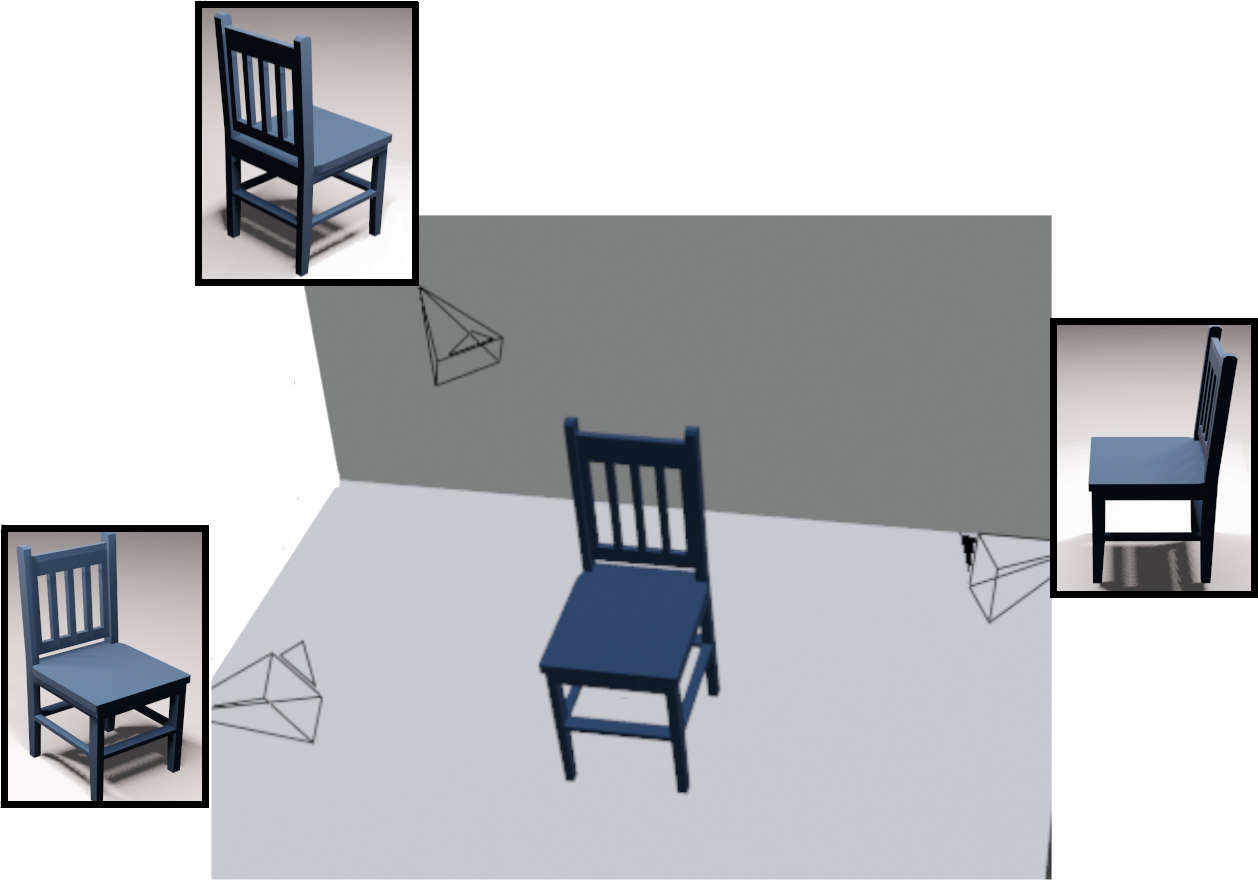
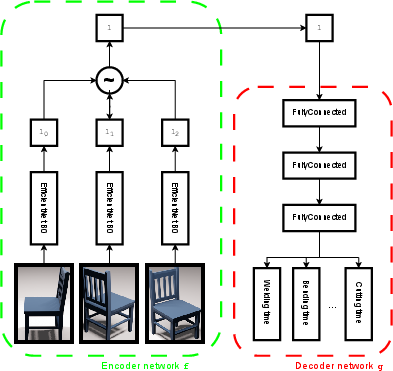
Figure 1: The prediction pipeline reflecting a high-level idea behind the Generative Query Network.
The process involves capturing several images of the object from different spatial angles to ensure comprehensive geometric feature extraction. The images are central to feeding the subsequent encoder-decoder architecture, significantly helping the neural network generalize across different item types.
Neural Network Architecture
The encoder-decoder architecture is pivotal for transforming the rendered images into actionable predictions. The encoder, based on the EfficientNetB0 framework, converts images into latent vectors, which the decoder further processes to produce time estimates.
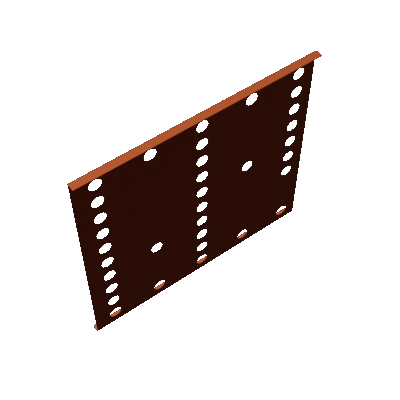


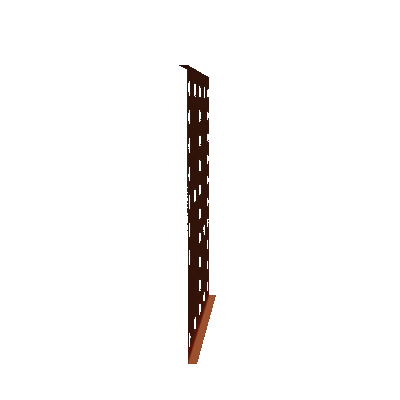


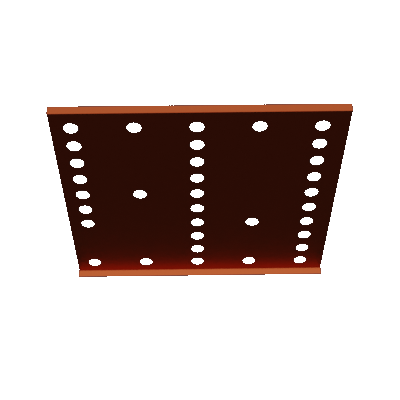


Figure 2: Example snapshots of objects used to train the model.
The encoder extracts meaningful embeddings, while the decoder translates these embeddings into a sequence of production times. The architecture maintains flexibility, allowing it to incorporate a varying number of input images without altering the model's structure or its trainable parameters.
Experiments
The dataset comprises 539 3D models with annotated production times for six different manufacturing stages: welding, cutting, bending, screwing, drilling, and assembling. The model showcases stellar performance on a test set of 60 randomly selected objects, with the MAE for predictions falling as low as 2.76 seconds, indicating a robust capacity for accurate predictions.
Performance metrics across other models such as PointNet and Multi-view Convolutional Neural Networks (MVCNN) were used for benchmarking. The GQN-based model demonstrated superior results with a F1 score of 0.93, highlighting its effectiveness in accurately predicting the necessity and duration of production steps.
Conclusion
The research confirms that neural networks derived from GQN can be effectively adapted to predict manufacturing steps and their durations, leveraging only the 3D geometry of products. The method surpasses existing techniques like PointNet, particularly in scenarios involving simple geometric objects with no hidden details. While this approach provides significant improvements, future work is invited to explore more complex geometries and extend its applicability to more elaborate manufacturing contexts. Strategies incorporating additional model features, like cross-sections, could enhance the model's efficacy with complex items. The current study lays the groundwork for more adaptive and precise manufacturing scheduling, improving the overall efficiency and responsiveness of modern production systems.

