- The paper introduces SITL, a framework that embeds societal values into AI systems via an algorithmic social contract.
- It extends the human-in-the-loop model by incorporating broad societal oversight to manage ethical trade-offs in AI.
- The approach underscores the need for innovative methods to program, monitor, and debug societal commitments in automated systems.
Society-in-the-Loop: Programming the Algorithmic Social Contract
Introduction
The paper introduces the concept of Society-in-the-Loop (SITL) as a mechanism to govern AI and algorithmic systems through an algorithmic social contract. This approach enhances the traditional Human-in-the-Loop (HITL) paradigm by embedding societal values into the governance of AI systems that impact broad social outcomes. SITL proposes a new interaction model incorporating the social contract tradition from political philosophy into algorithmic governance.
Human-in-the-Loop
HITL is well-established in fields such as Human-Computer Interaction and supervisory control, emphasizing human oversight in automated processes. A human operator is integral to tasks such as monitoring exceptions and optimization. The HITL paradigm has proven valuable in scenarios requiring expert oversight to regulate AI behavior, such as in the control of autonomous systems like drones or credit-scoring algorithms.
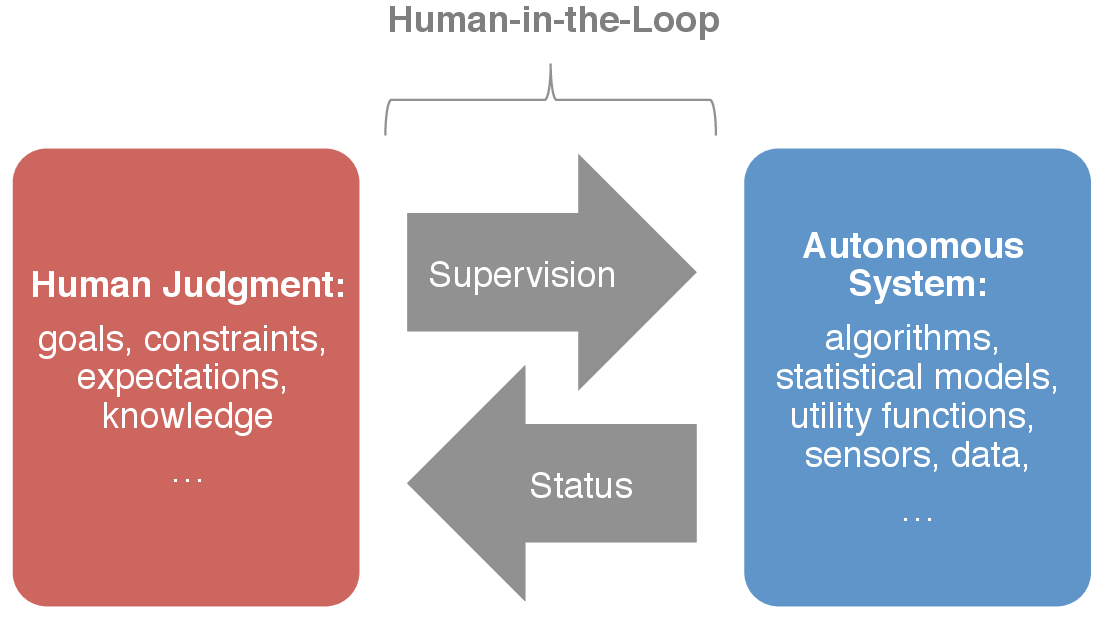
Figure 1: In a HITL system, a human provides monitoring and supervisory functions at crucial junctions in the system's operation.
Society-in-the-Loop
While HITL focuses on individual or group oversight for systems with narrow impacts, SITL extends this concept to address systems with profound societal implications, such as AI algorithms that affect millions of people. SITL requires integrating societal values into systems to balance stakeholder interests, akin to programming an algorithmic social contract, which manages significant societal functions.
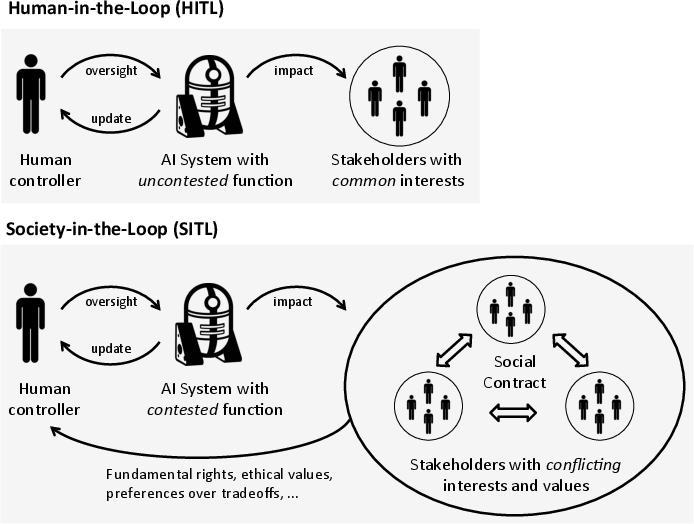
Figure 2: Society-in-the-Loop (SITL) = Human-in-the-Loop (HITL) + Social Contract; SITL requires societal stakeholders to identify and negotiate ethical values that guide AI operations.
The Algorithmic Social Contract
SITL introduces an algorithmic social contract, inspired by historical social contract concepts, to ensure AI systems respect societal values and norms. It stresses the necessity for societal negotiation in defining AI-created societal trade-offs, ensuring equitable distribution of benefits and costs. Unlike HITL systems focusing on narrow objectives, SITL demands broader input across both system impacts and societal stakeholders.
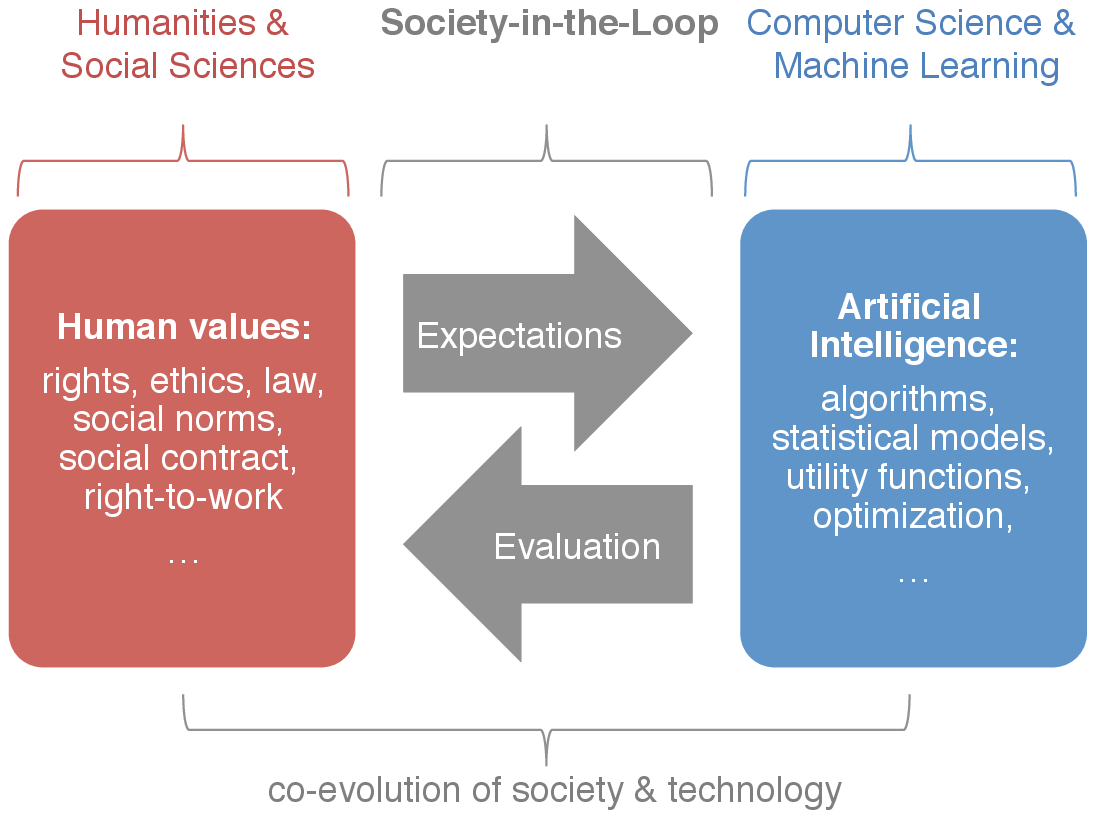
Figure 3: In a SITL system, broad societal values must be involved in AI systems' monitoring and supervisory functions with wide-ranging societal implications.
Illustrating SITL: The Extended Framework
The implementation of SITL requires innovative methodologies to articulate, quantify, and verify societal values. Legislative, ethical, and engineering perspectives must converge to effectively monitor AI compliance with the societal contract. Tools for programming, debugging, and continuous monitoring need development to safeguard the integrity of this social contract.

Figure 4: The frontispiece of Thomas Hobbes' 1651 book Leviathan illustrates the sovereign deriving power from the governed's consent, analogous to SITL's societal empowerment over AI.
Conclusion
The paper presents SITL as a progressive framework for embedding human values in AI governance, drawing parallels to modern political institutions built on social contracts. By synthesizing HITL with social contract theory, SITL advocates for societal oversight over AI systems with comprehensive societal influence. As governance functions increasingly encode into algorithmic form, SITL emphasizes the need for robust institutional frameworks to program, debug, and maintain our algorithmic social contracts.